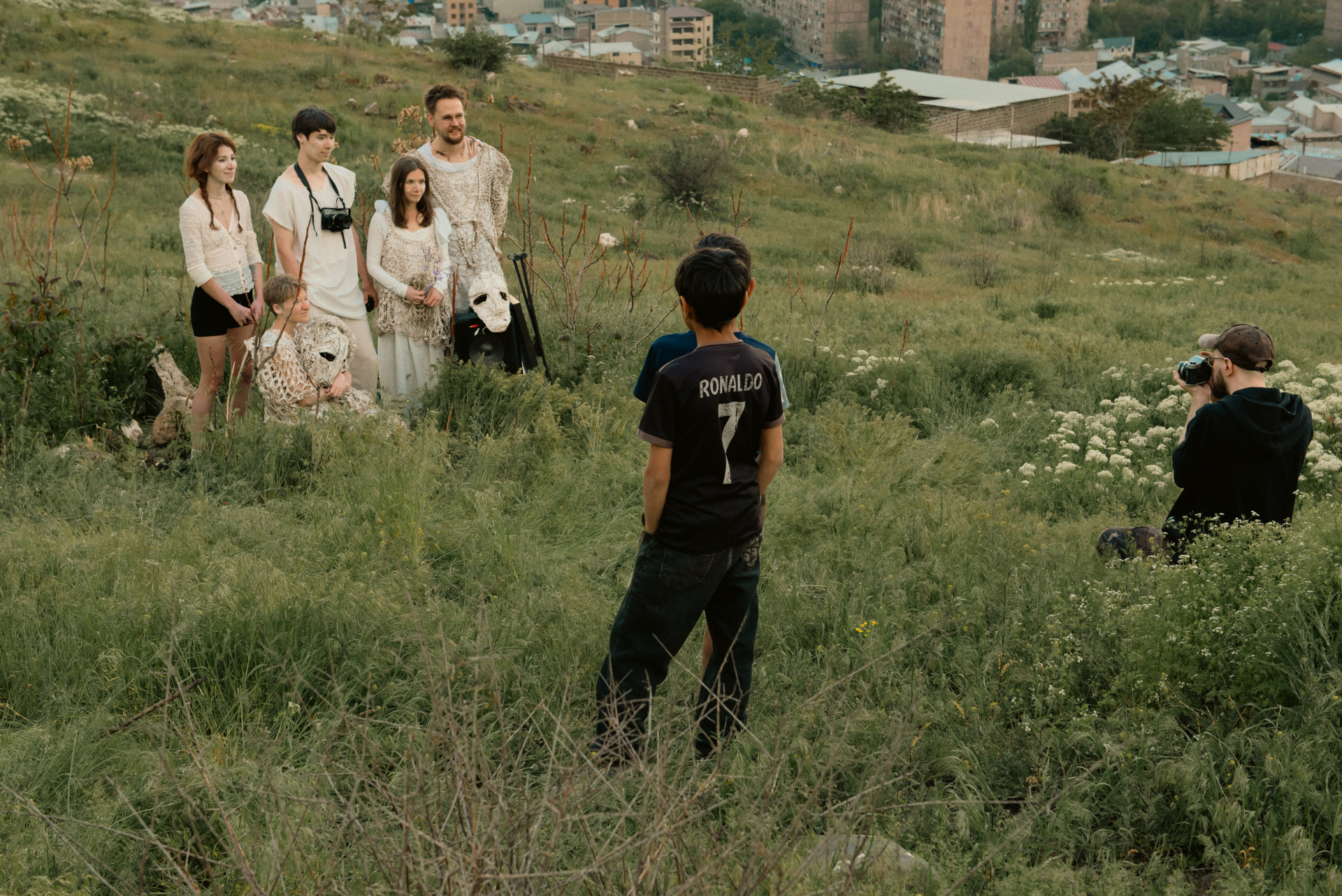
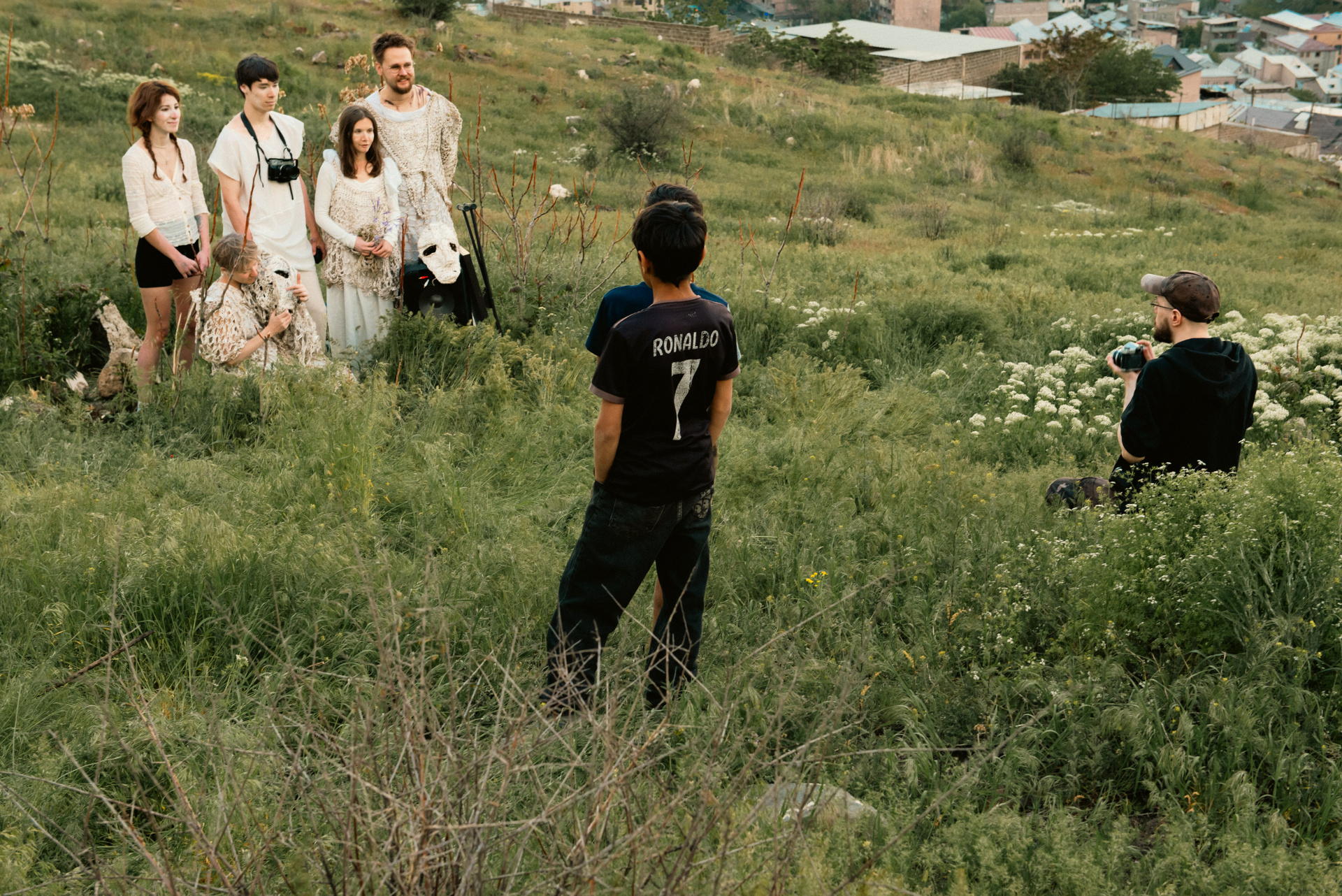
Performance “On the Mystery of the Structure of the World and the Elusiveness of the Universe”
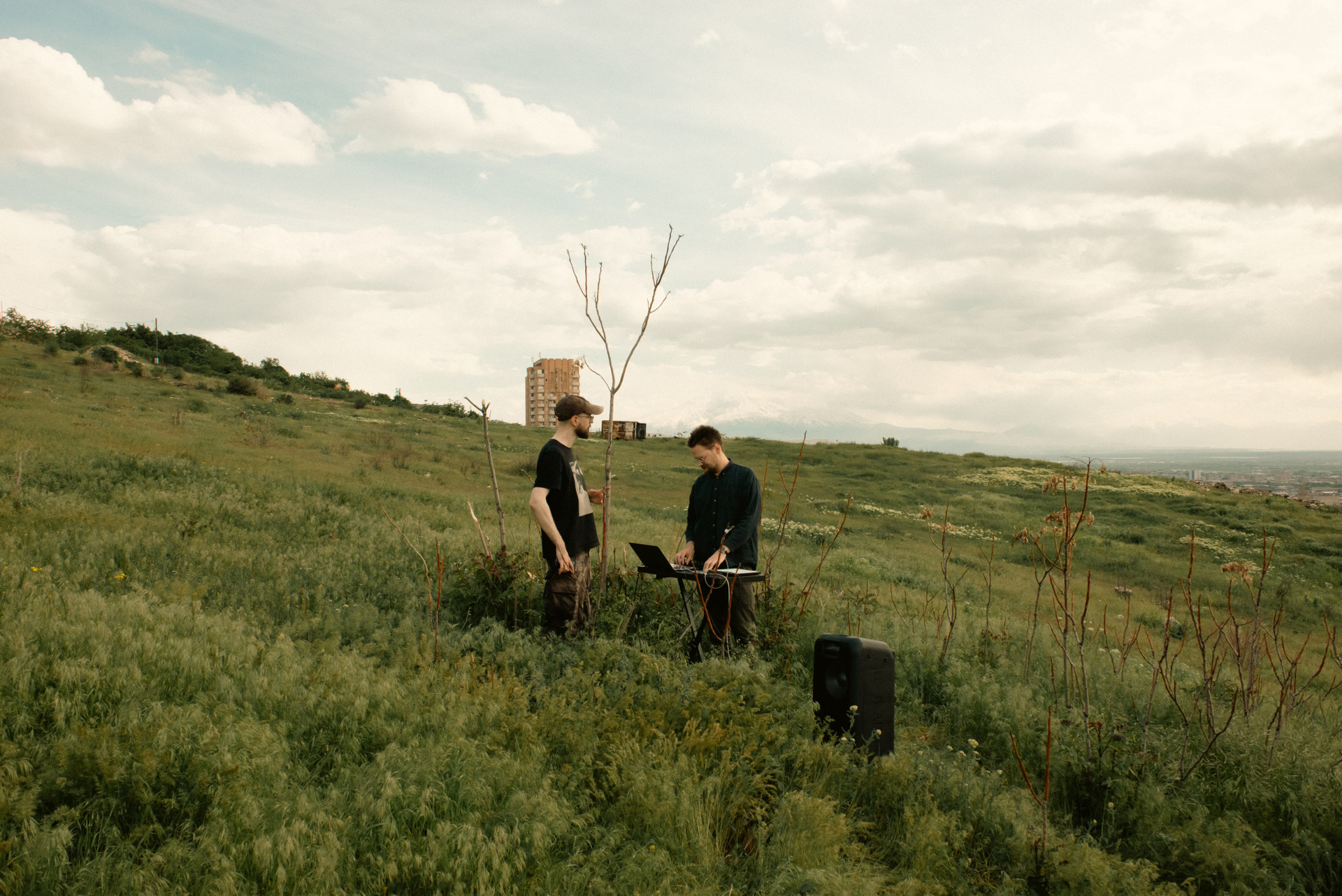
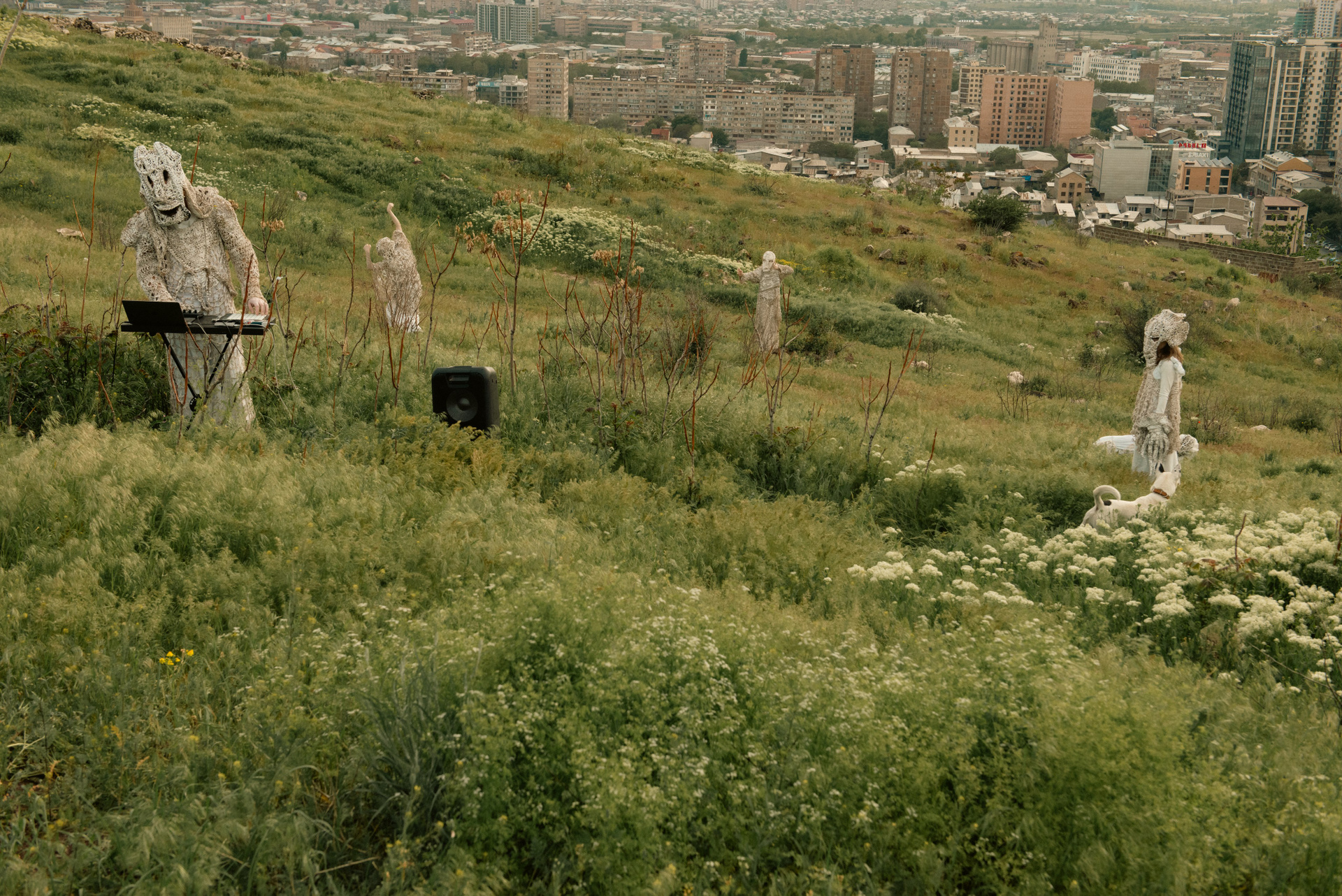
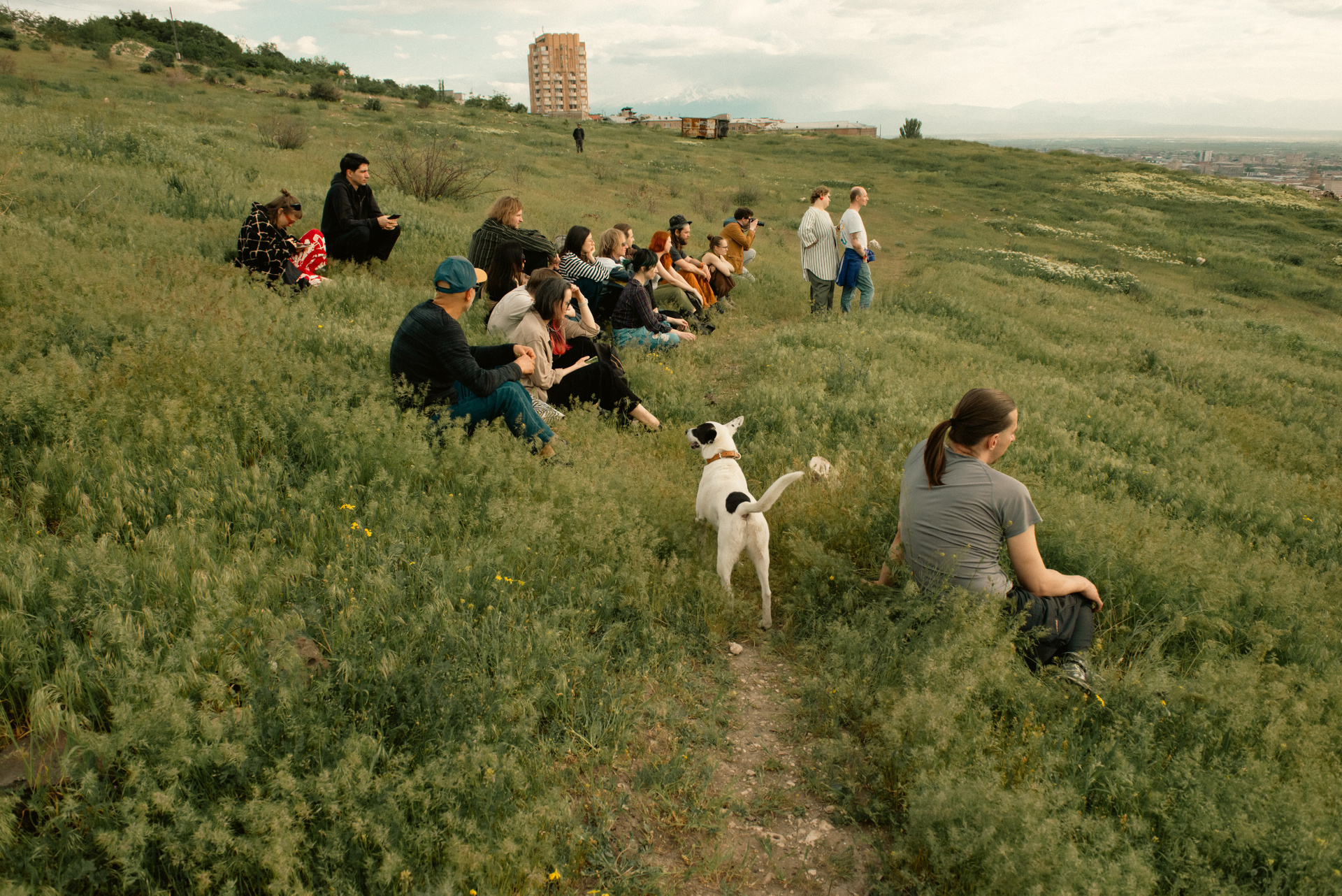
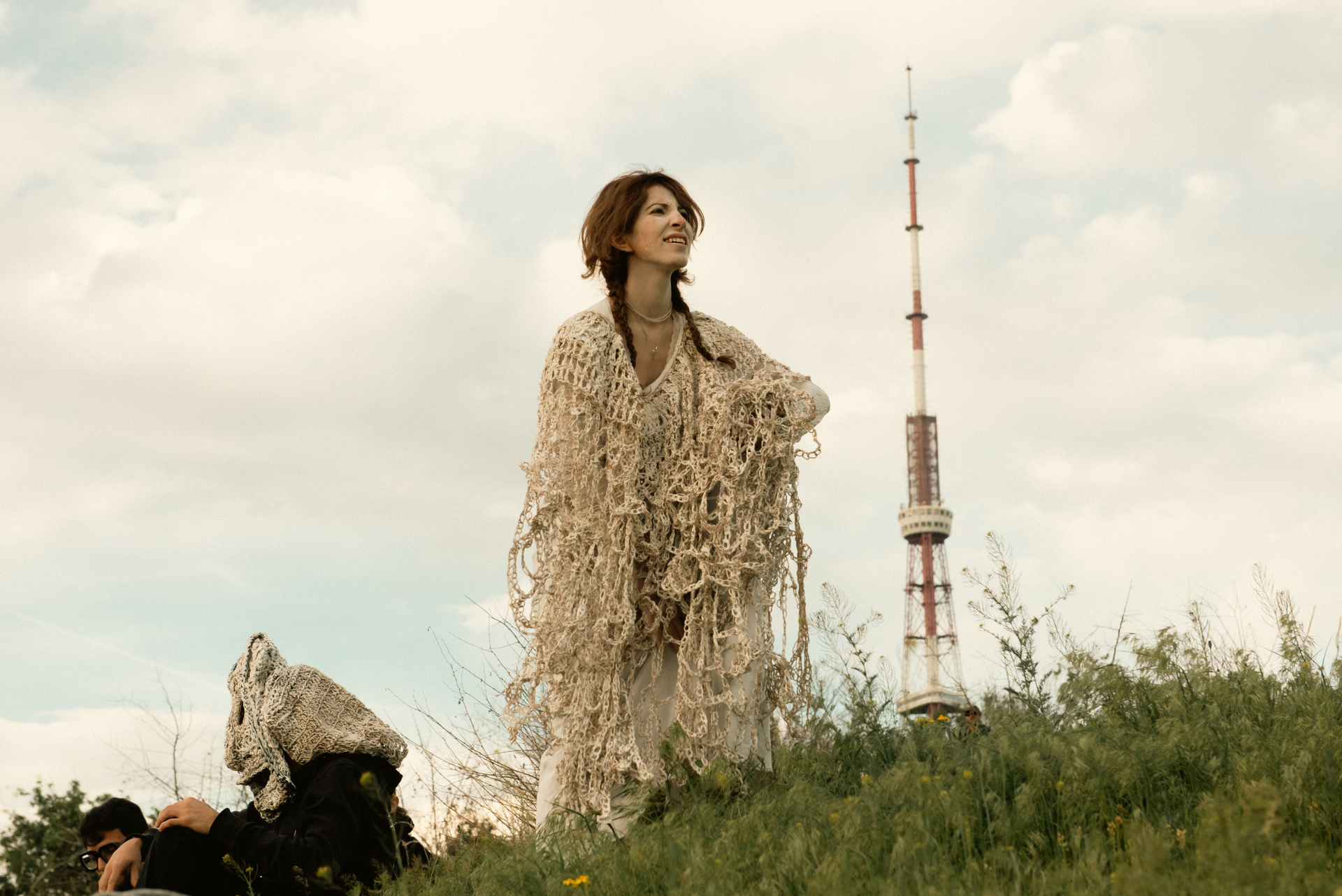
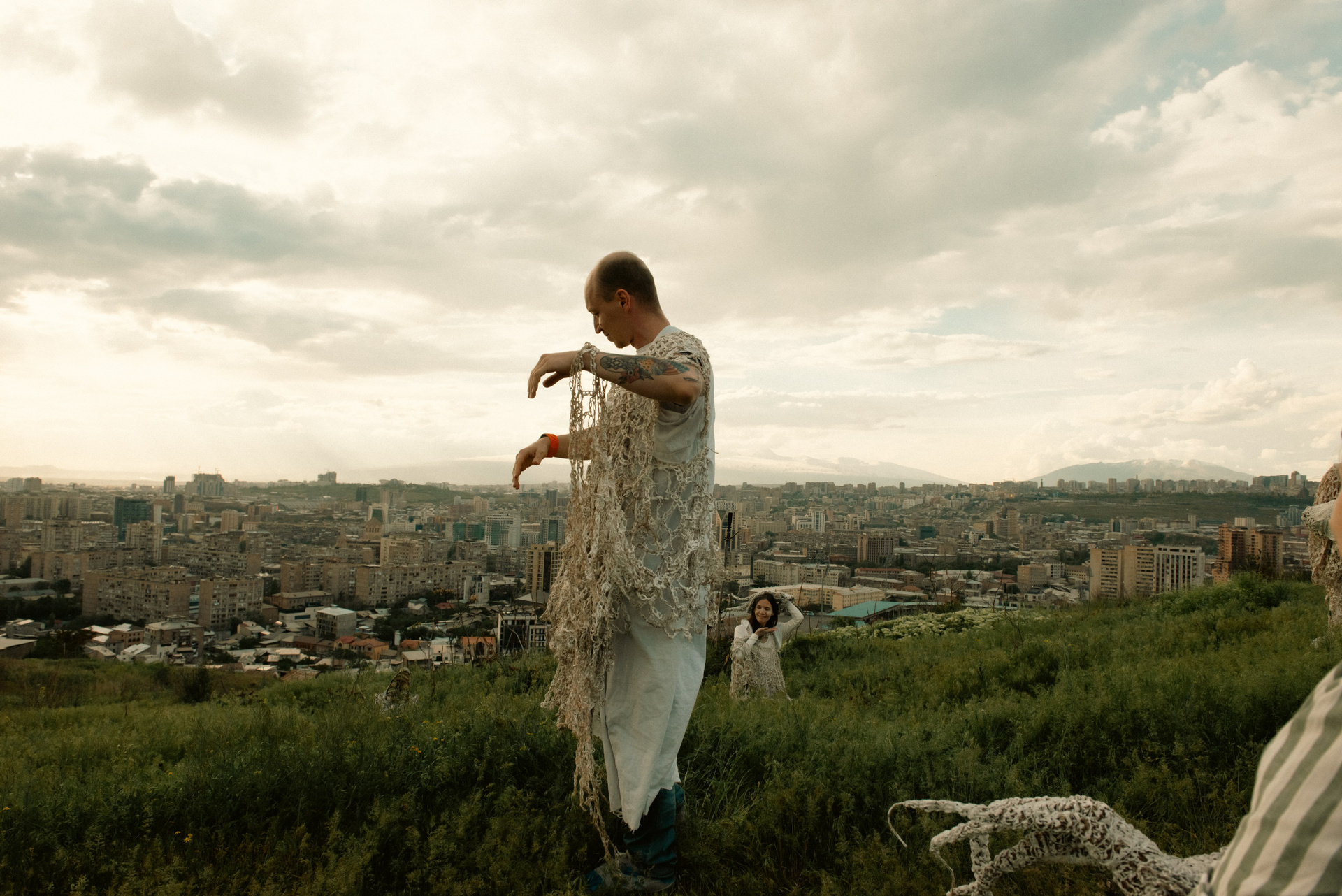
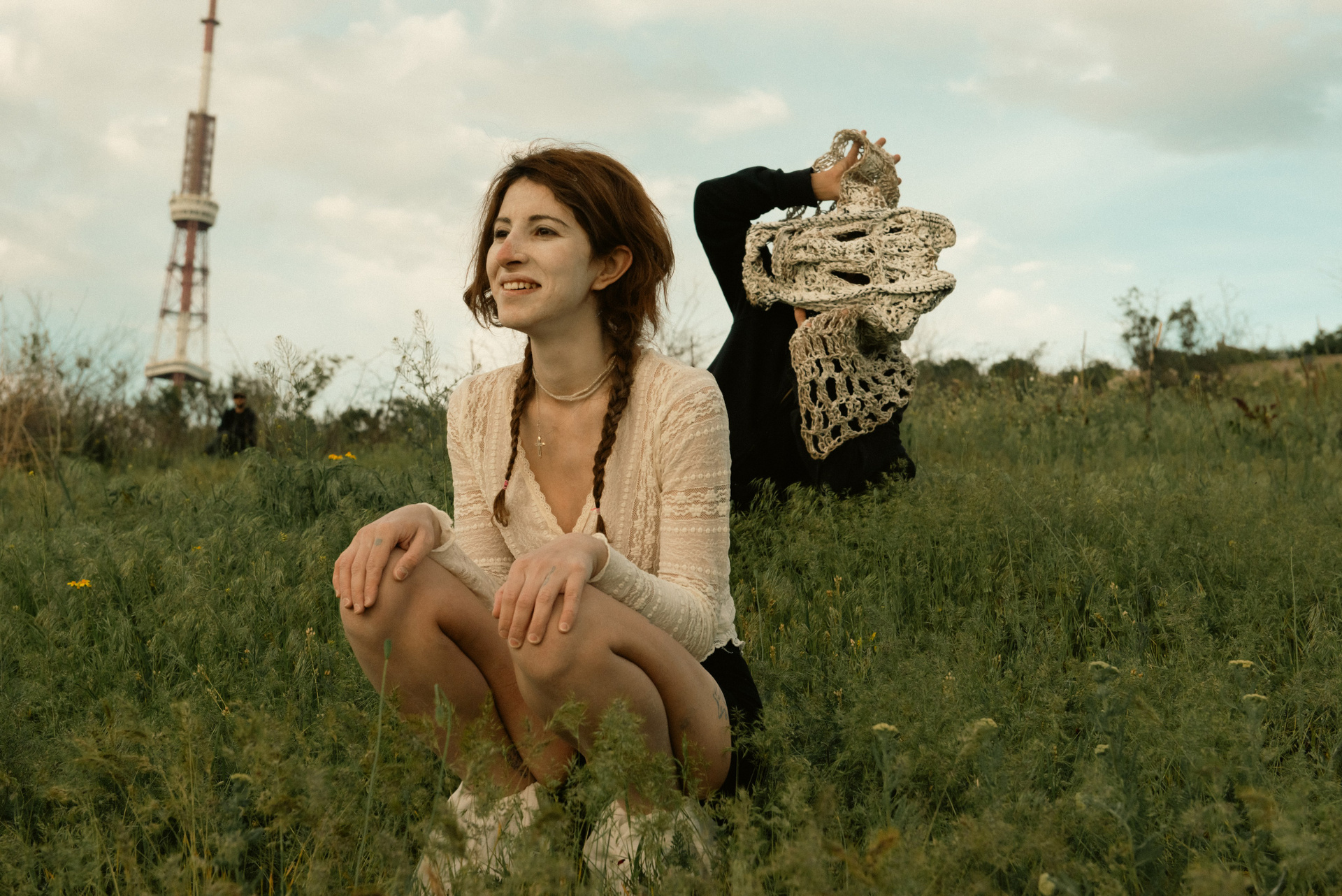
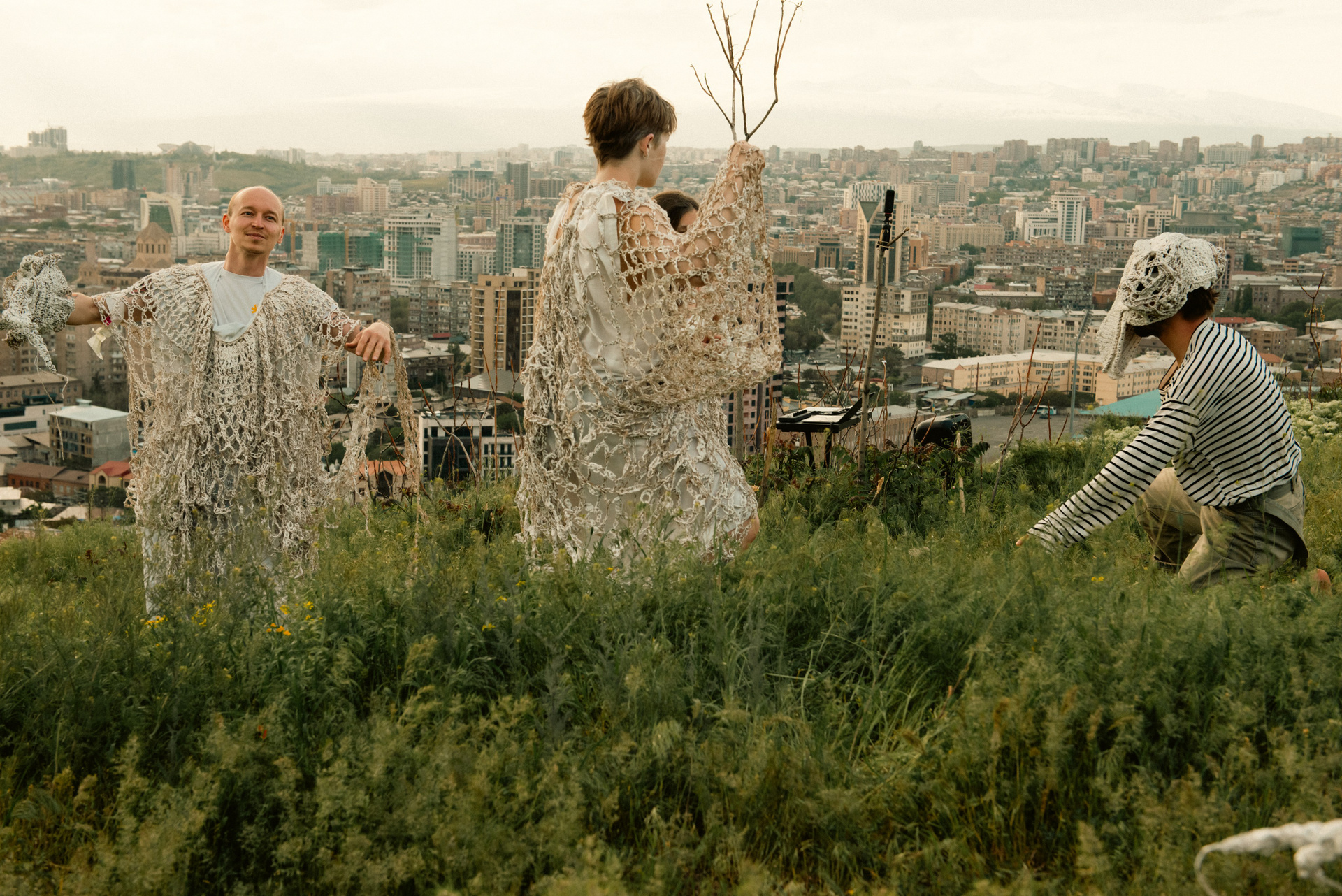
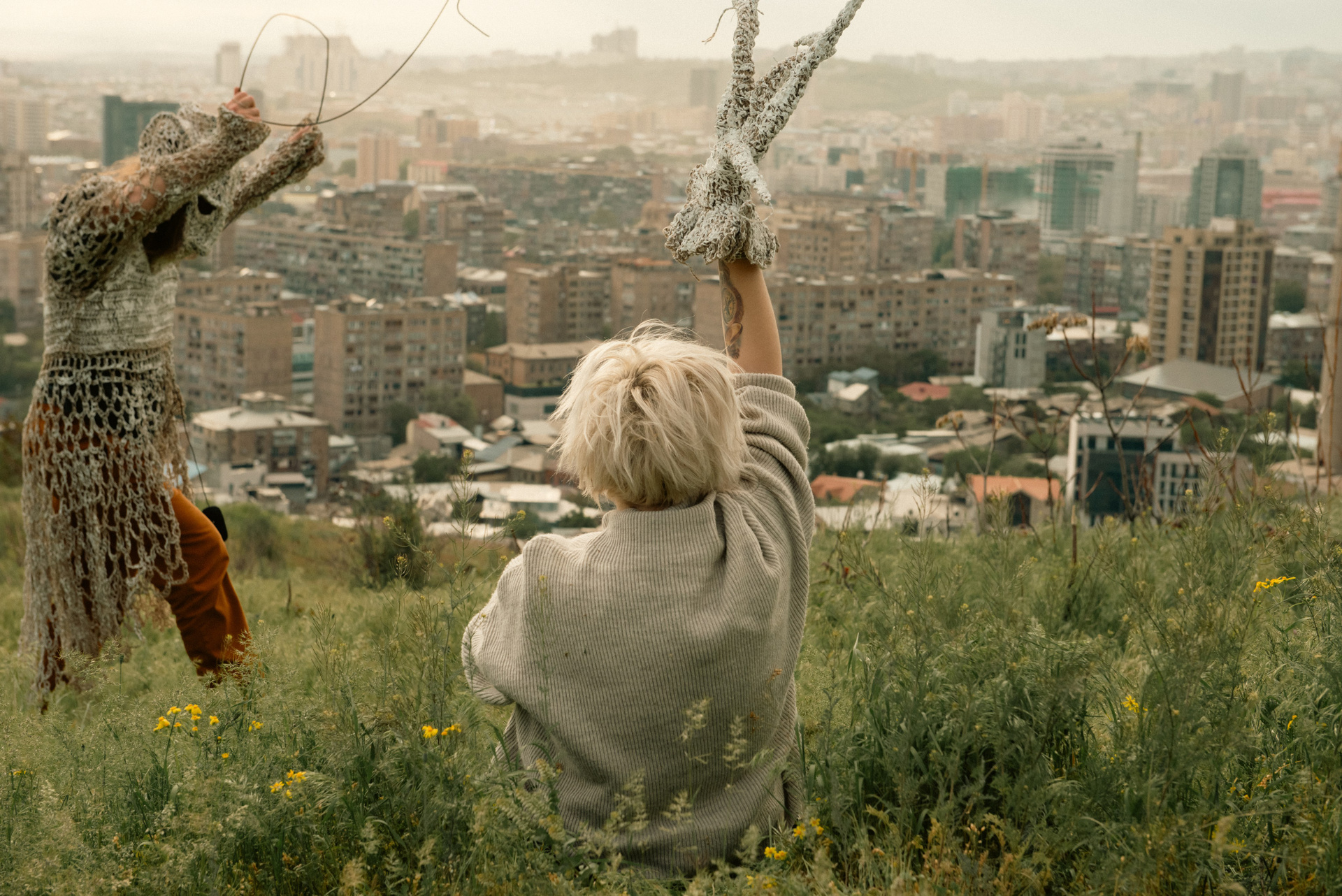
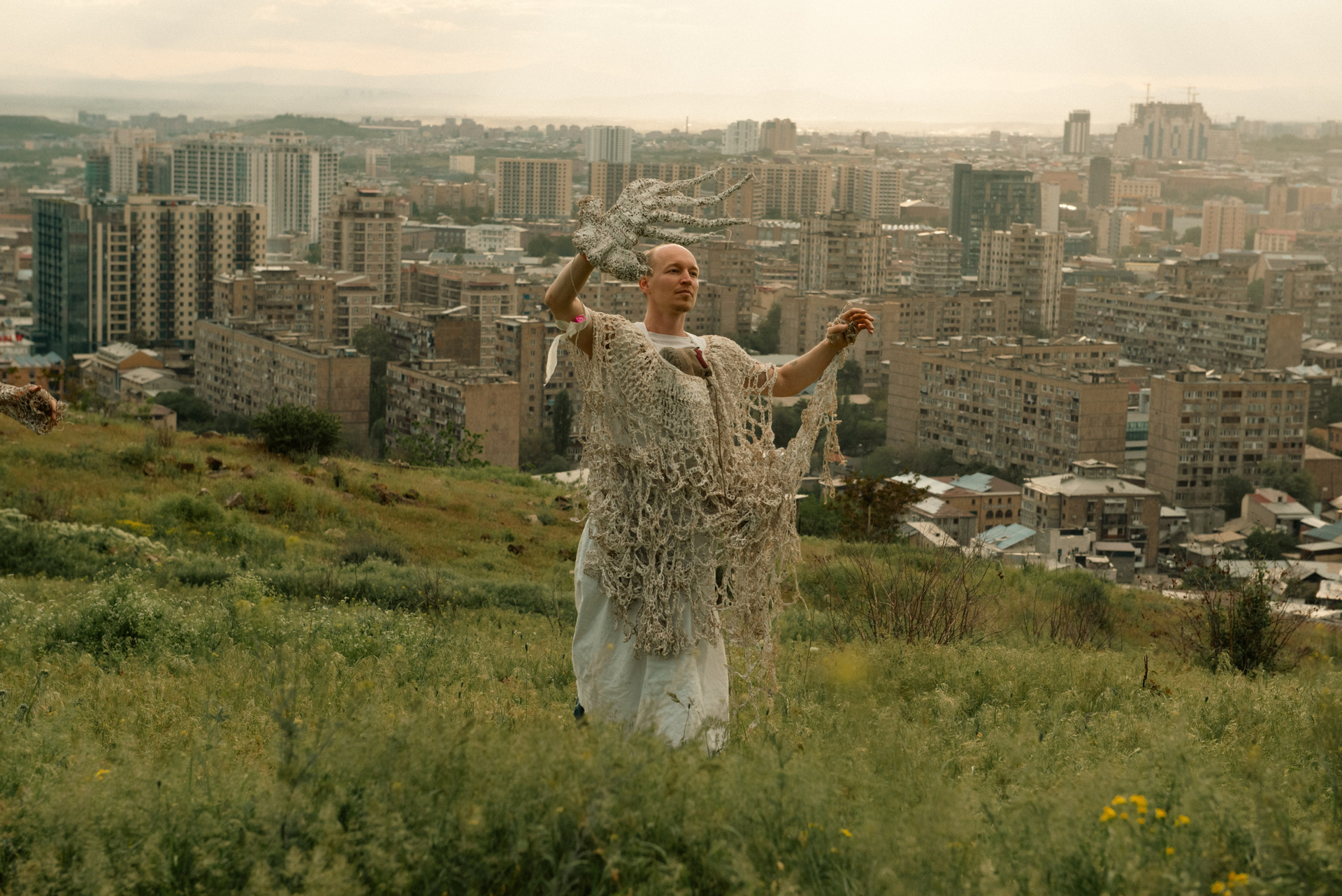
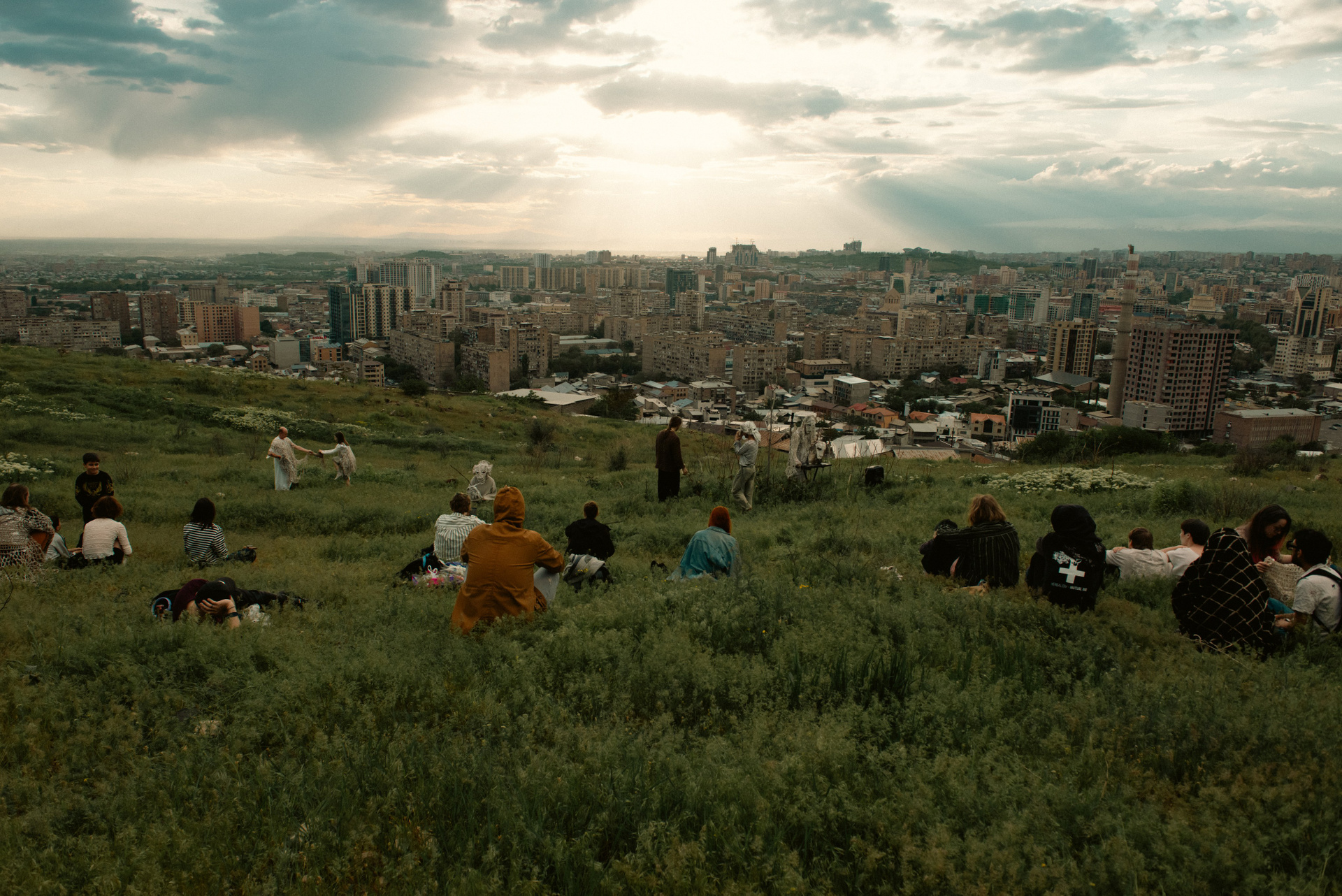
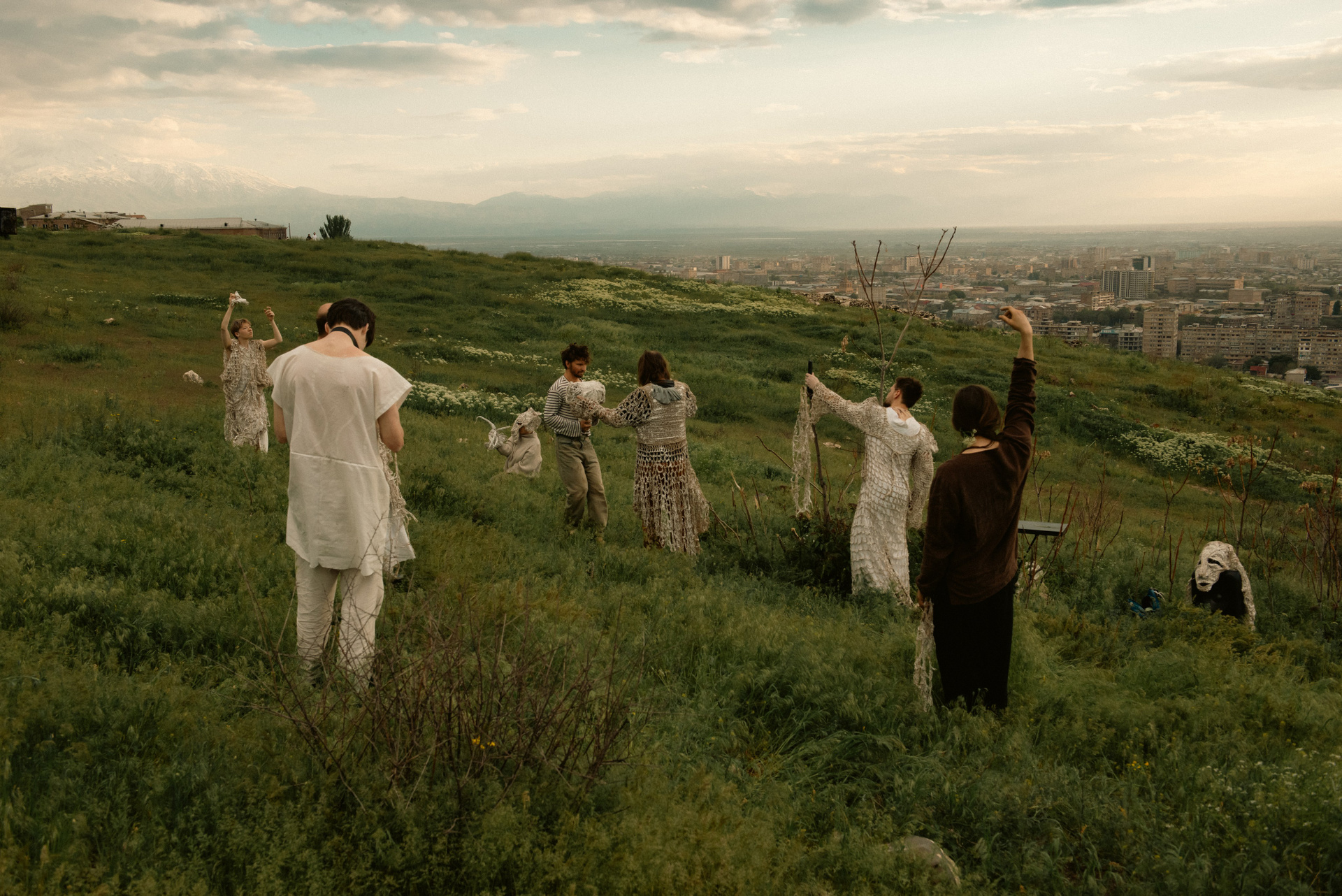
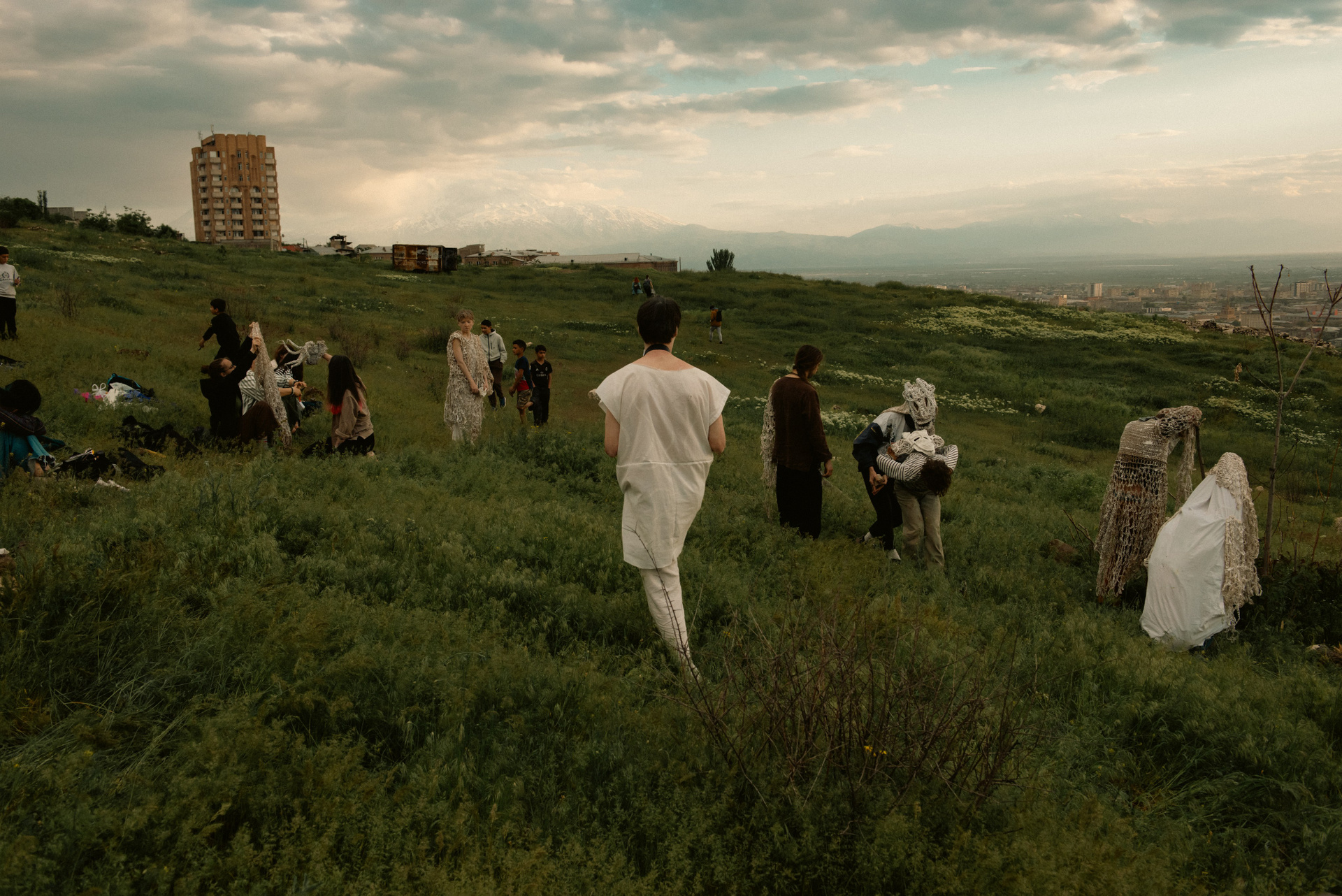
Slope above Yerevan near the TV tower
coordinates: 40.164782, 44.527344
May 10, 2026, from 17:50
I deeply value this performance as an enriching experience of horizontal organization, knowledge exchange with other creators, and the lived experience of free and trusting artistic collaboration with other people.
Team
- I participated in the project as a co-author, taking on curatorial and managerial tasks, and also performing.
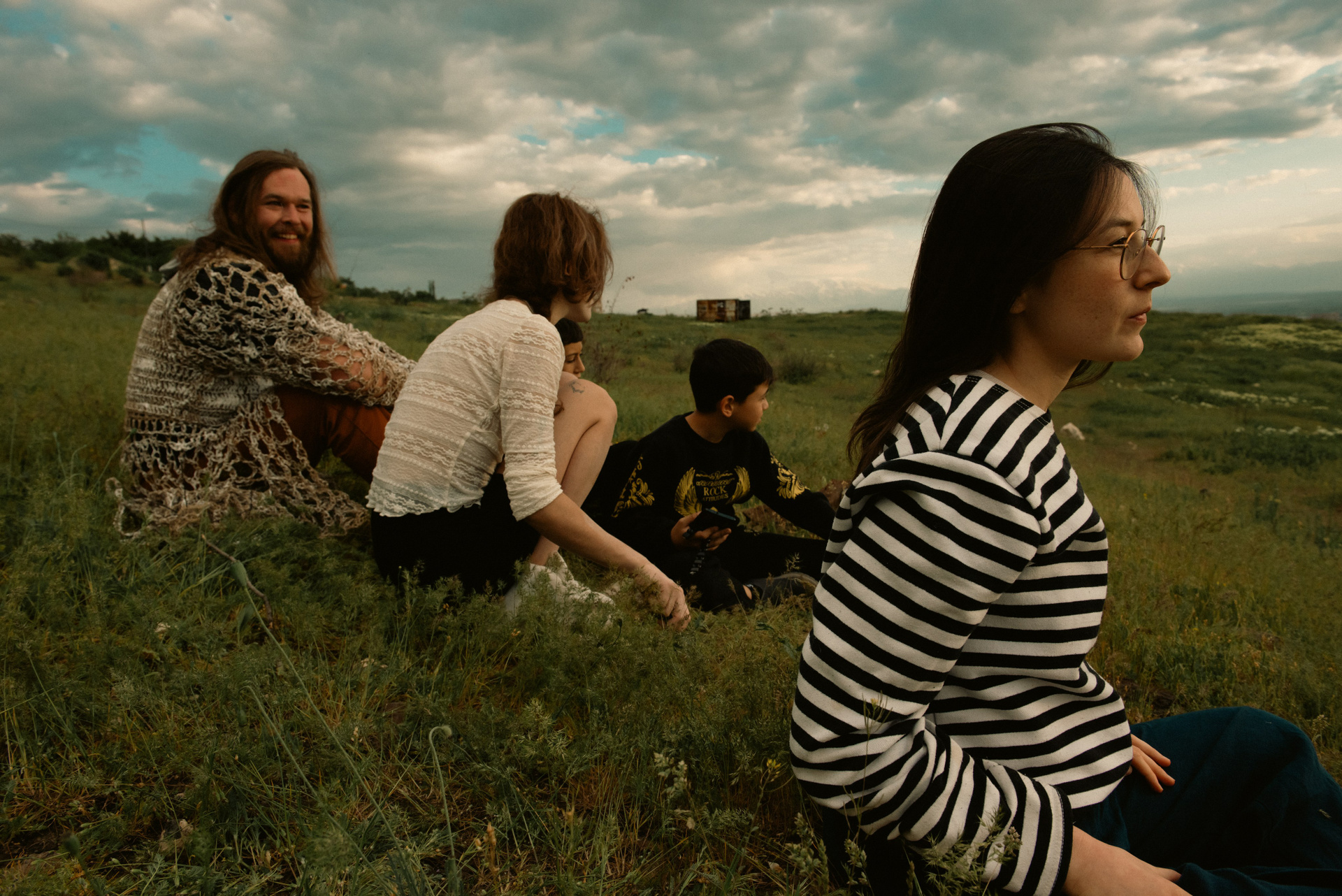
- Nikita Baskov — performer, Butoh dancer, and multidisciplinary artist. He was the author of the idea, director, announcement creator, and performer.
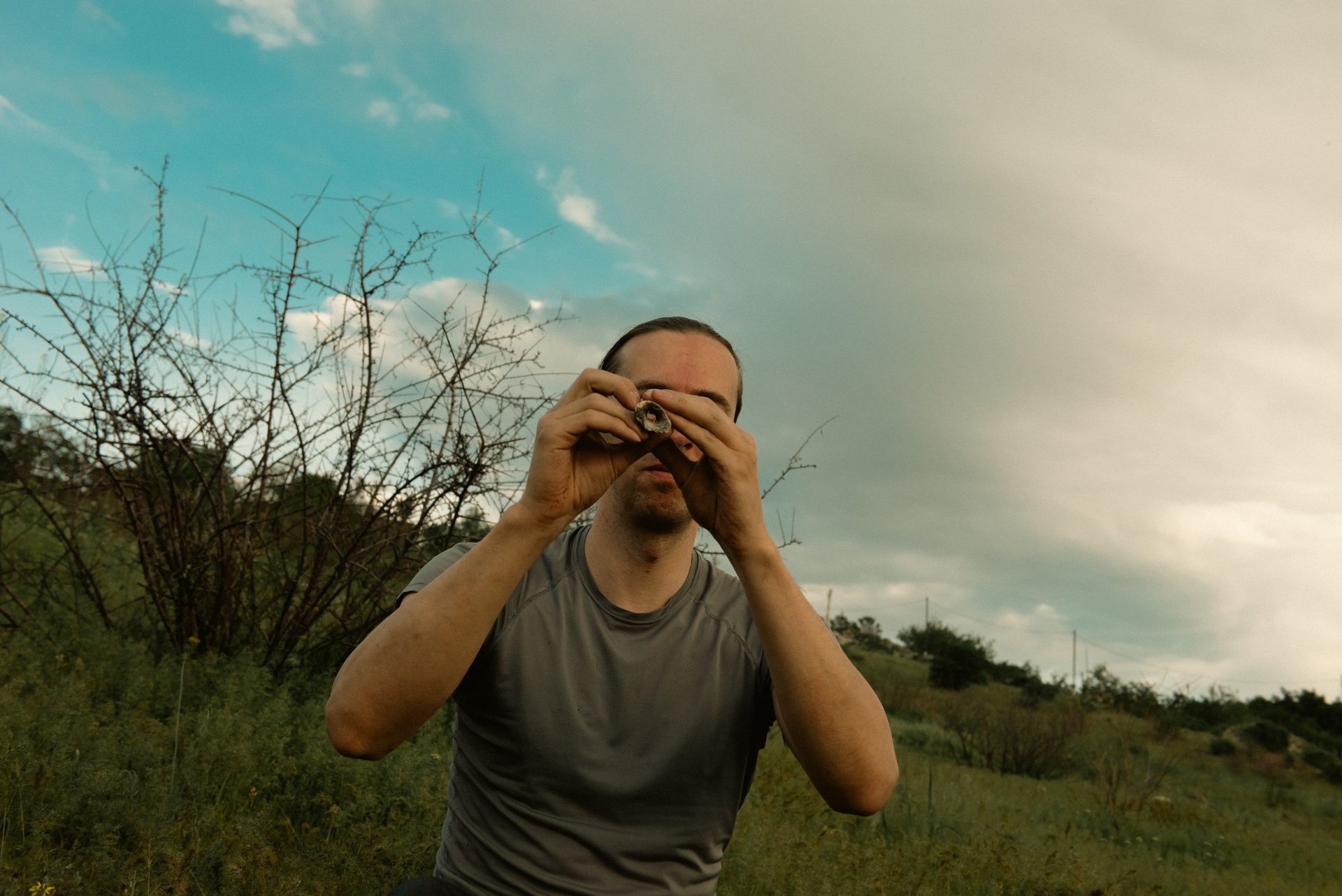
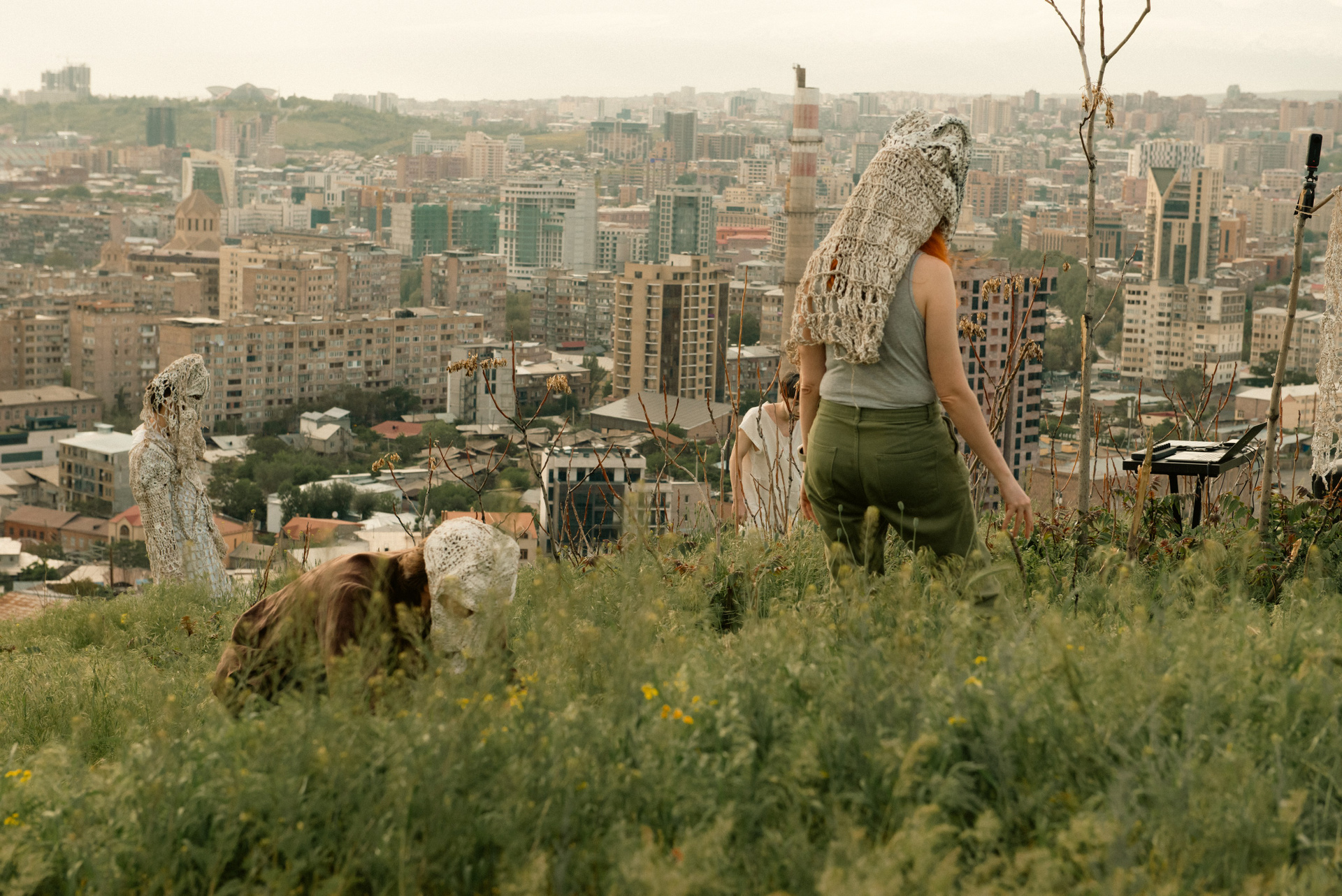
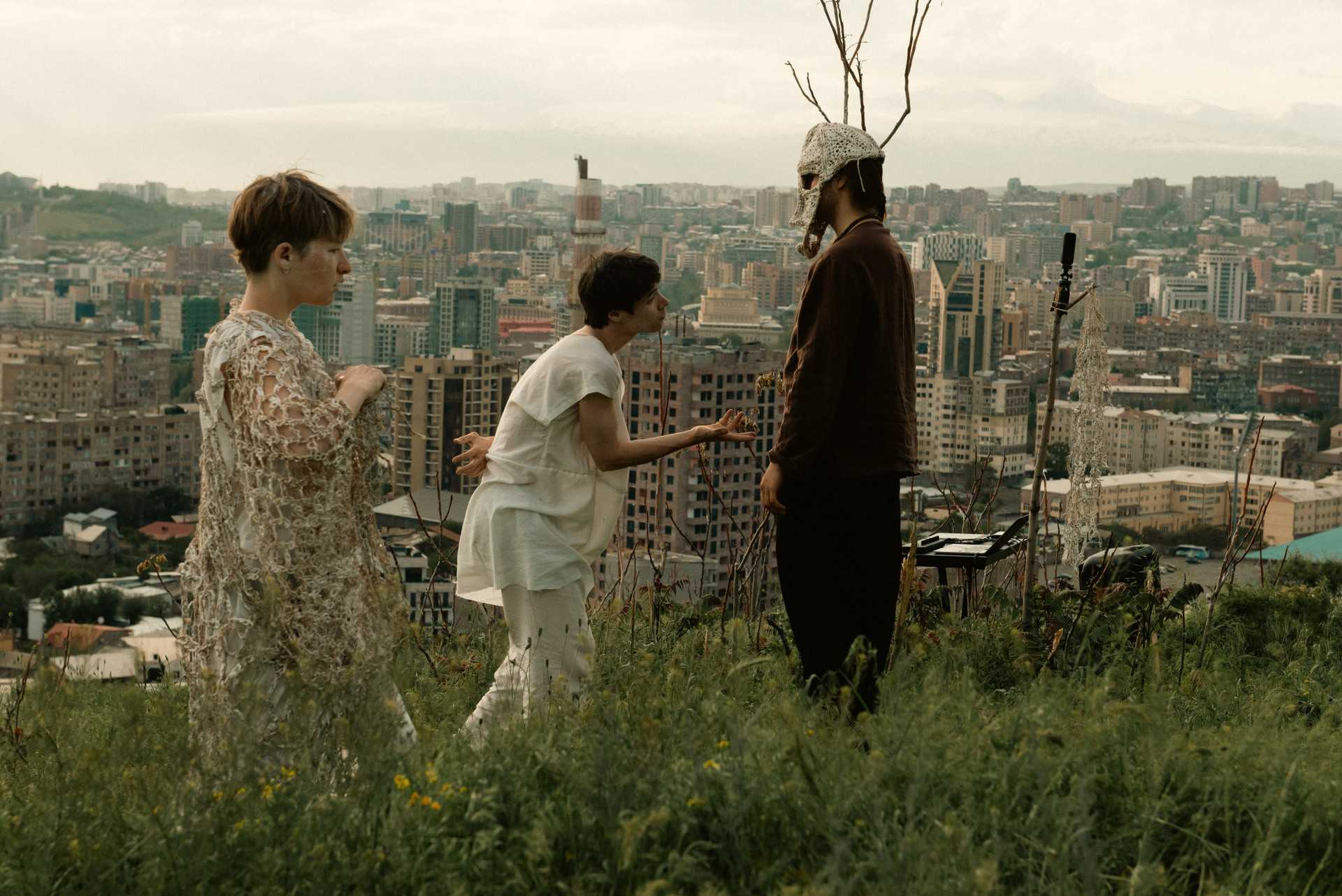
- Sergey Zhulkov — musician and engineer, member of SEC. He assembled the motion sensors and prepared the sound system that voiced the dance of the gods. He also performed during the event.
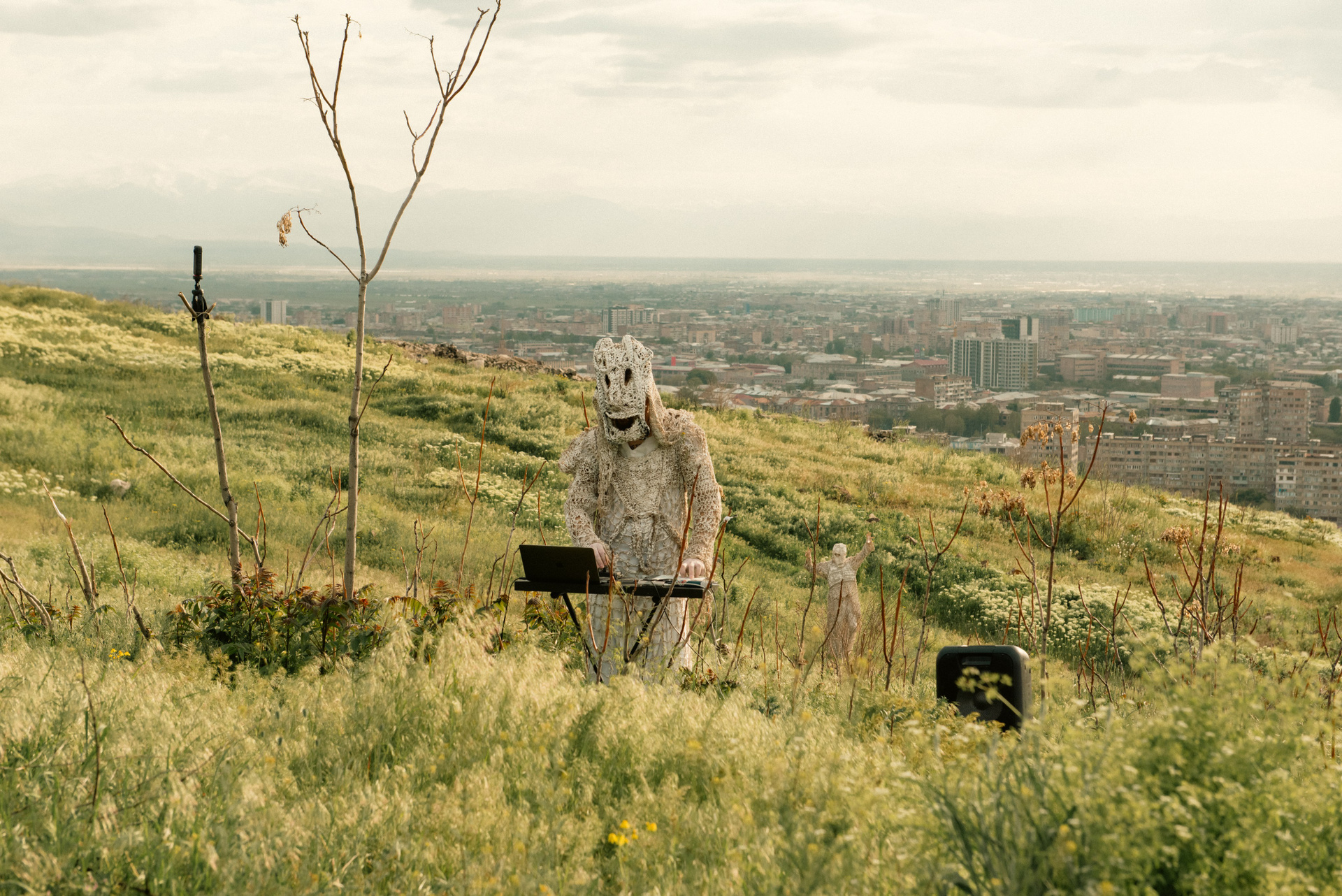
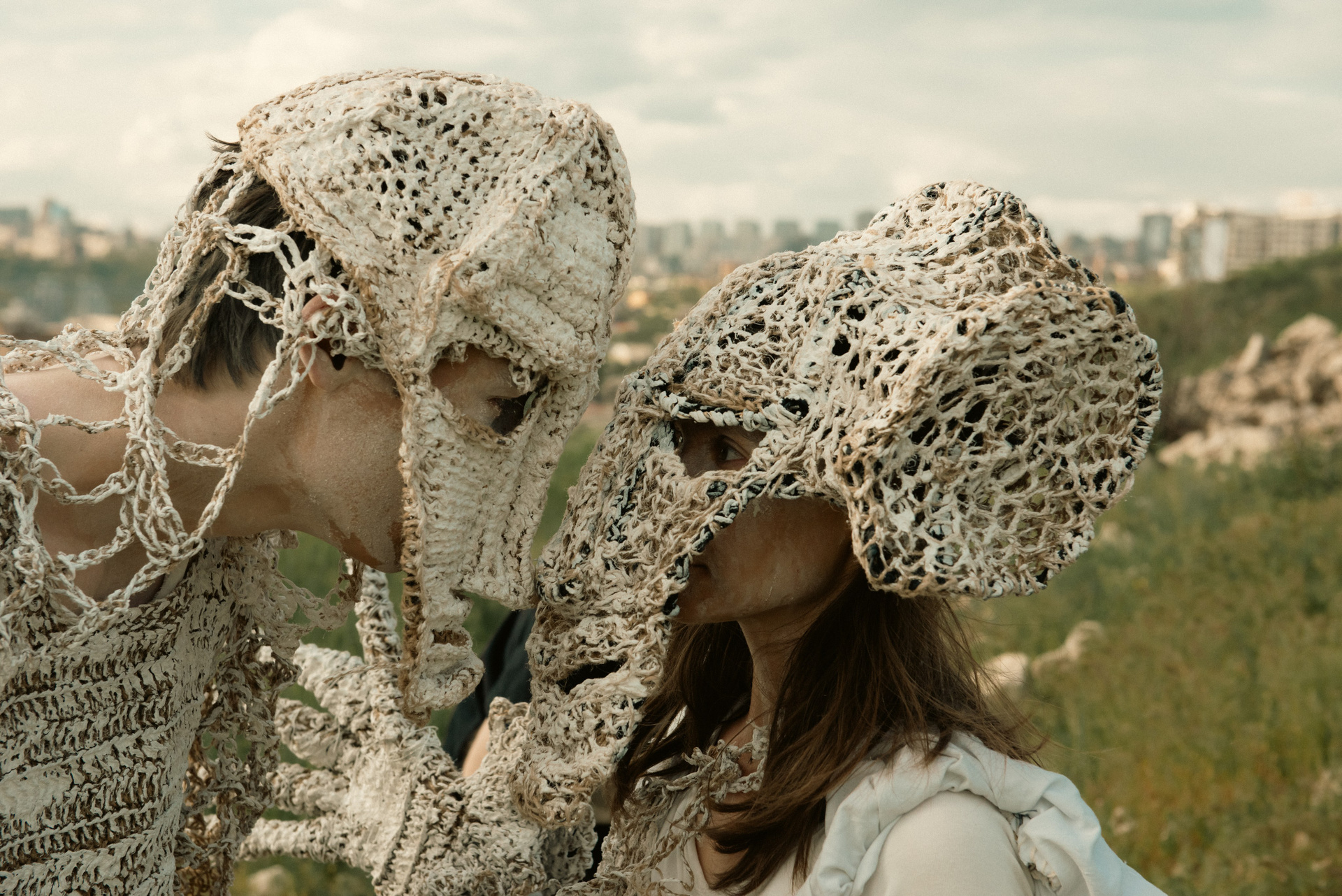
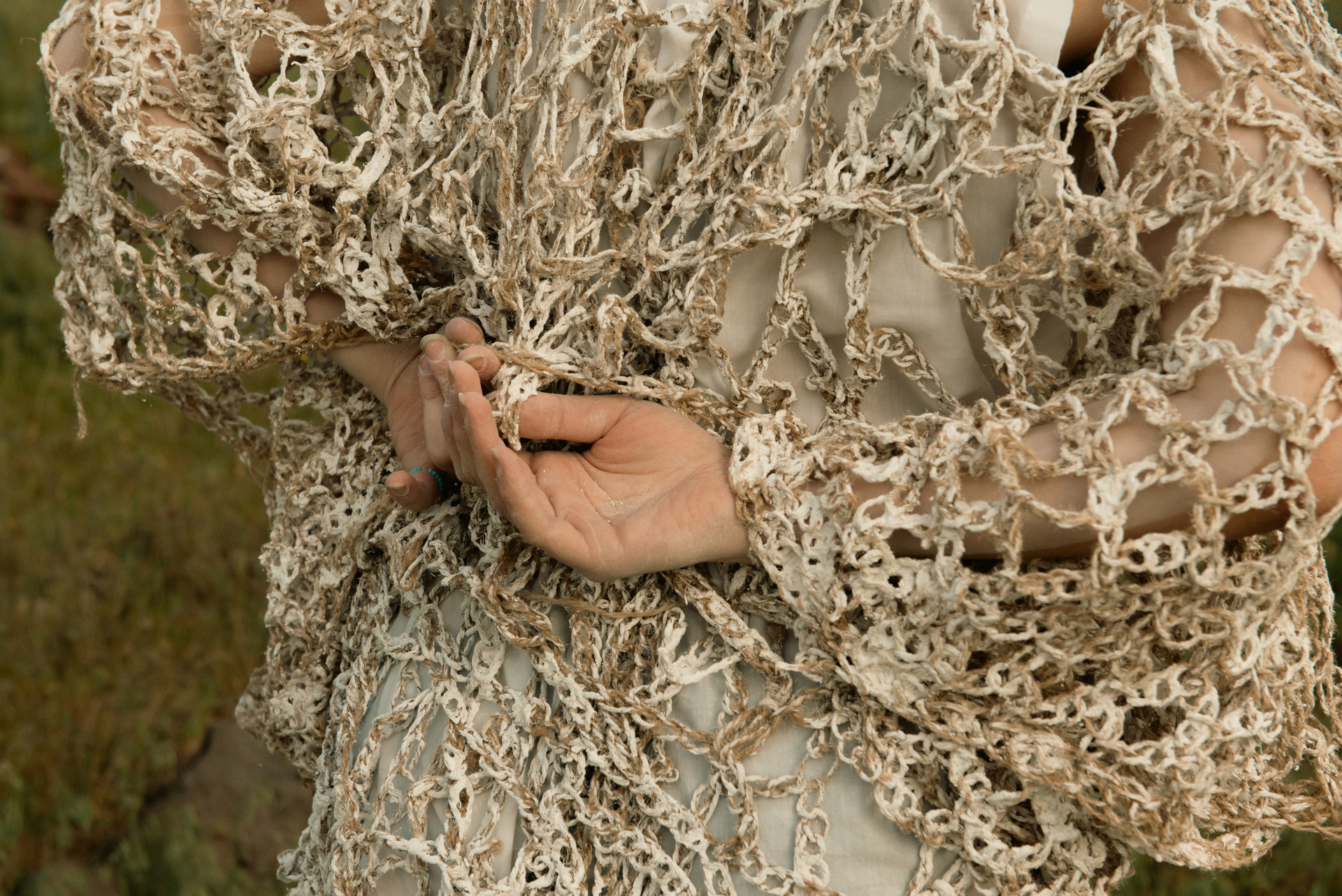
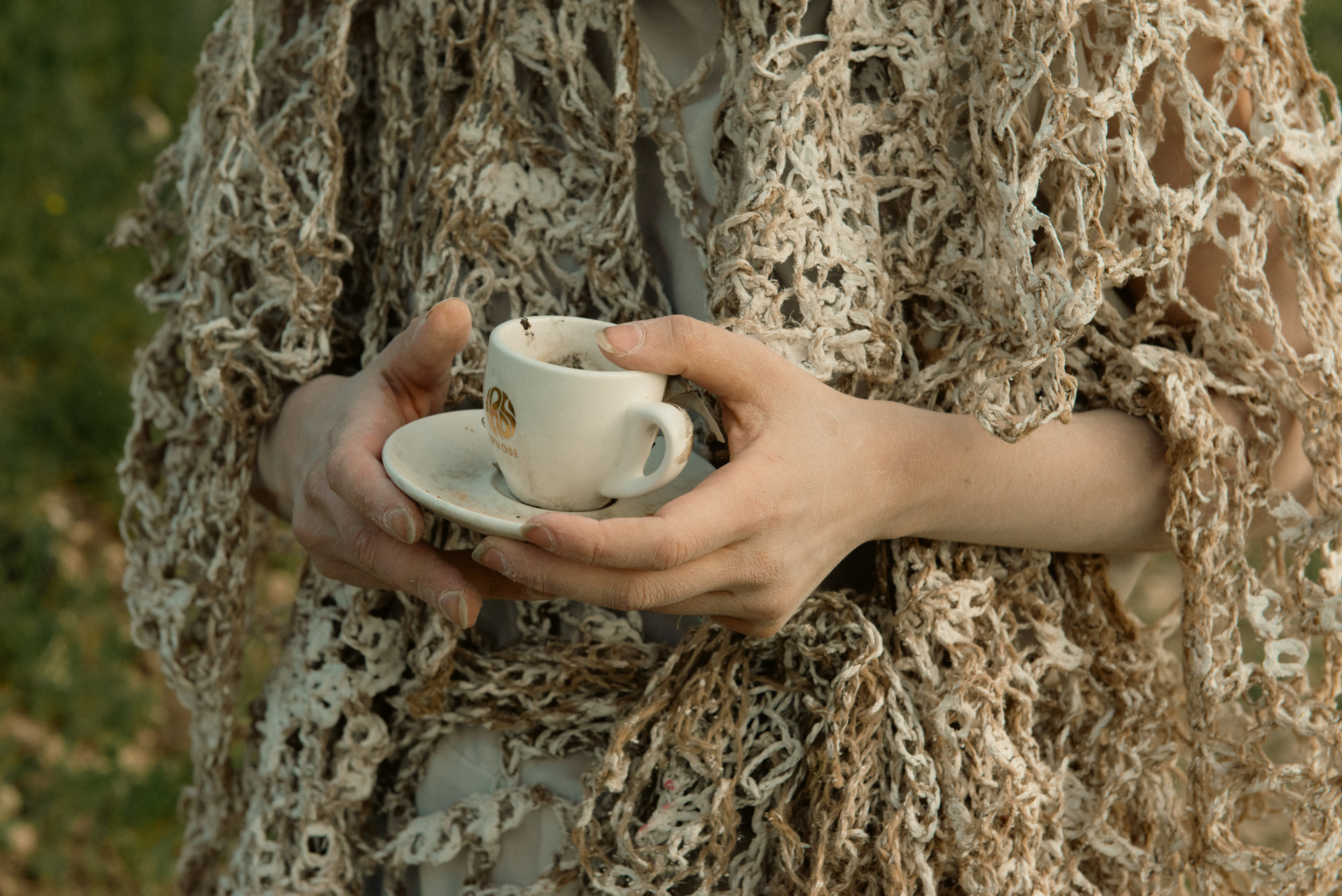
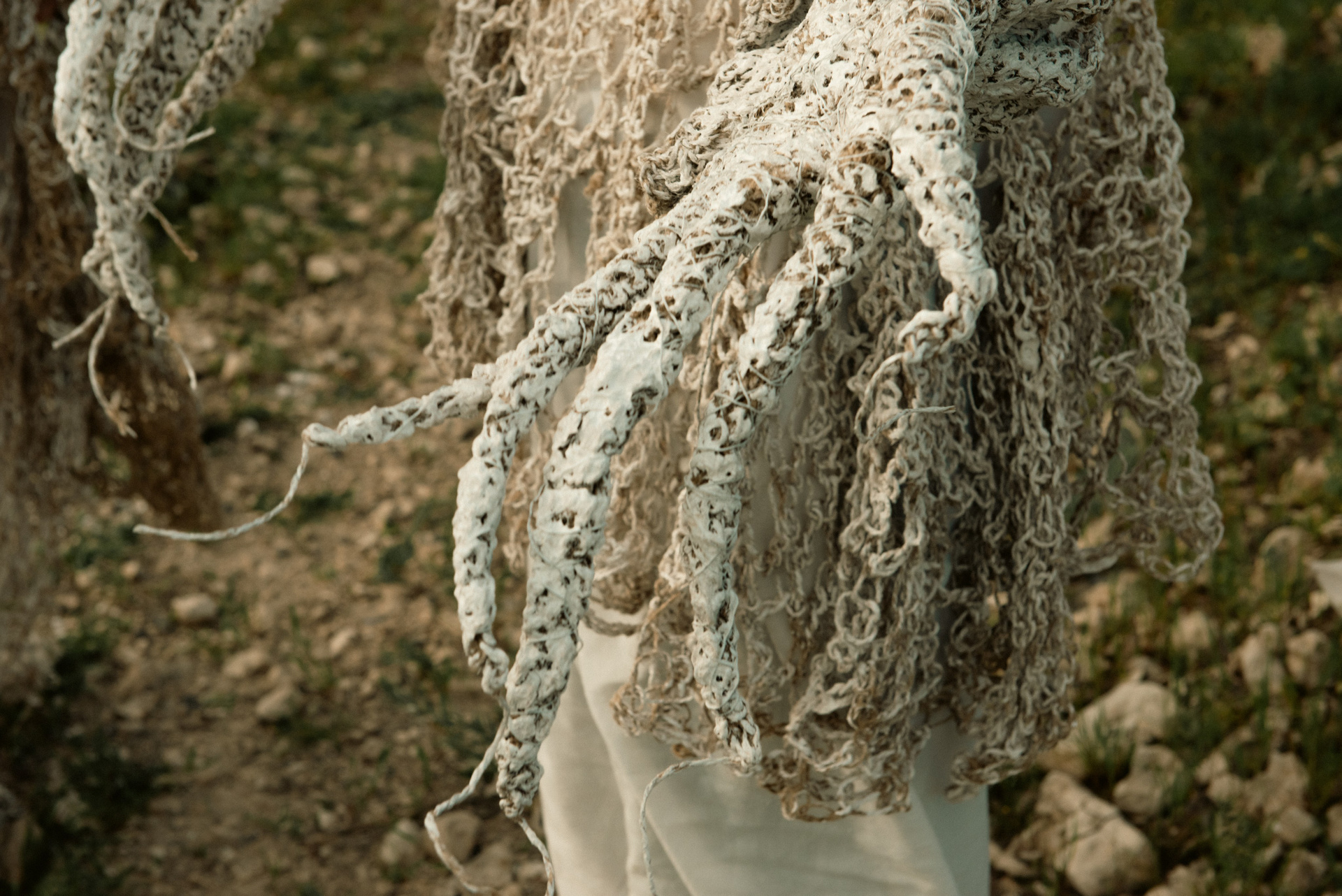
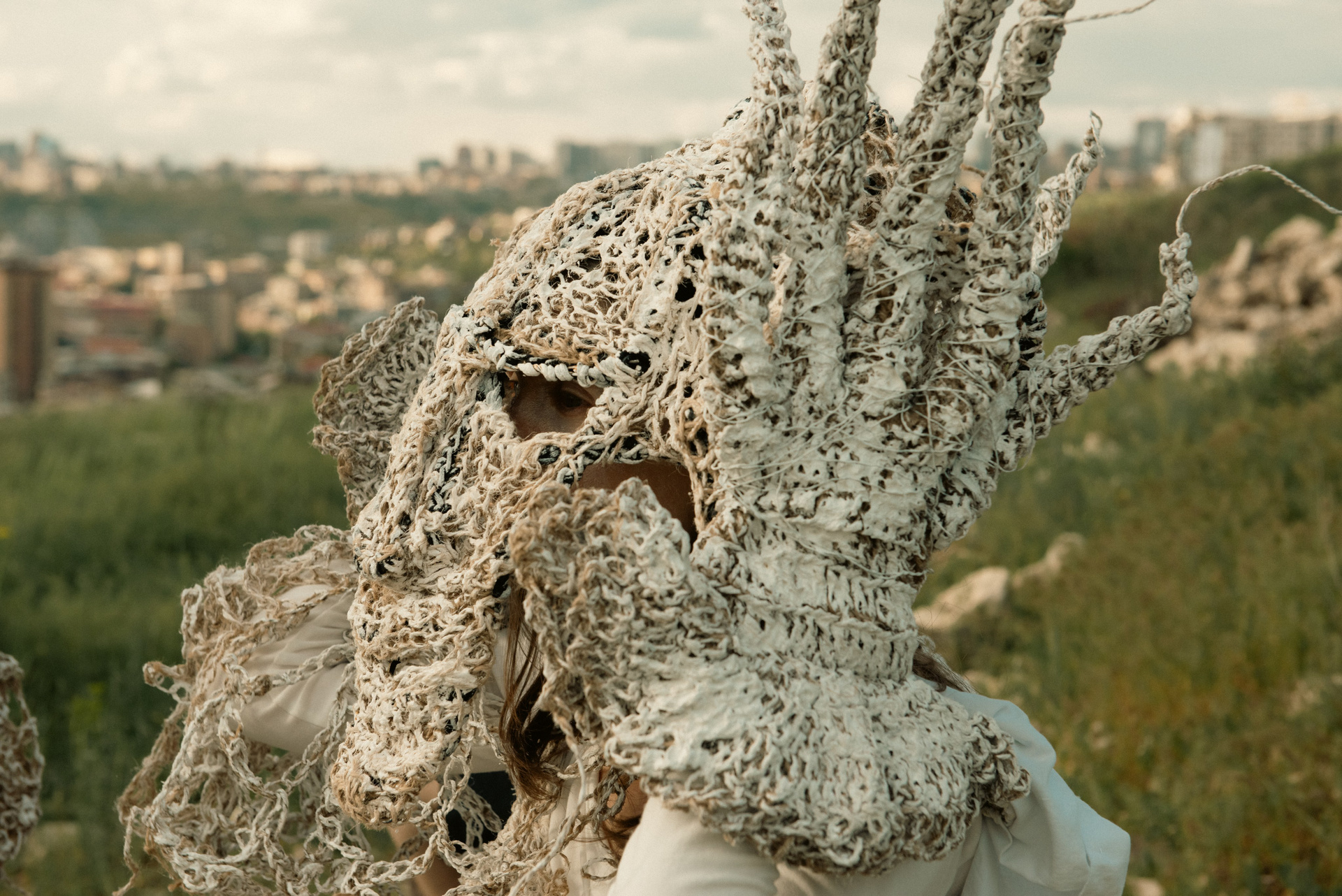
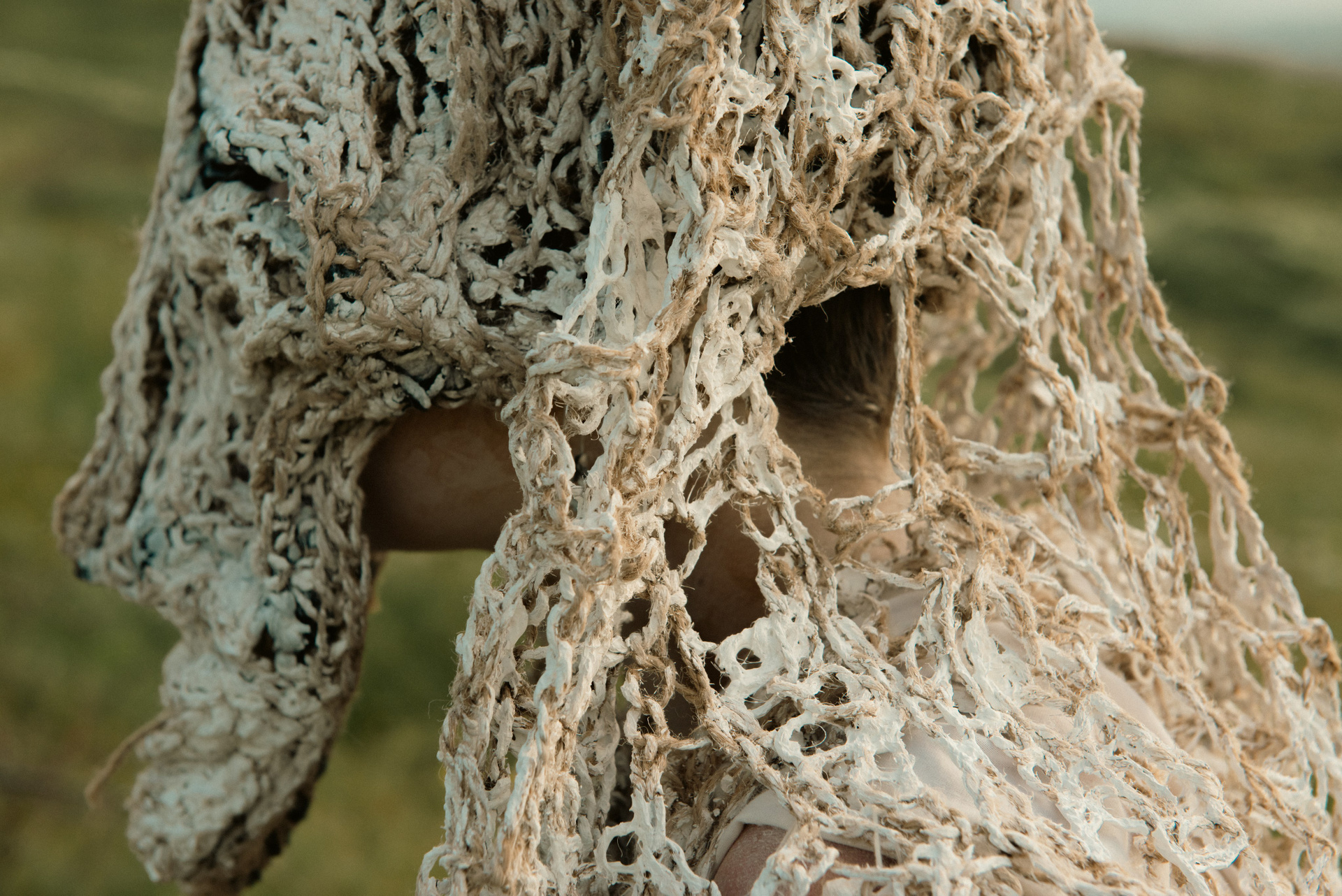
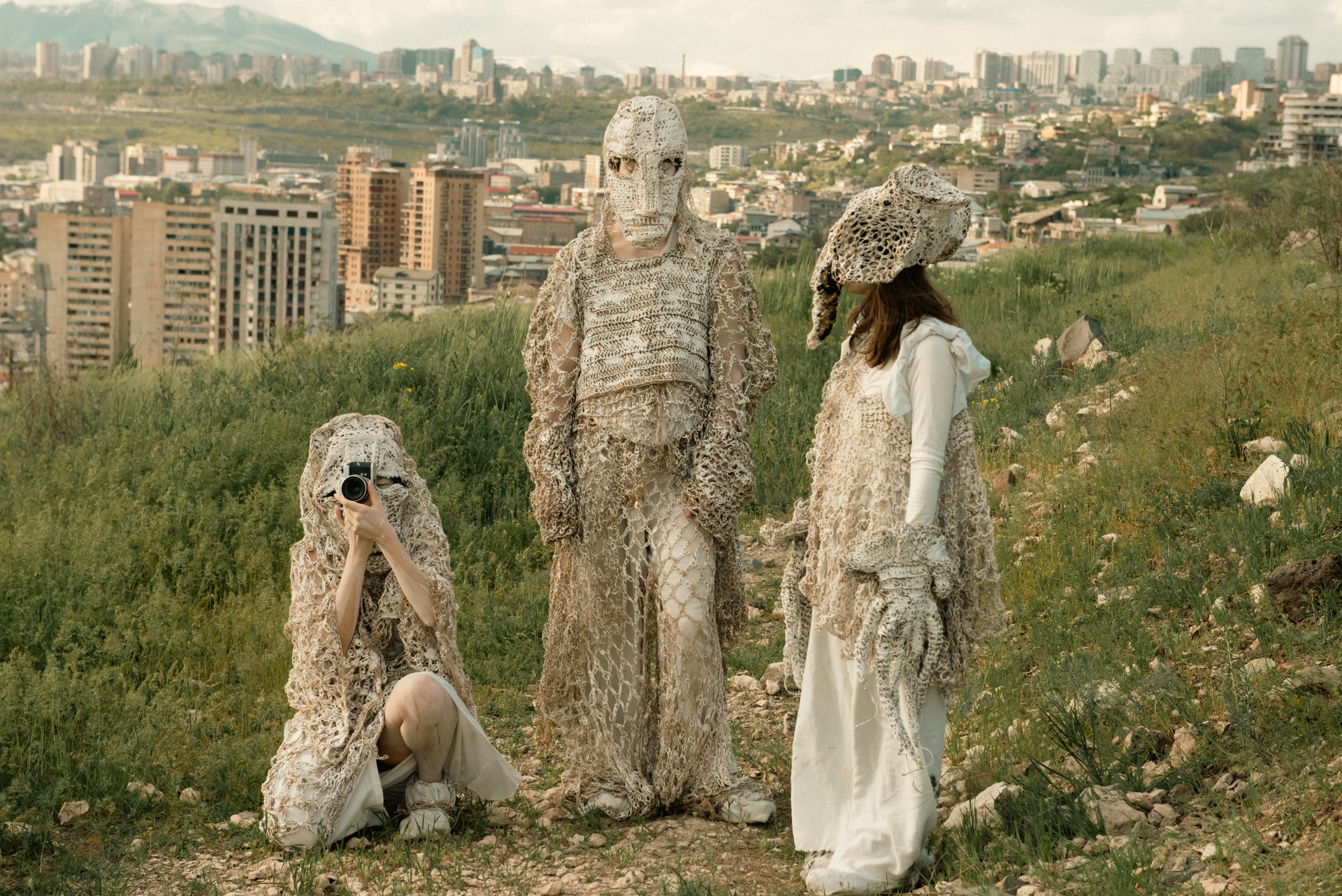
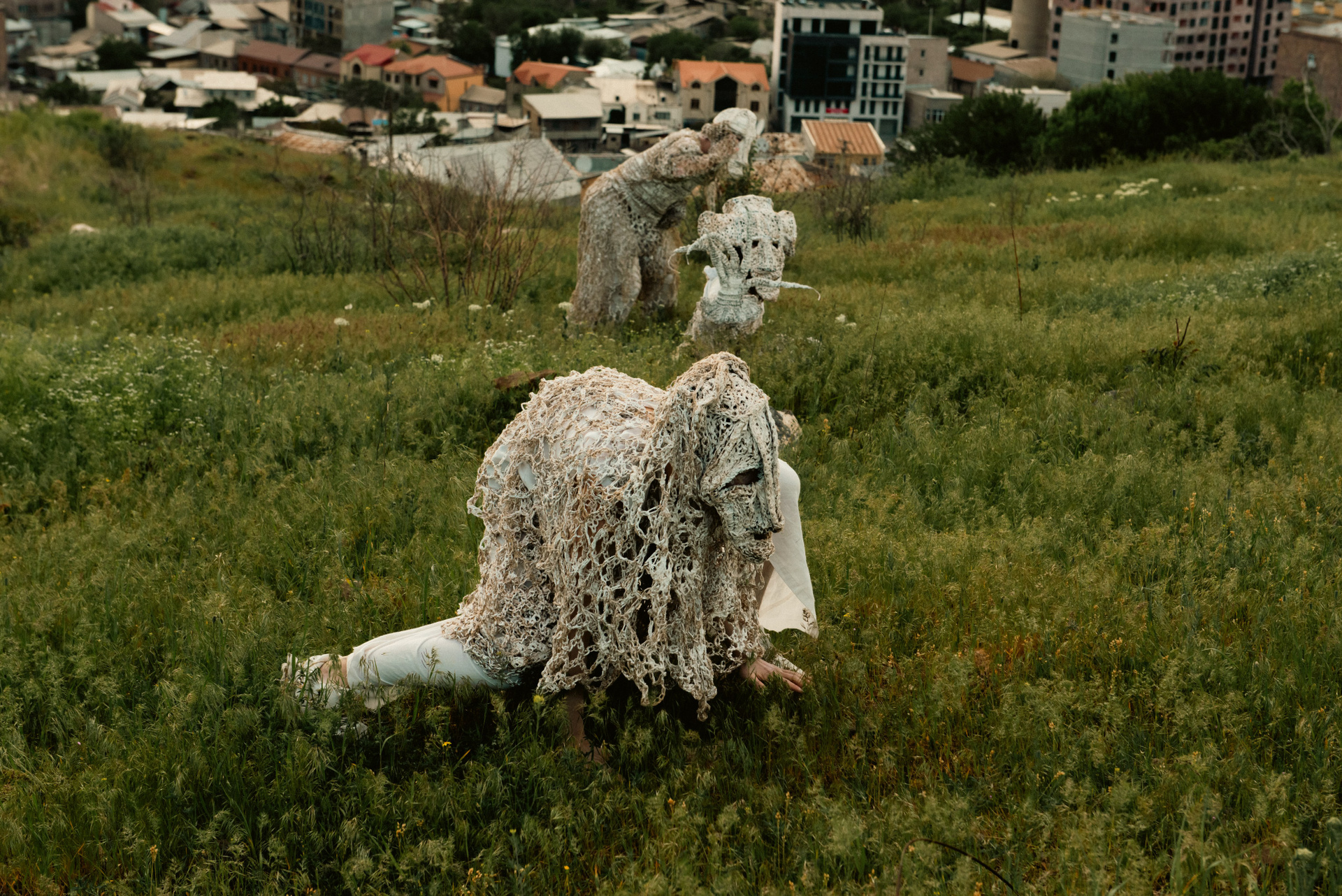
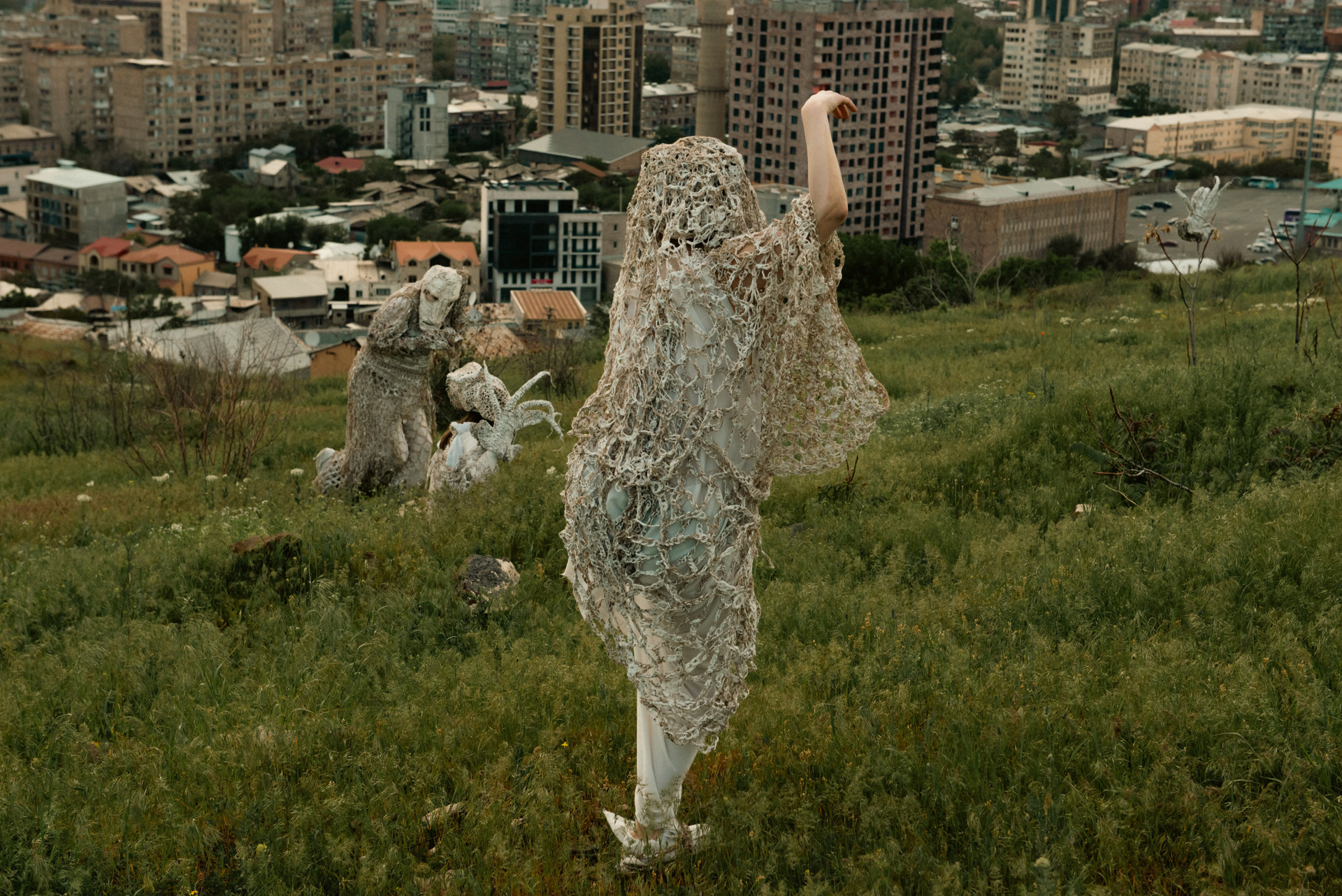
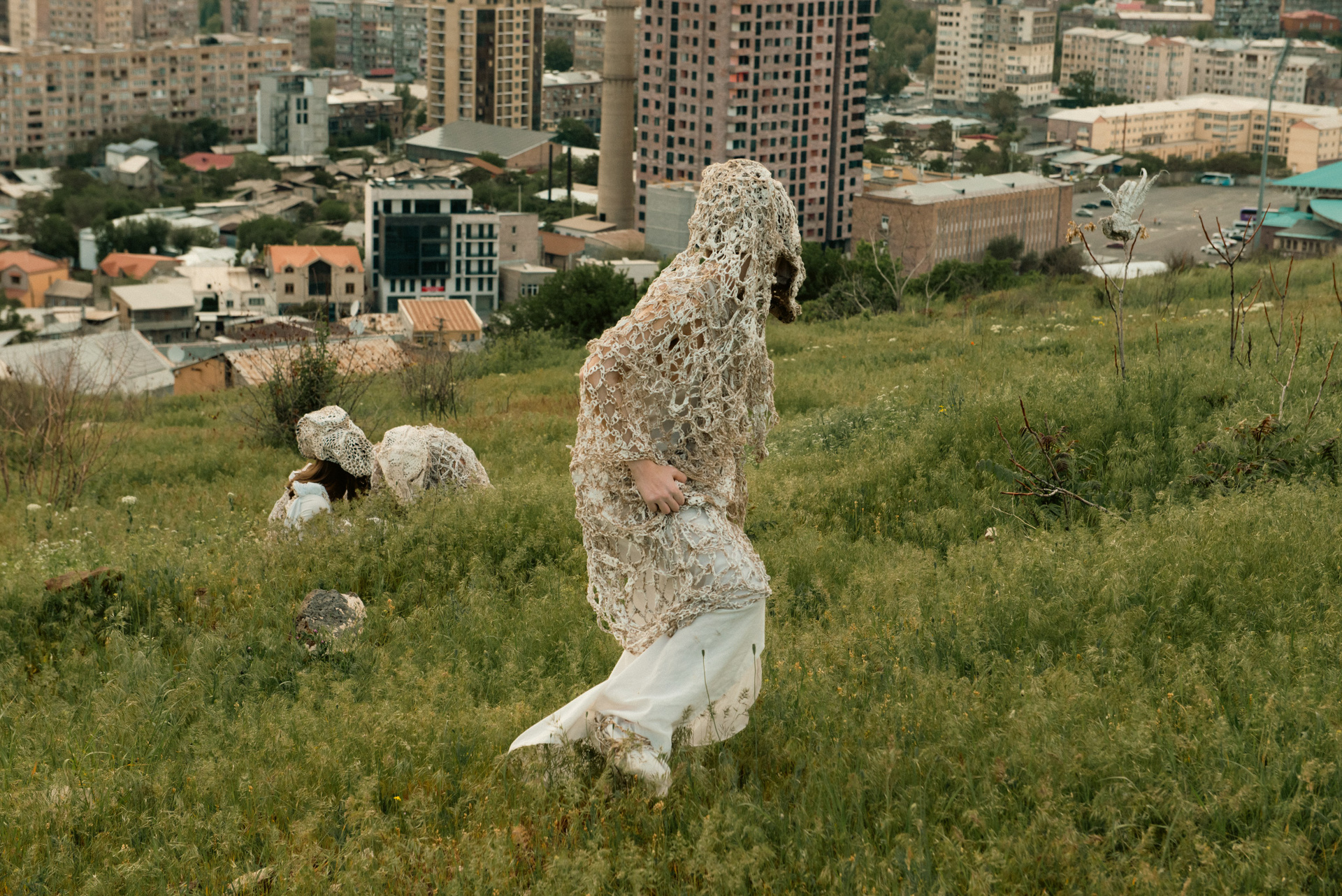
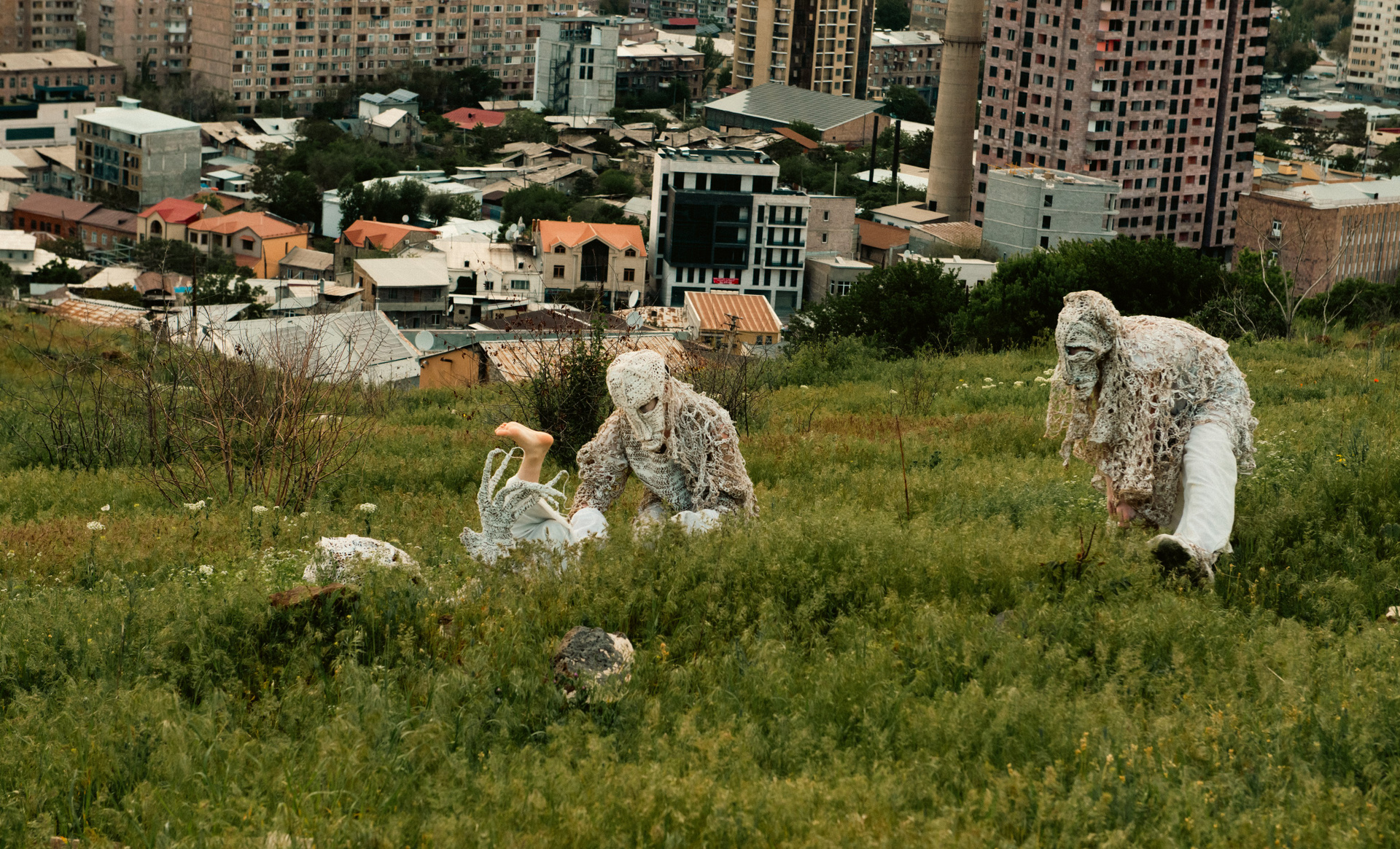
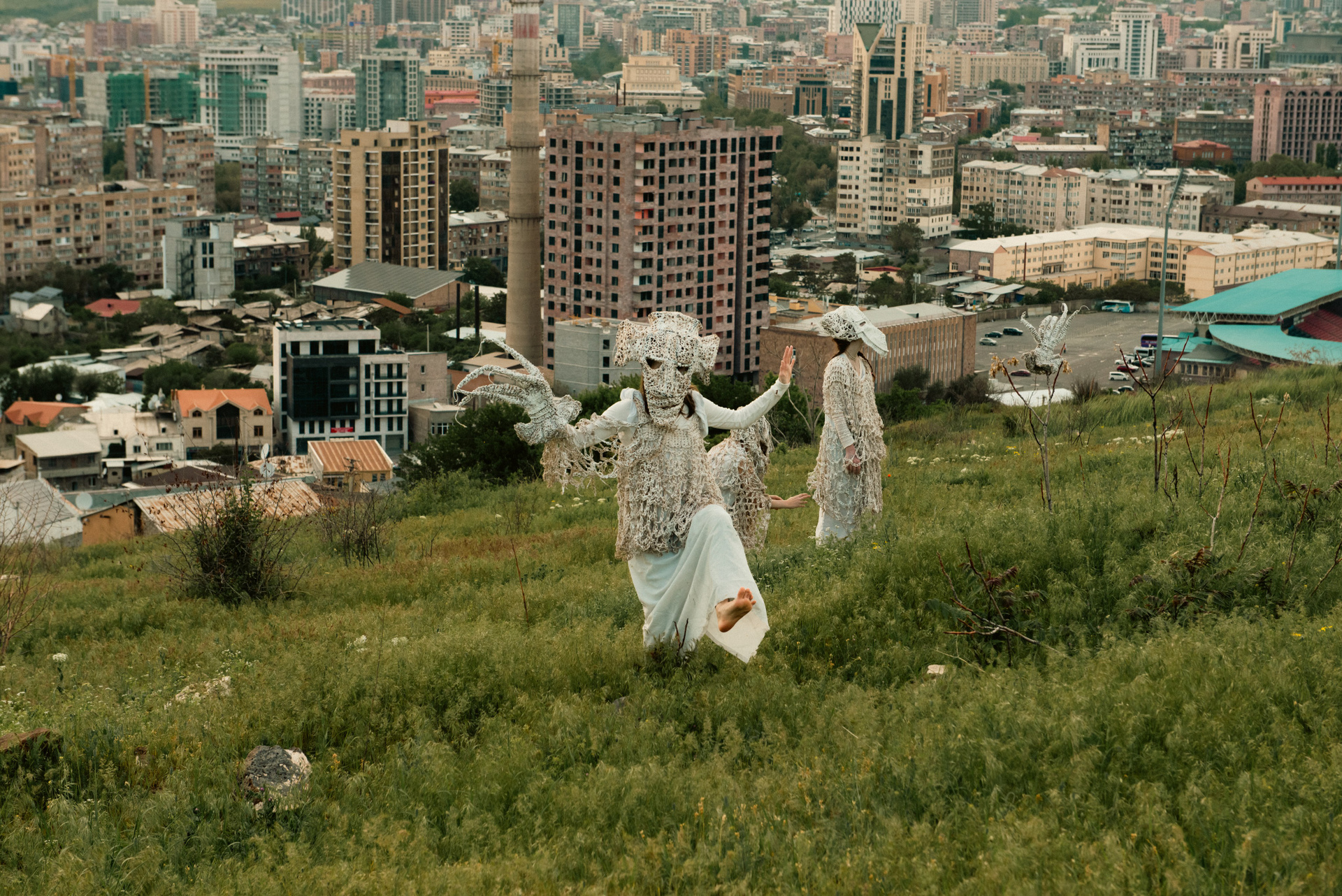
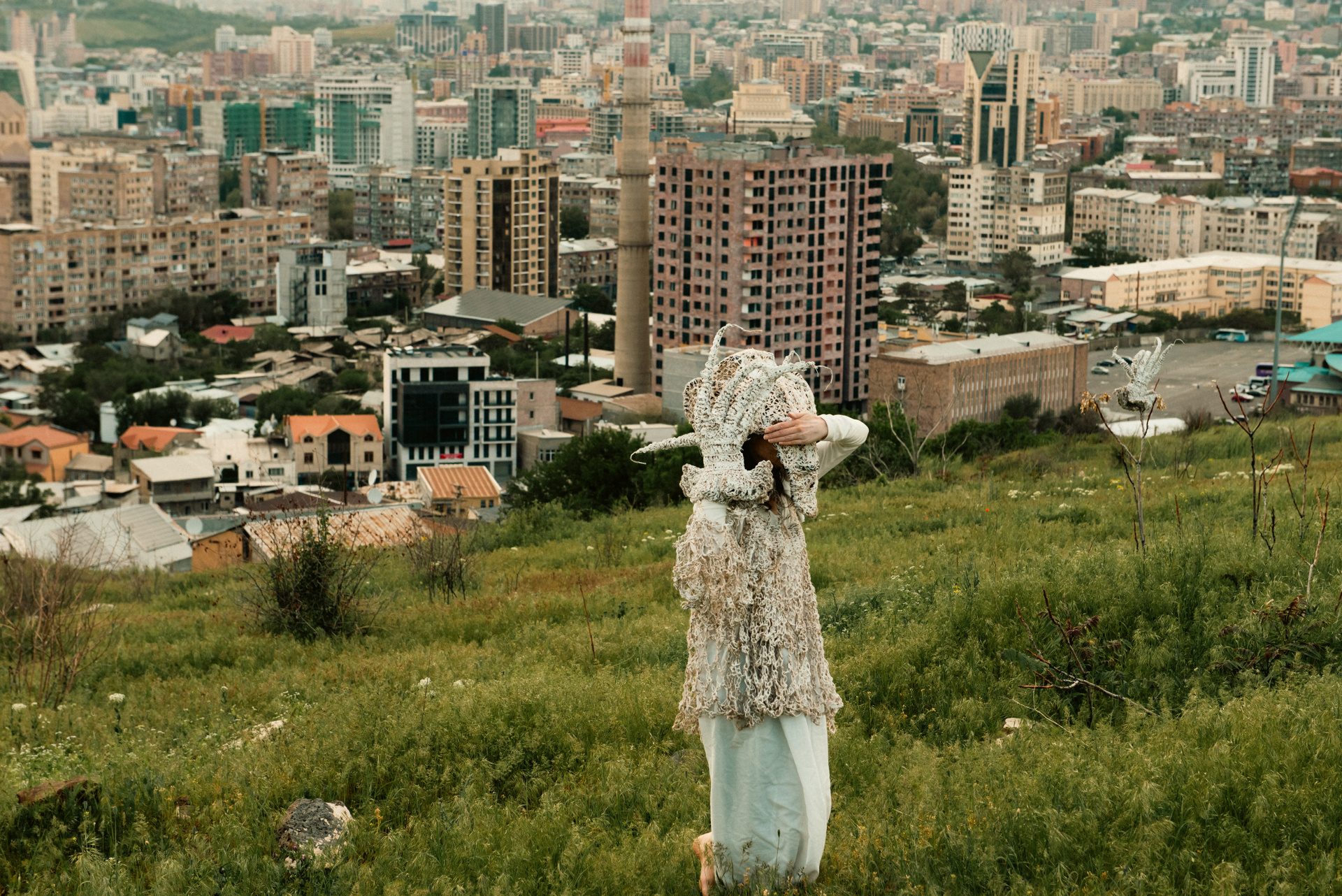
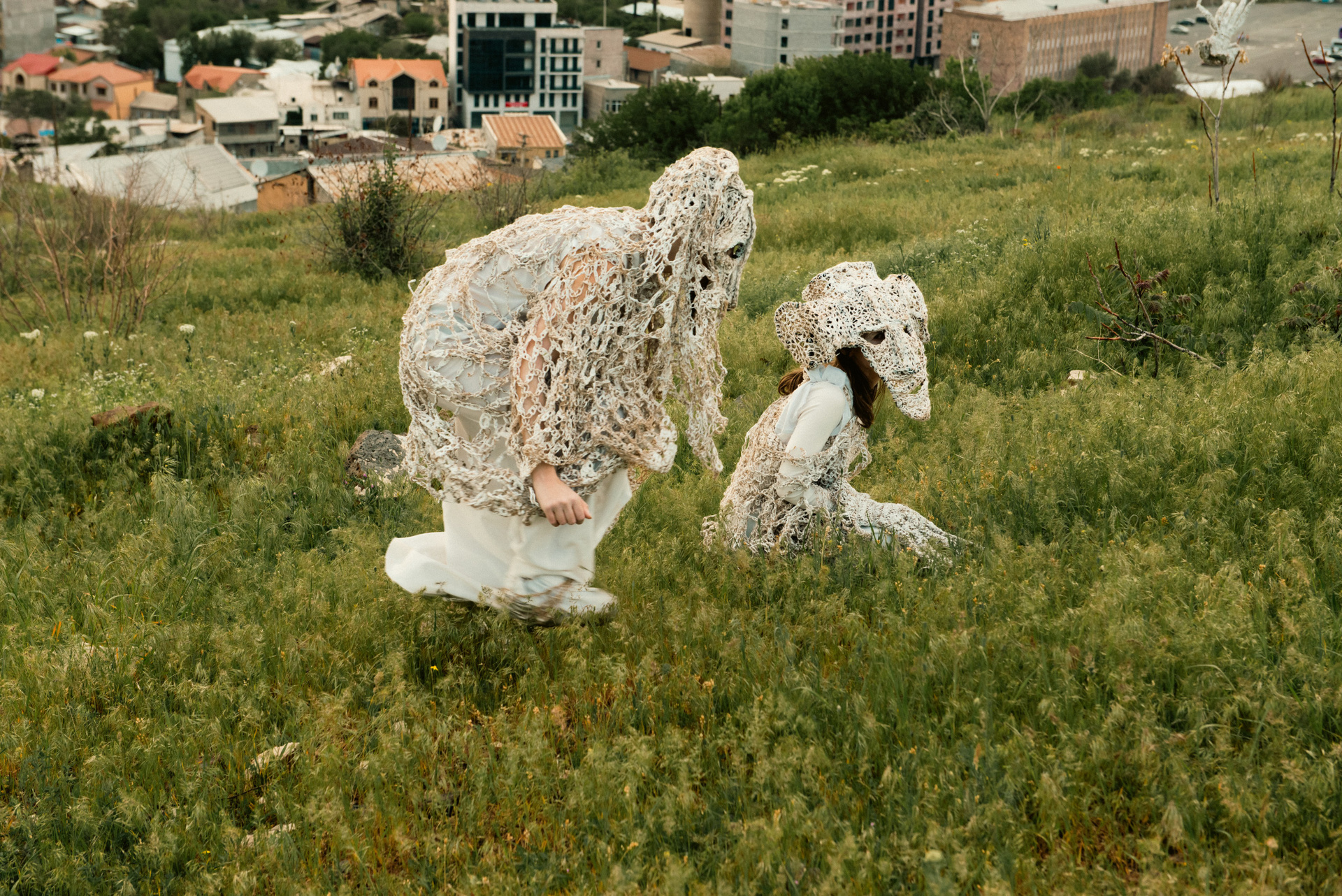
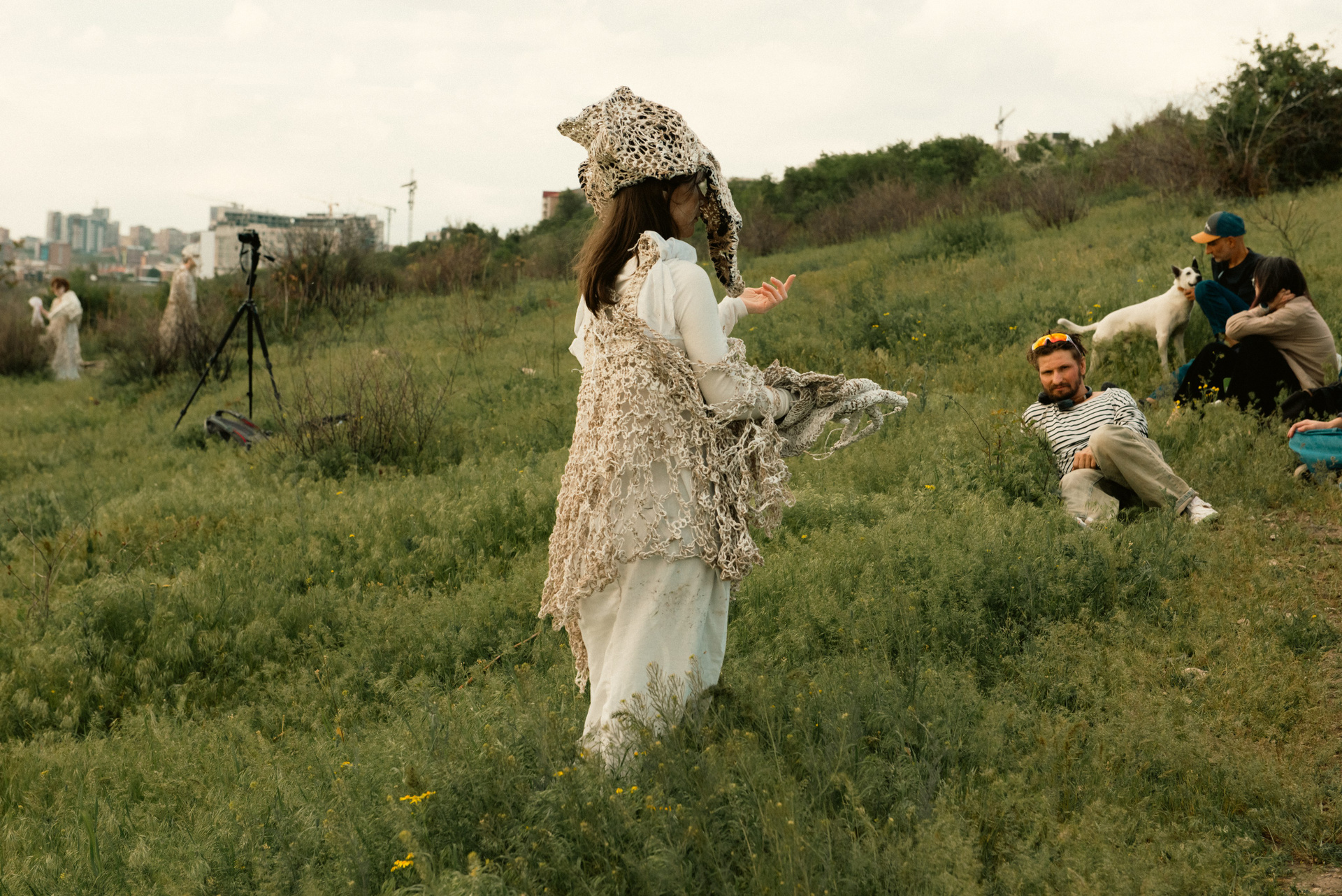
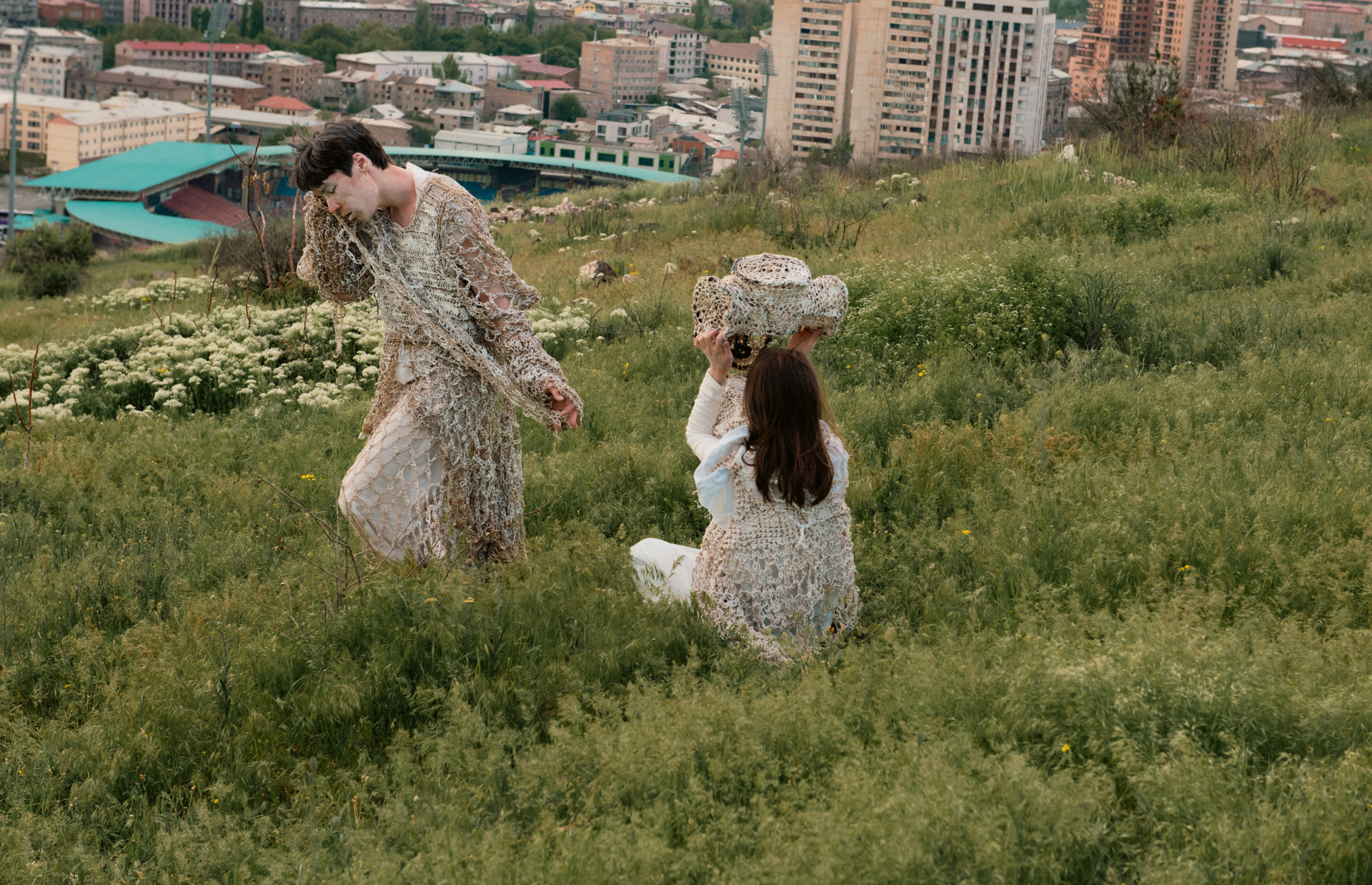
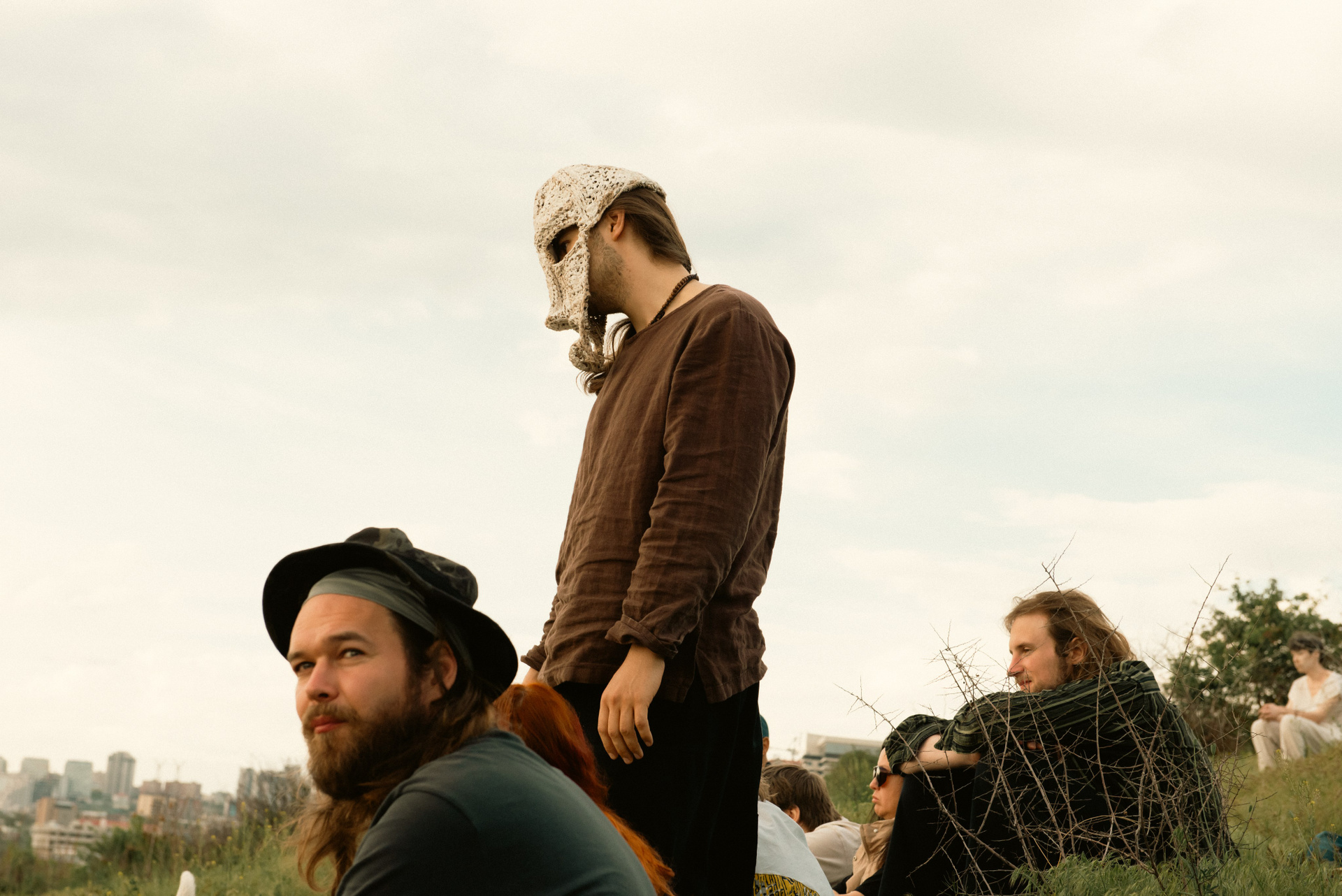
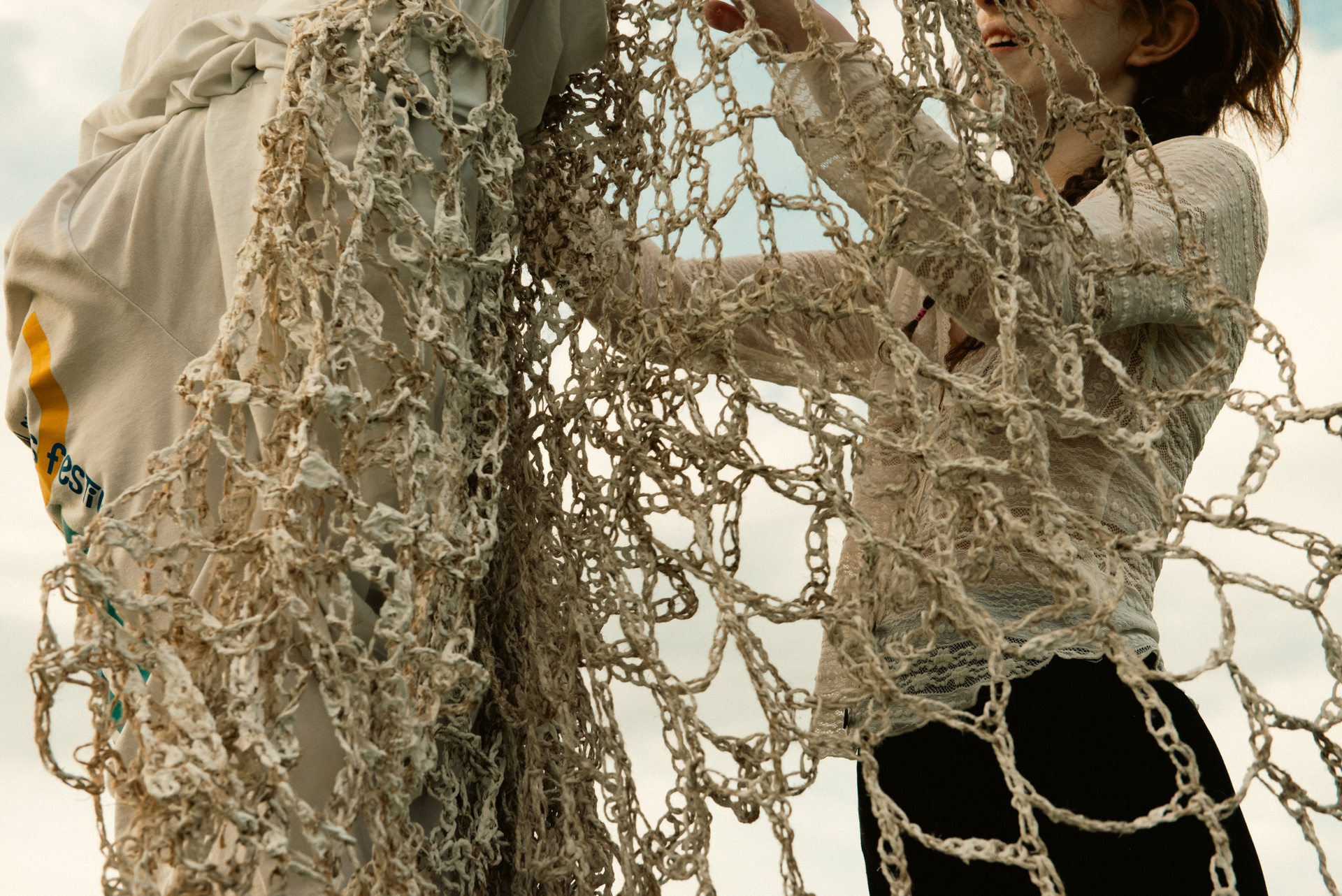
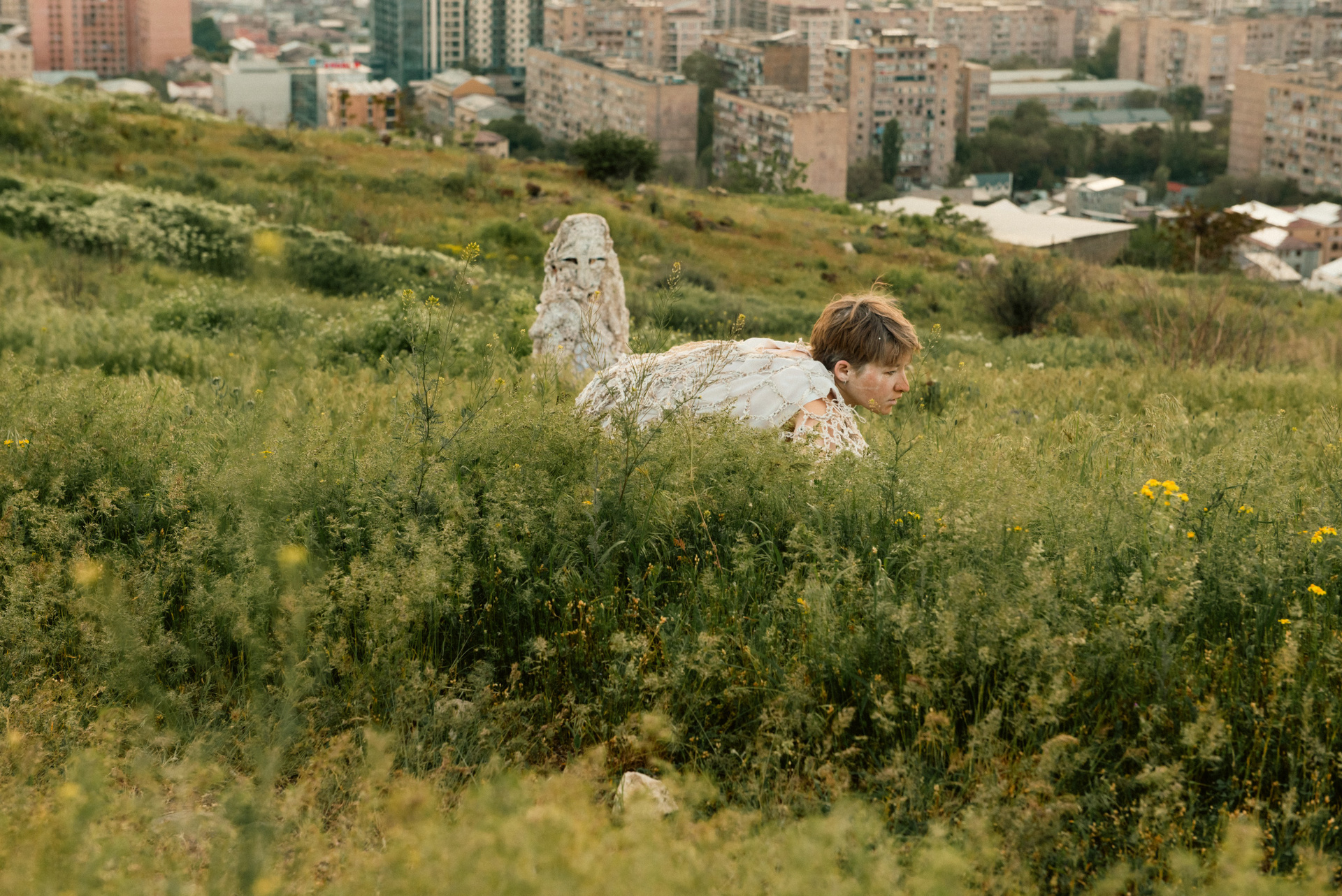
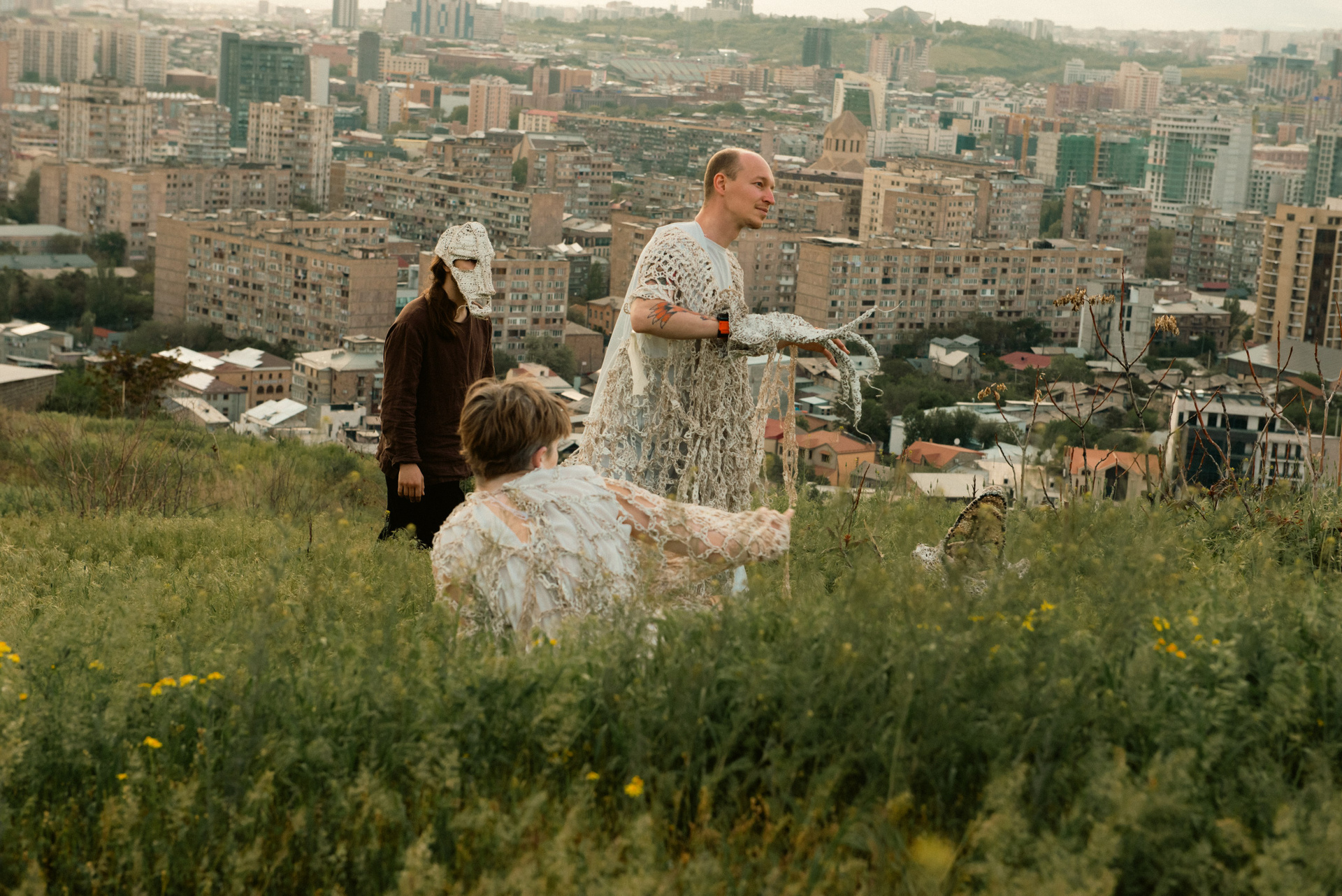
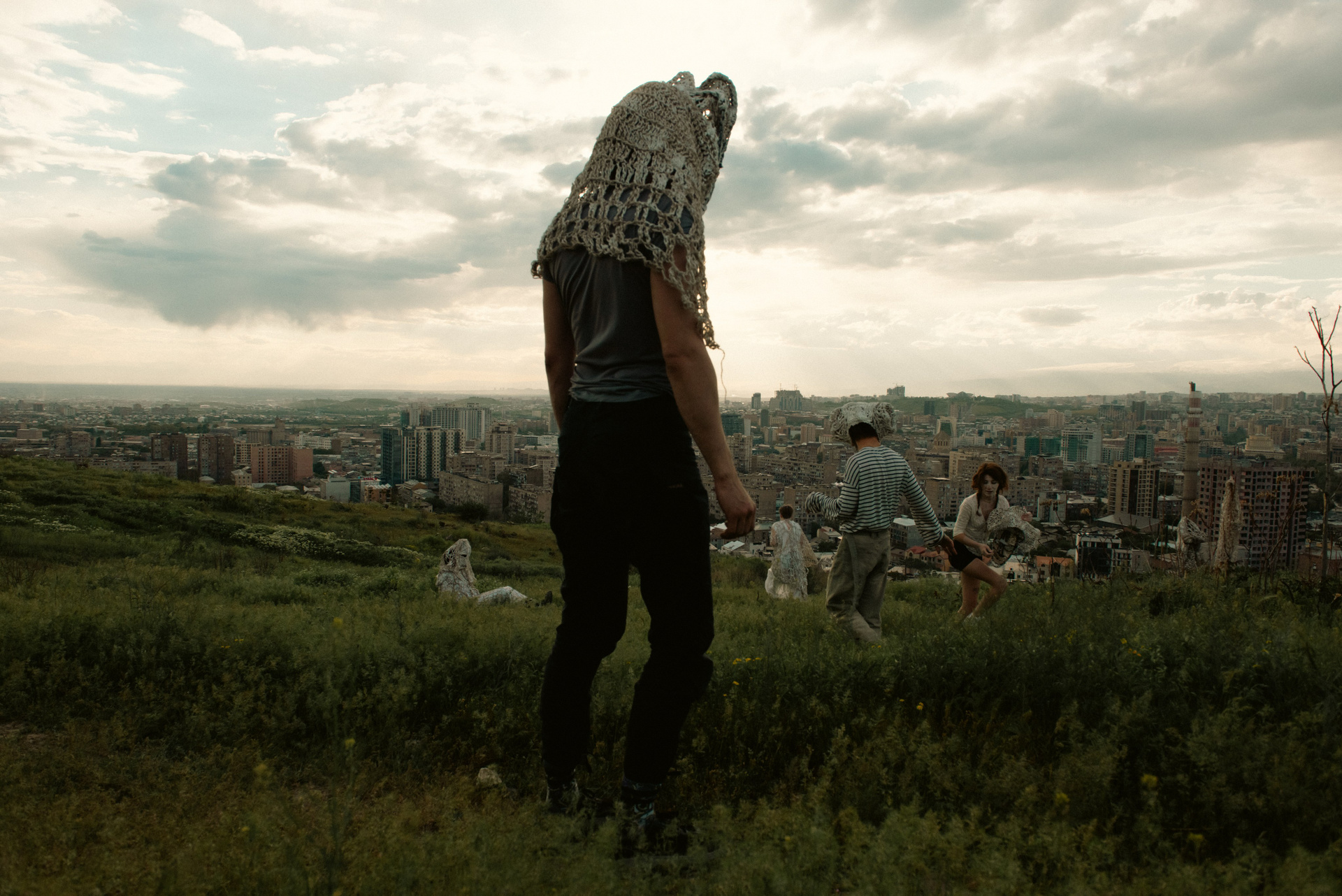
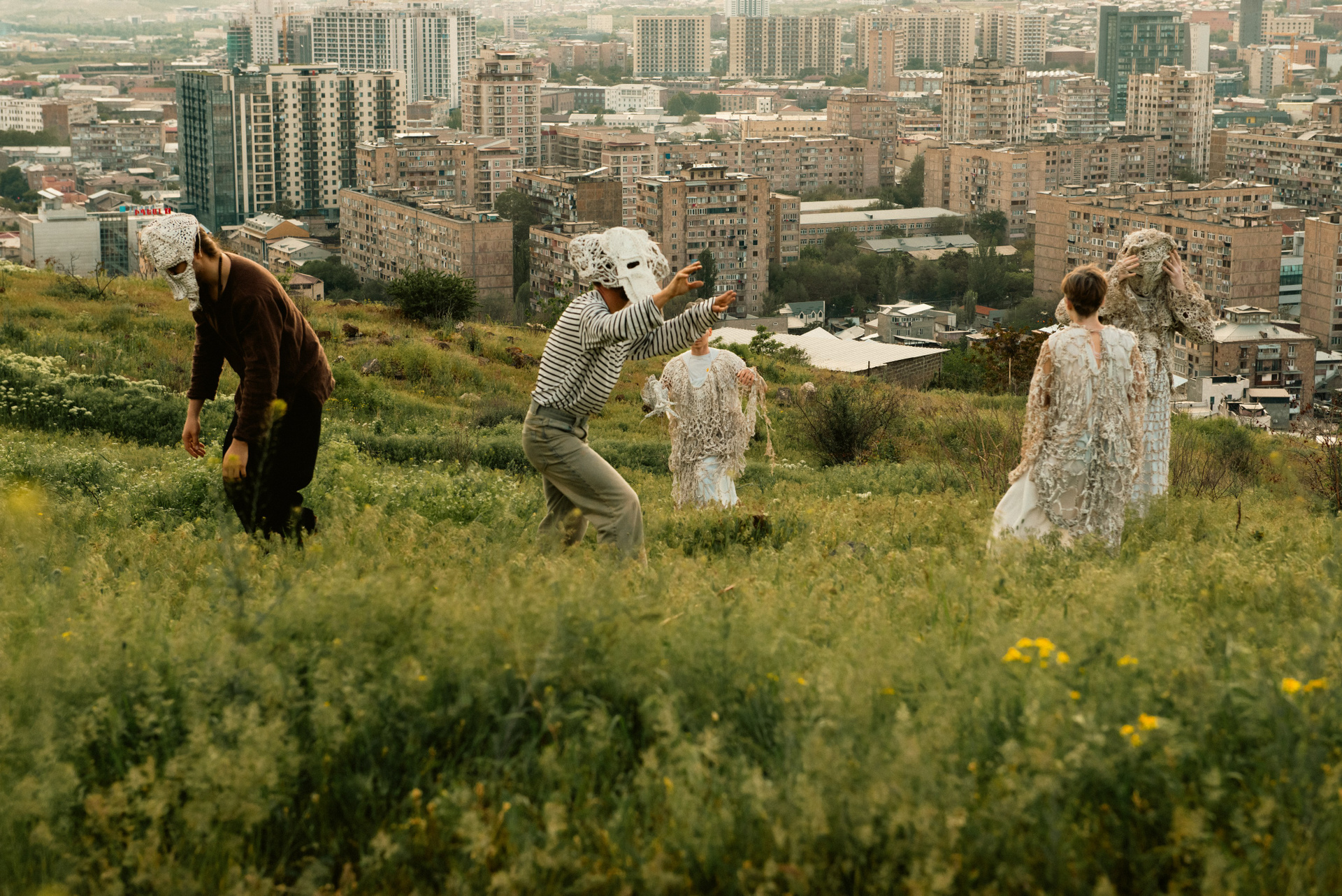
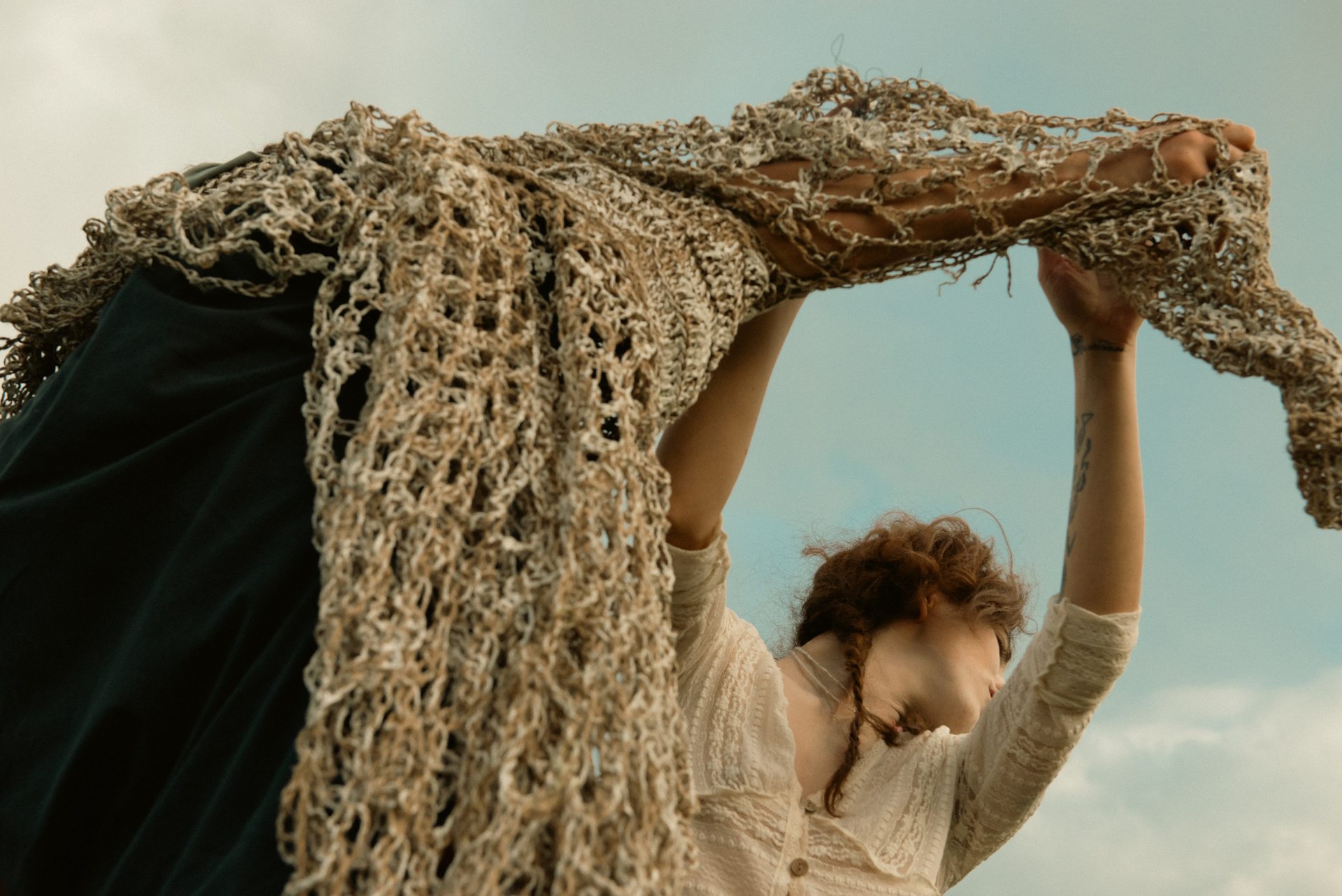
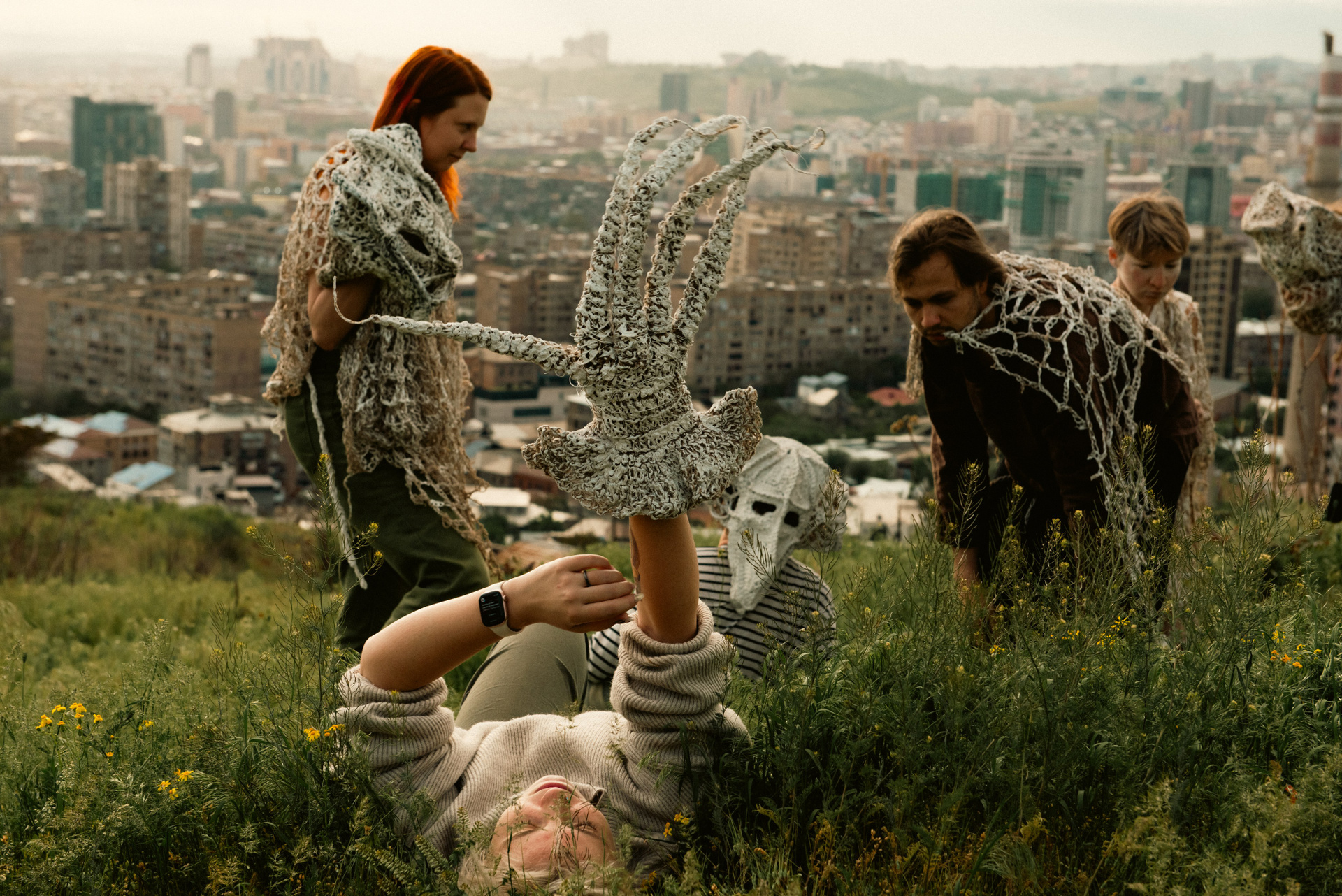
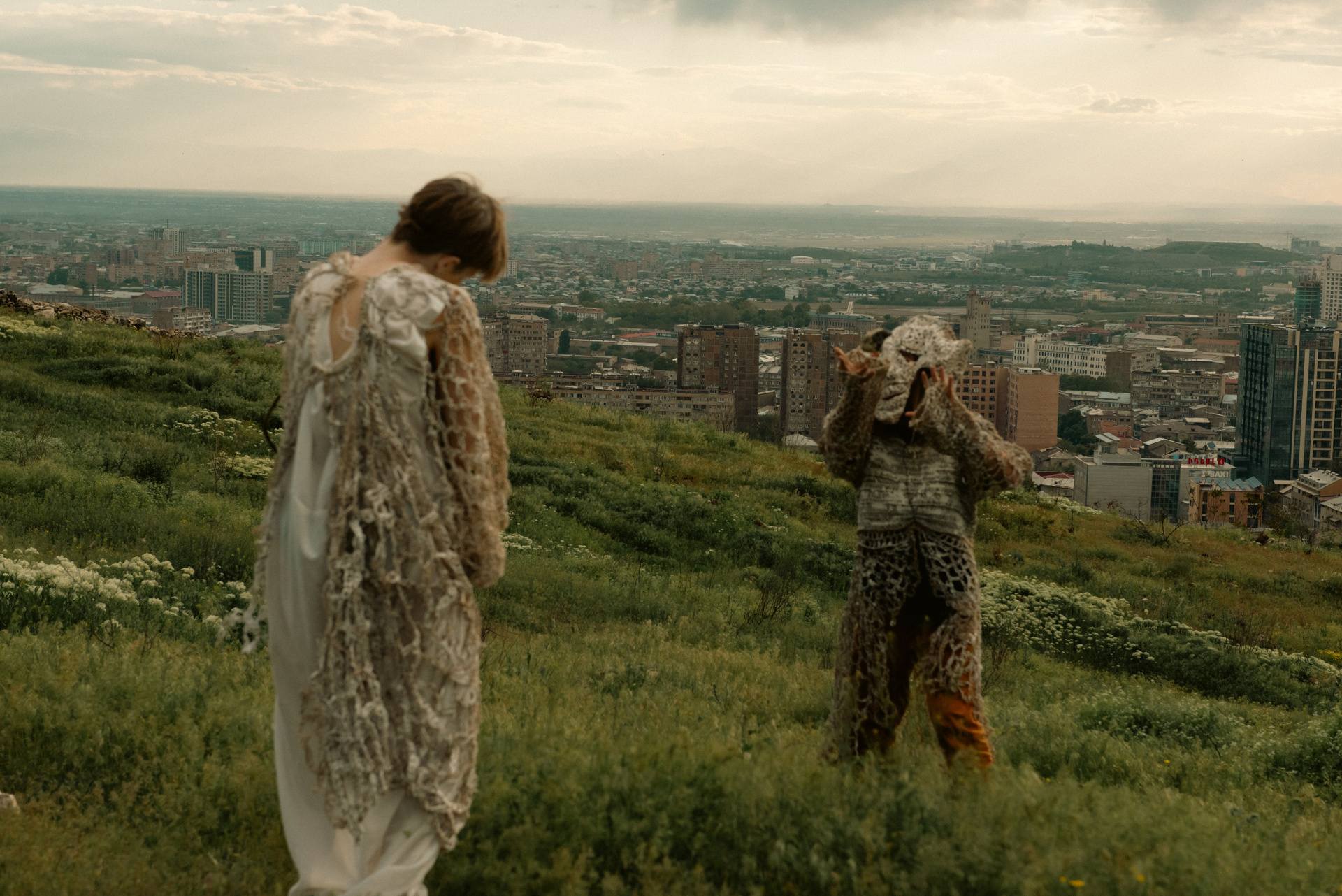
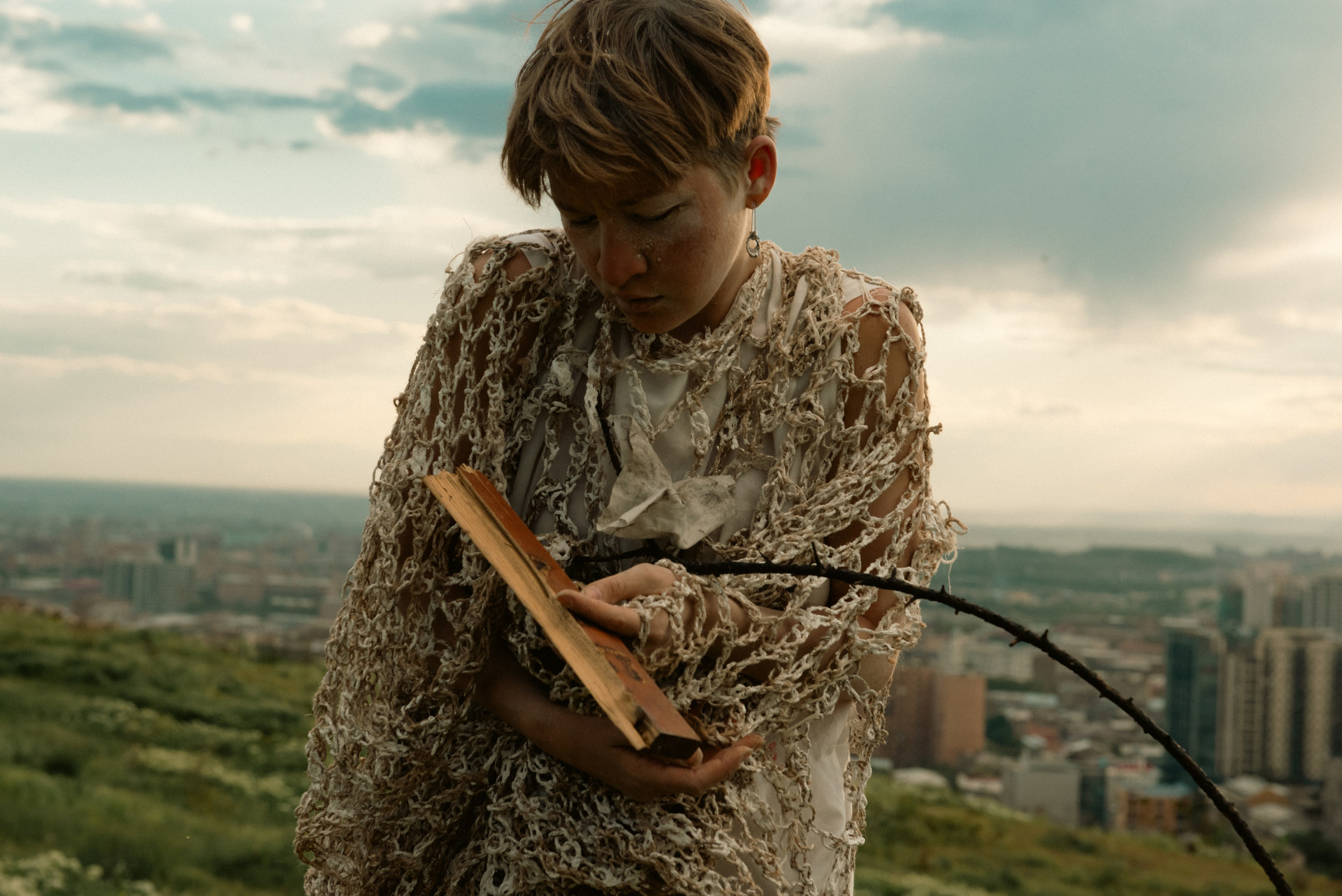
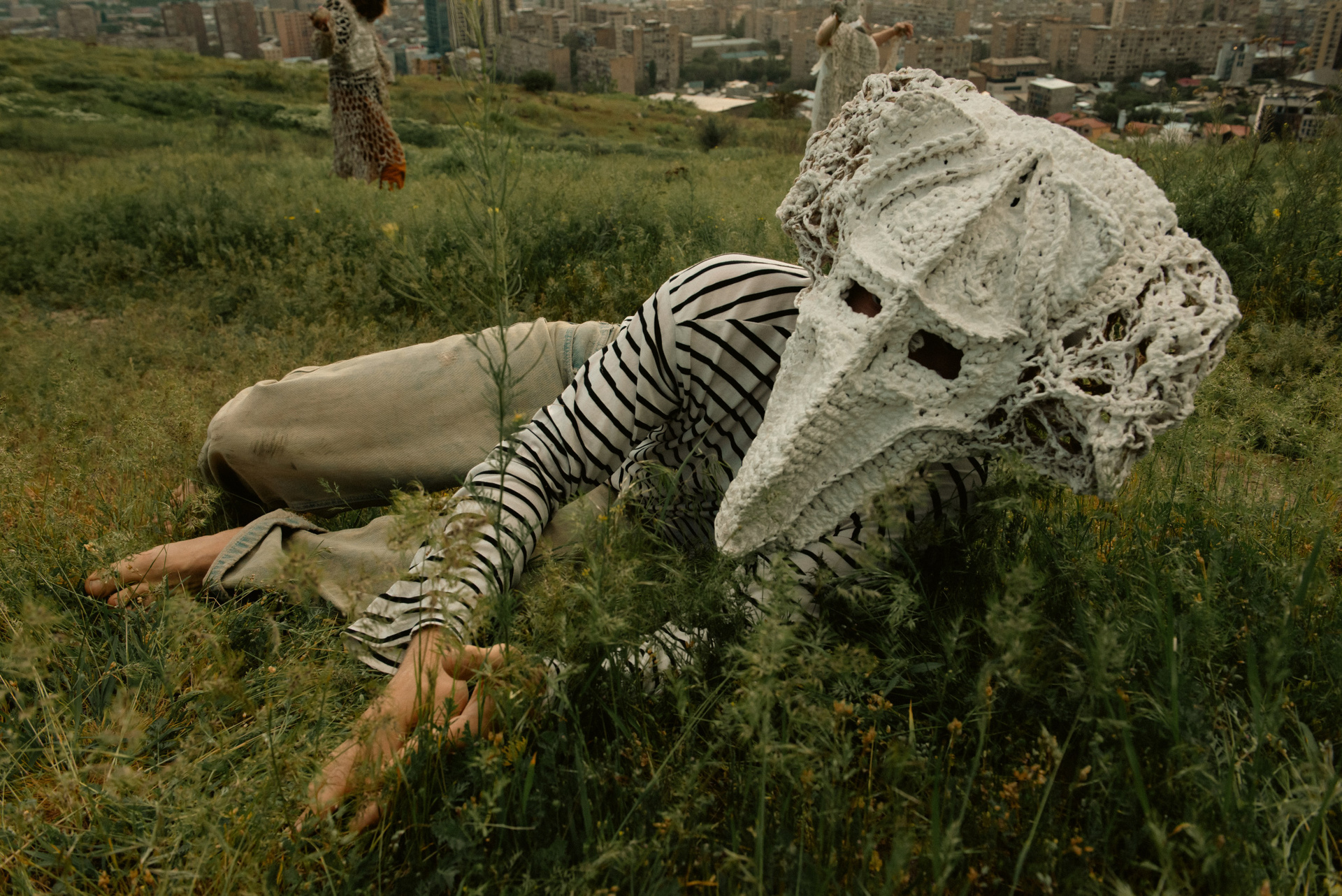
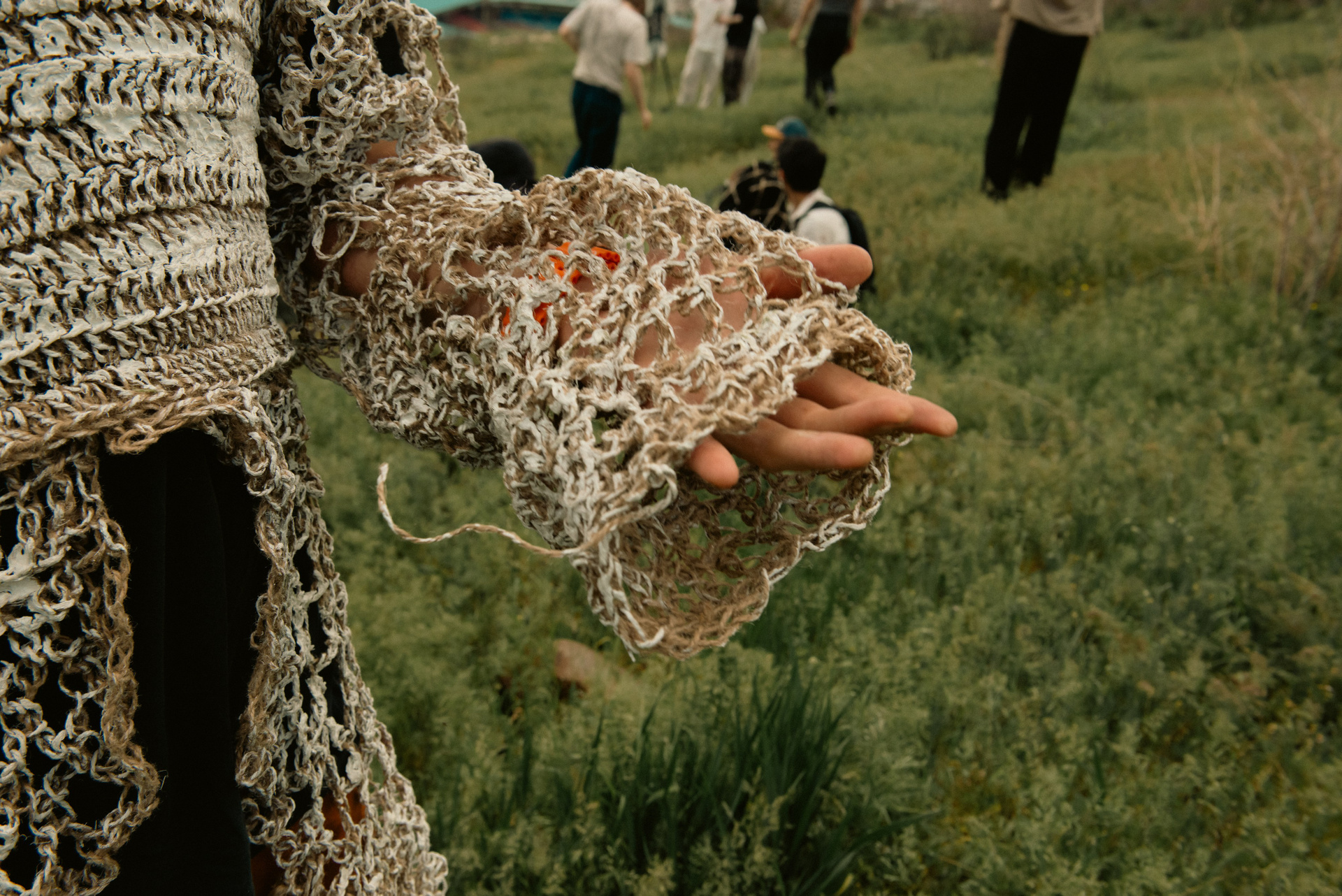
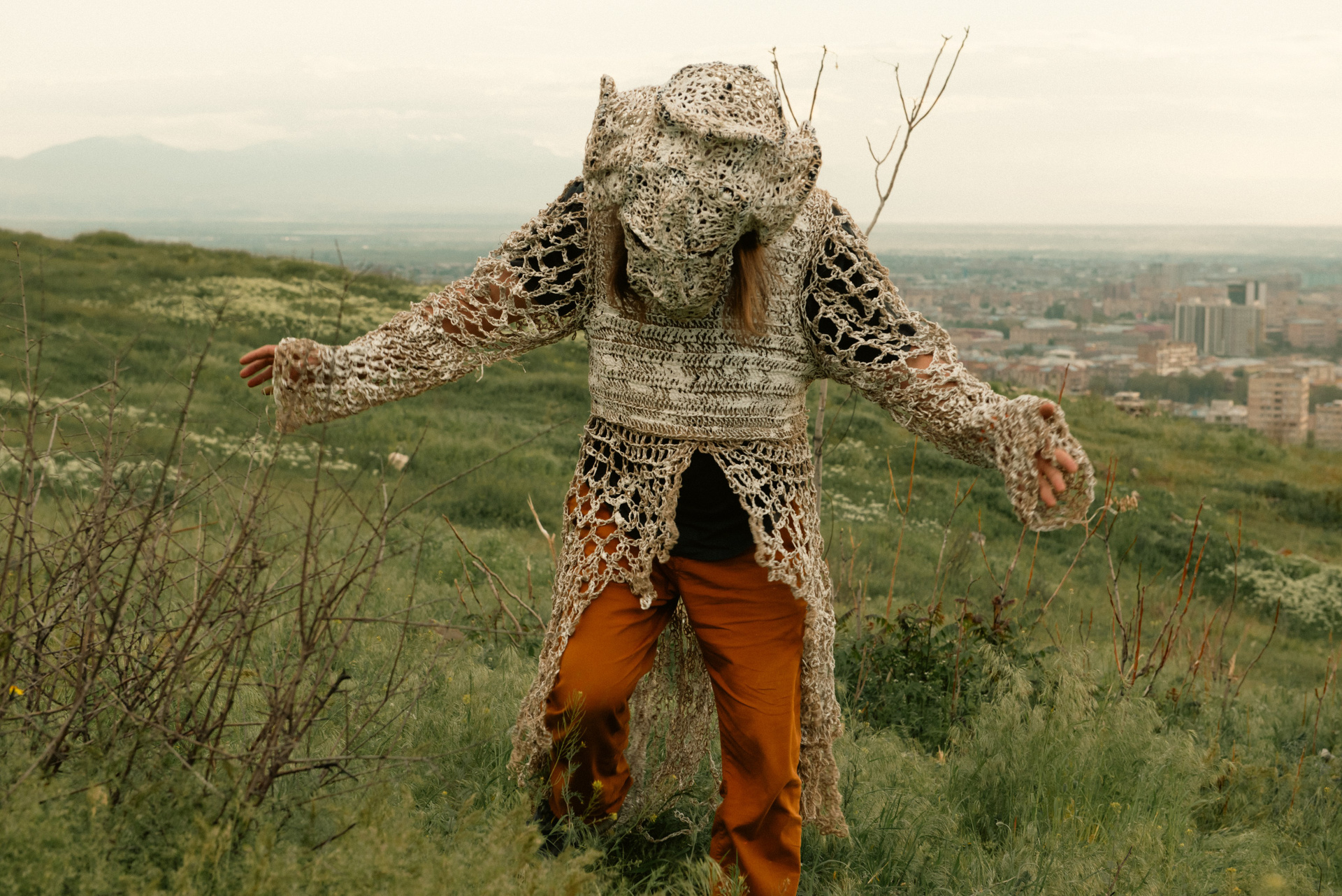
- The costumes were created within the Aramazd project by artist Maria Kutuzova during a residency at NPAK in Armenia in 2025, near the border with Turkey.
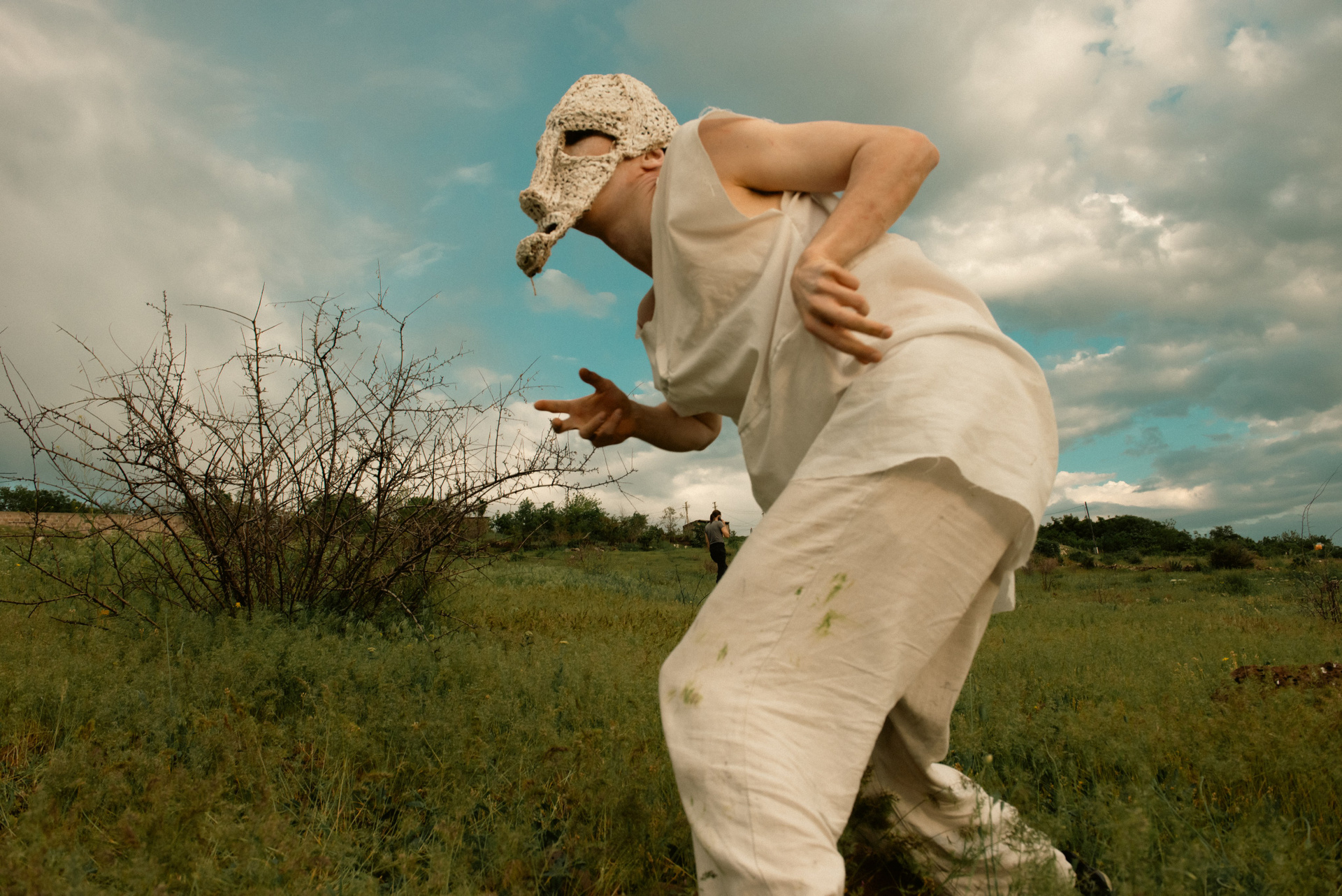
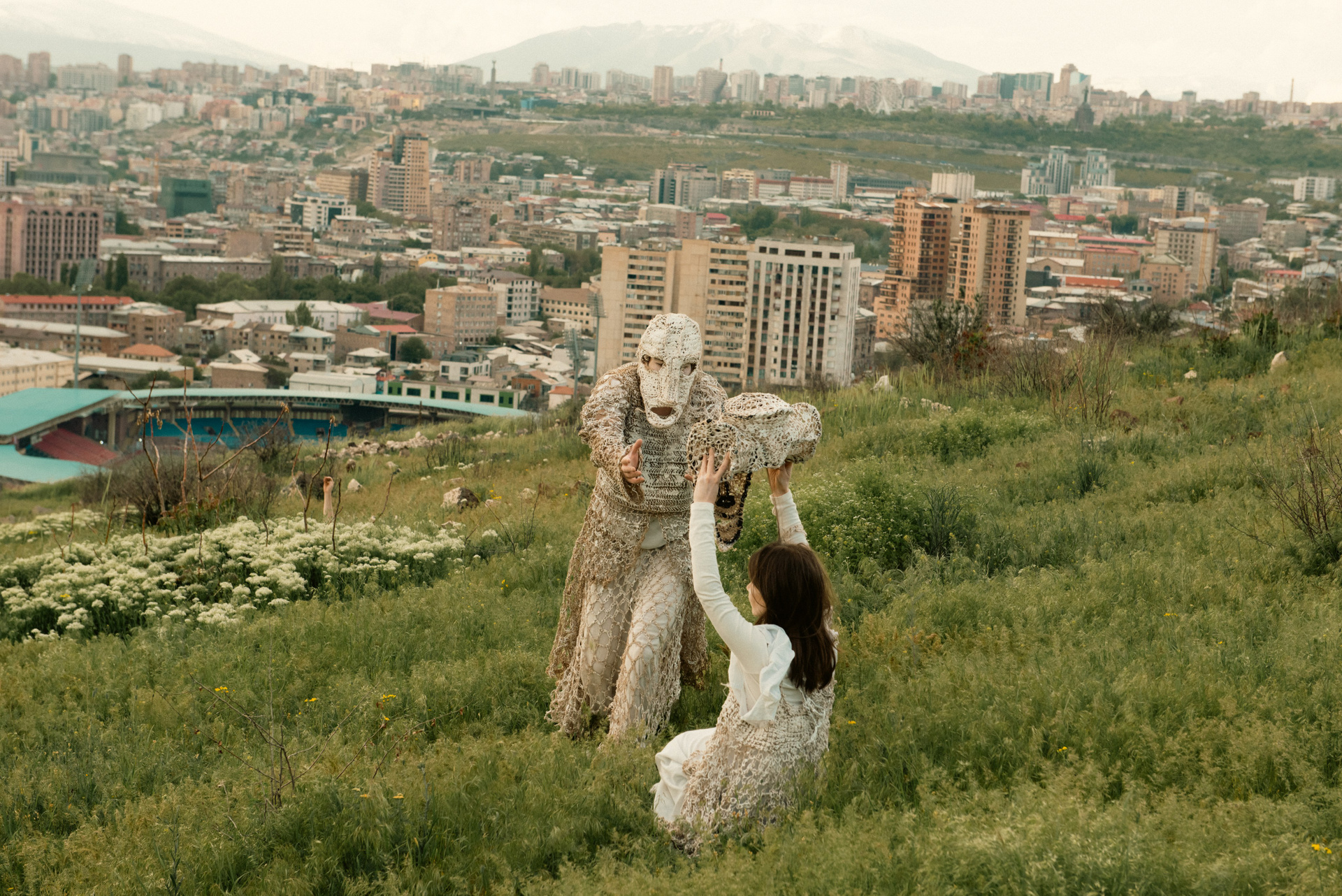
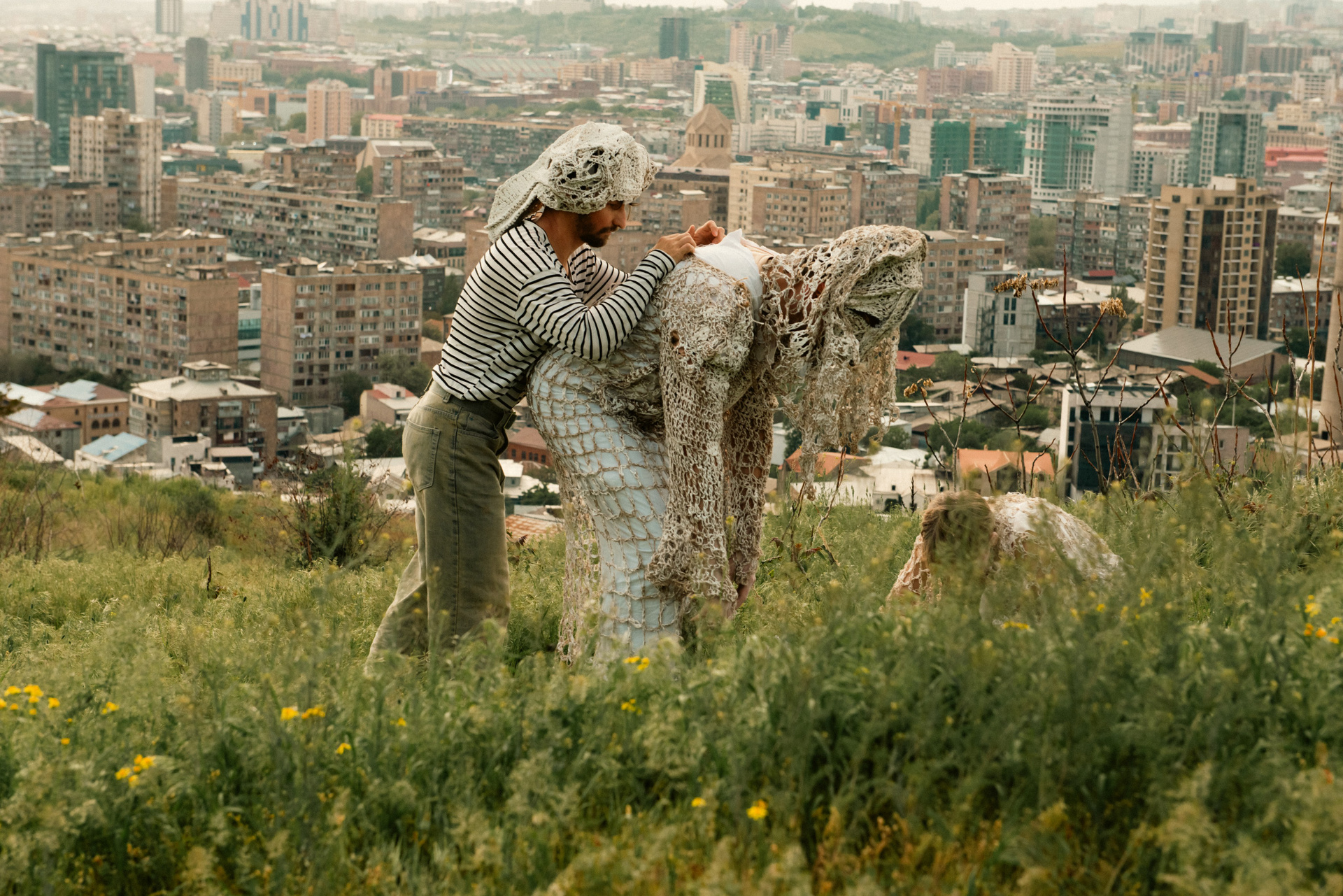
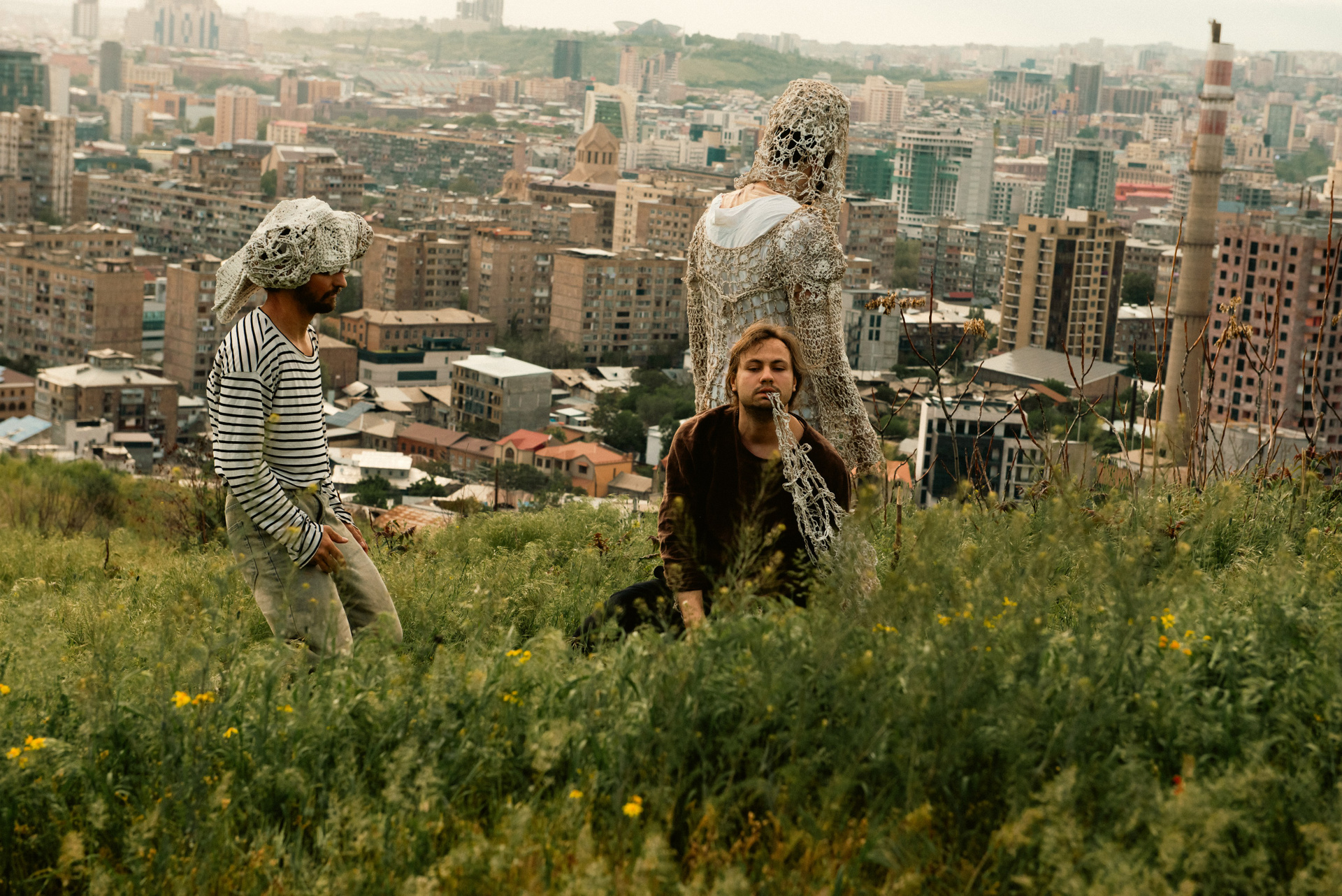
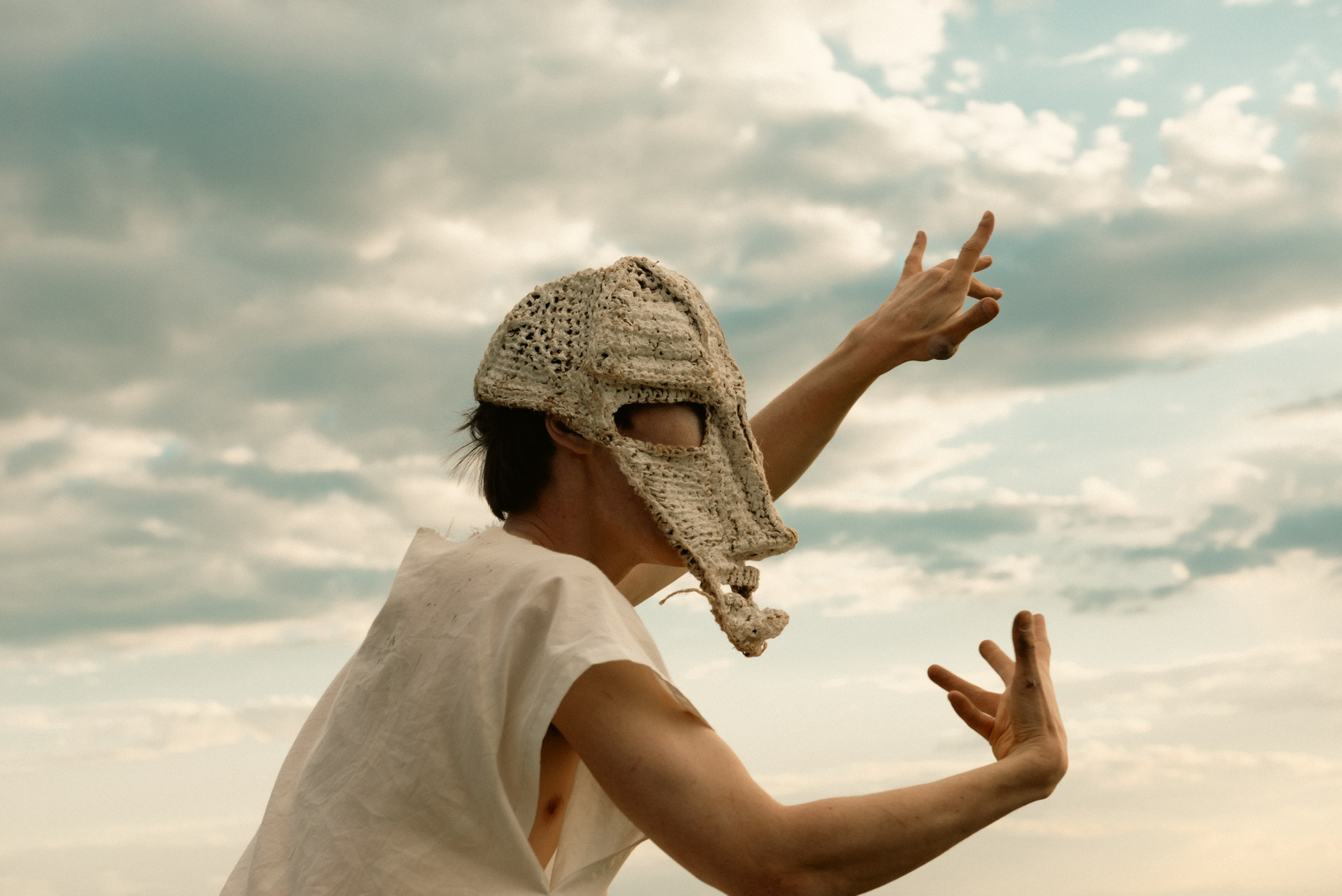
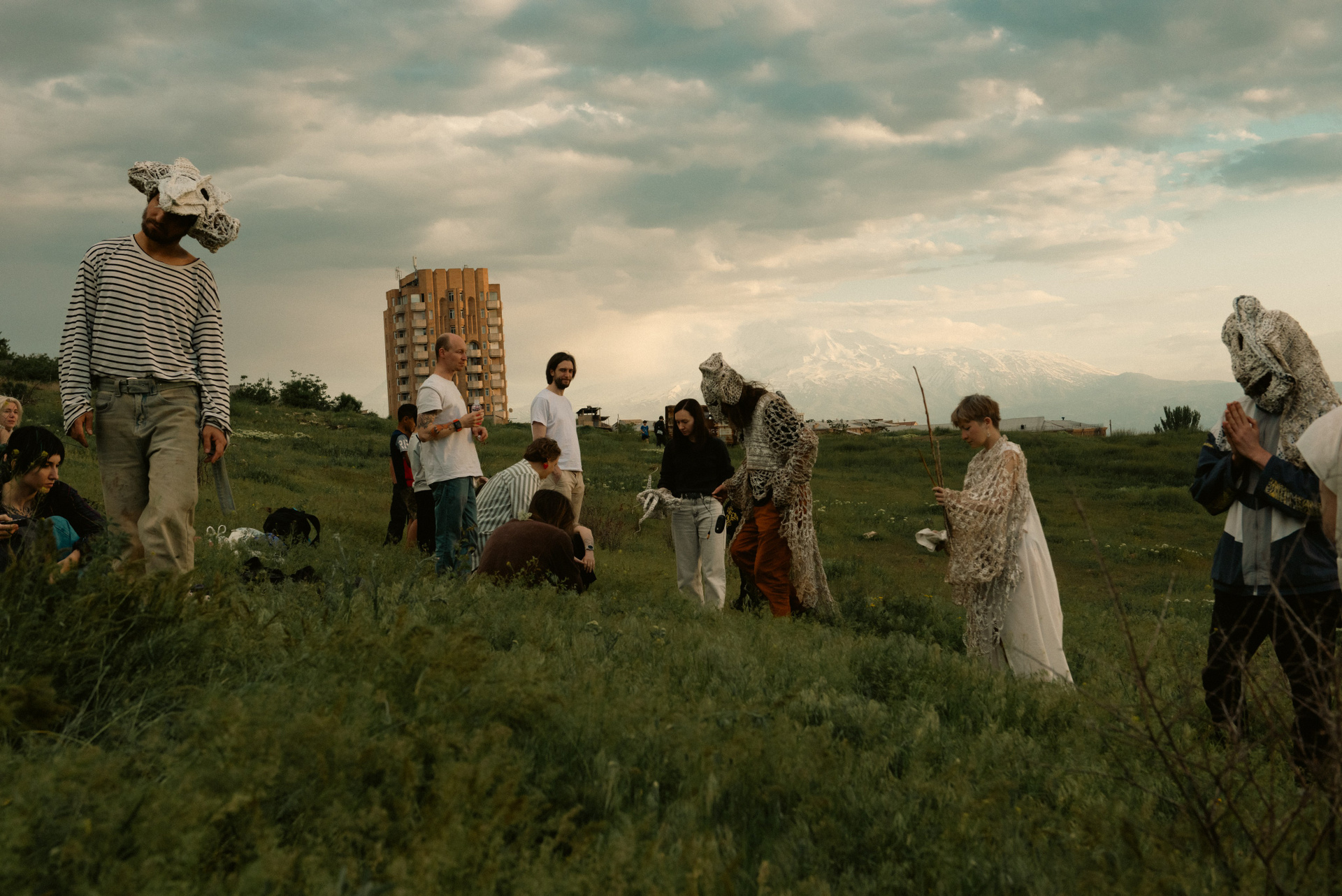
The project is based on archetypal logic, connecting inner states with the functions of Armenian pagan deities. Through the image of Aramazd and his children — Anahit, Vahagn, Nane, Mihr, and Astghik — the project constructs a transition from chaos toward the logic of forming order. All costumes are made of twine covered with white paint and form a unified system in which each element corresponds to a particular stage of this transition.
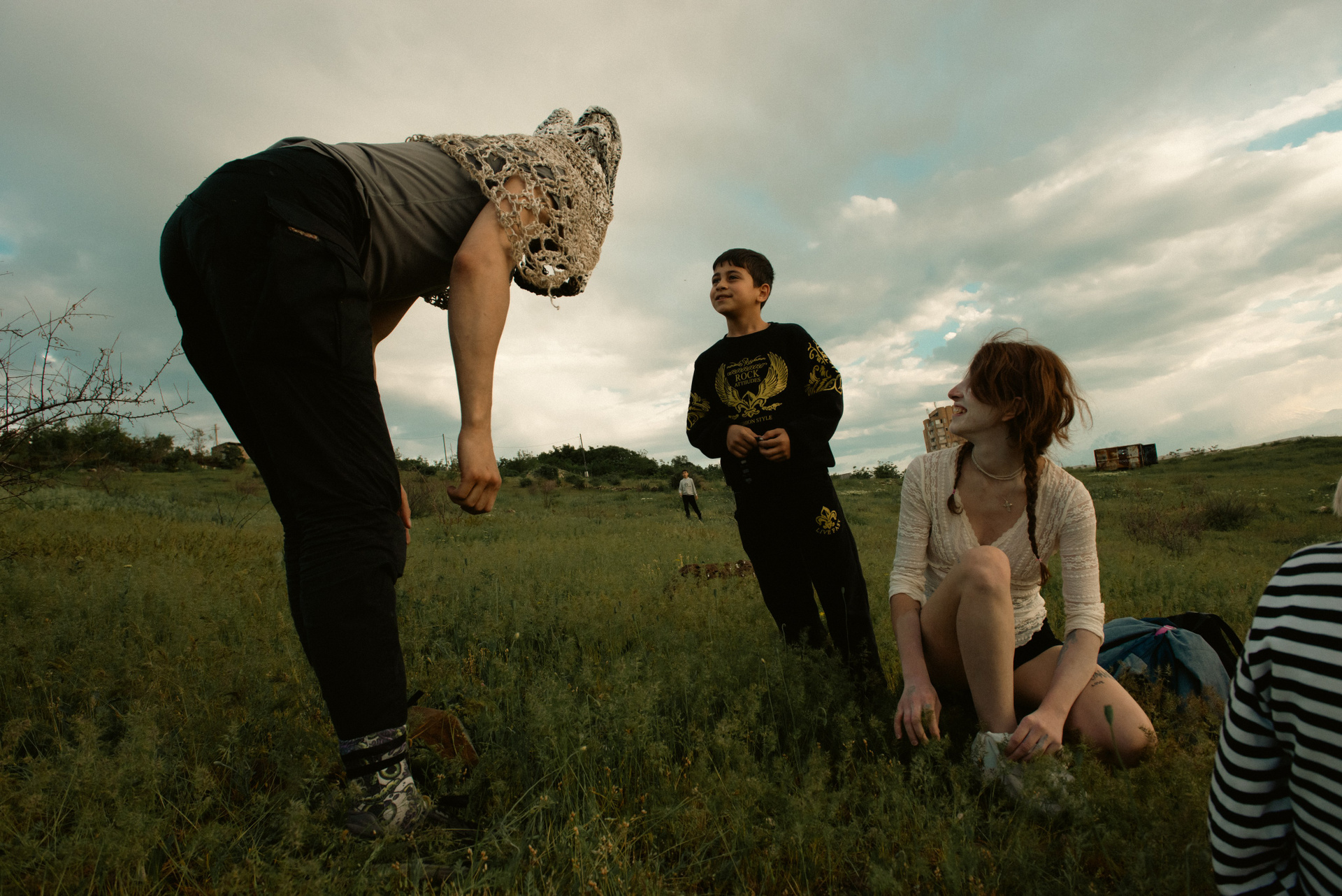
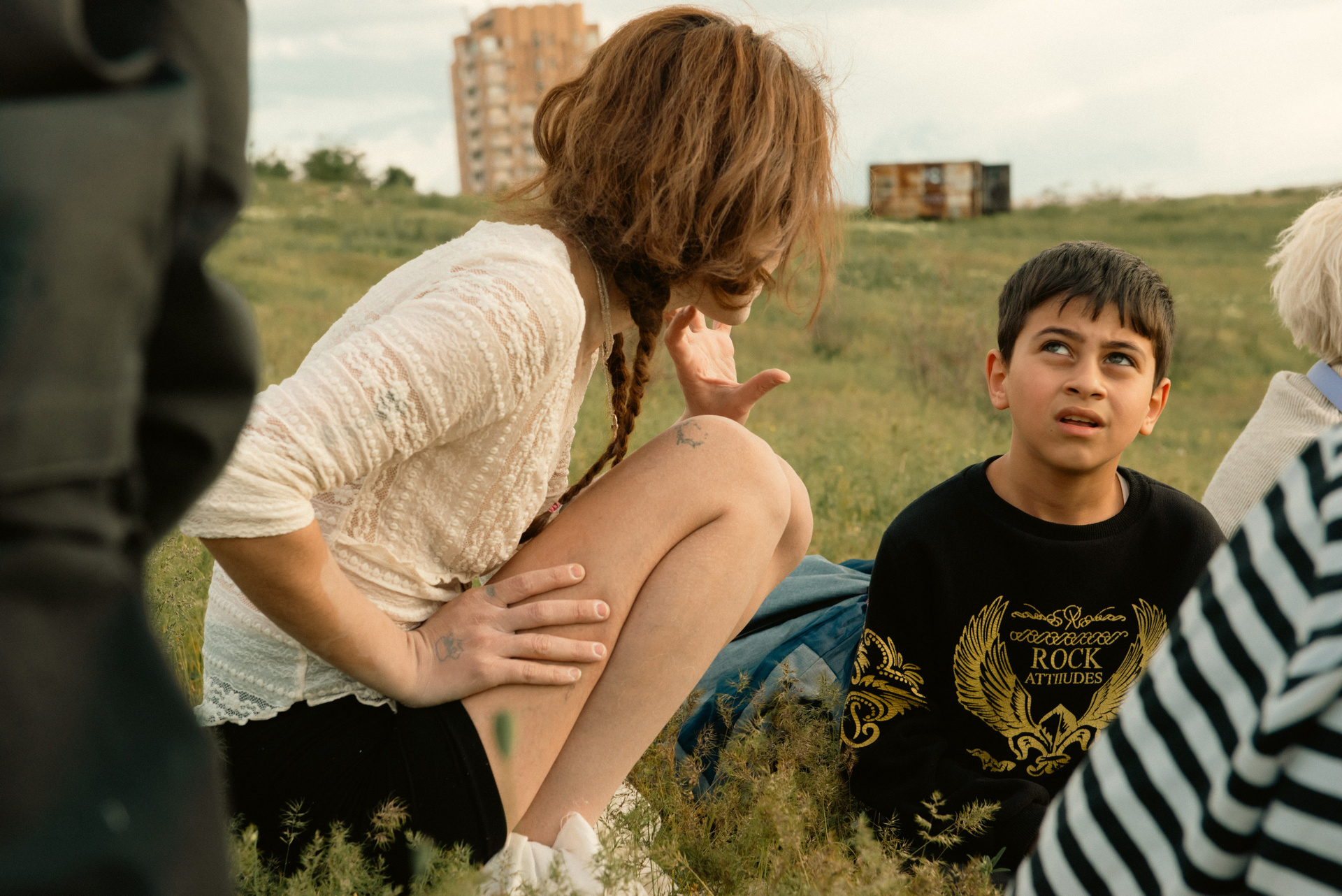
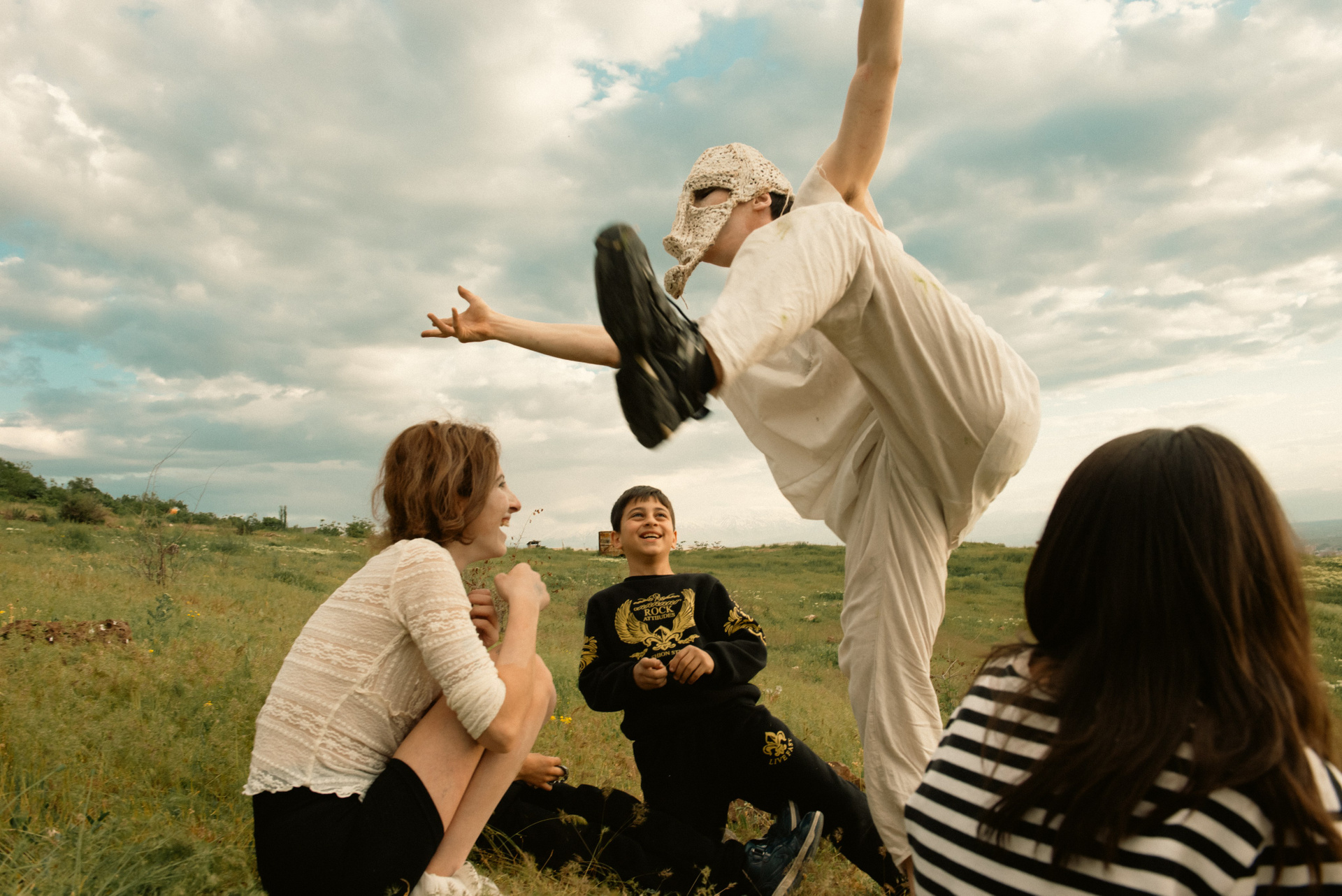
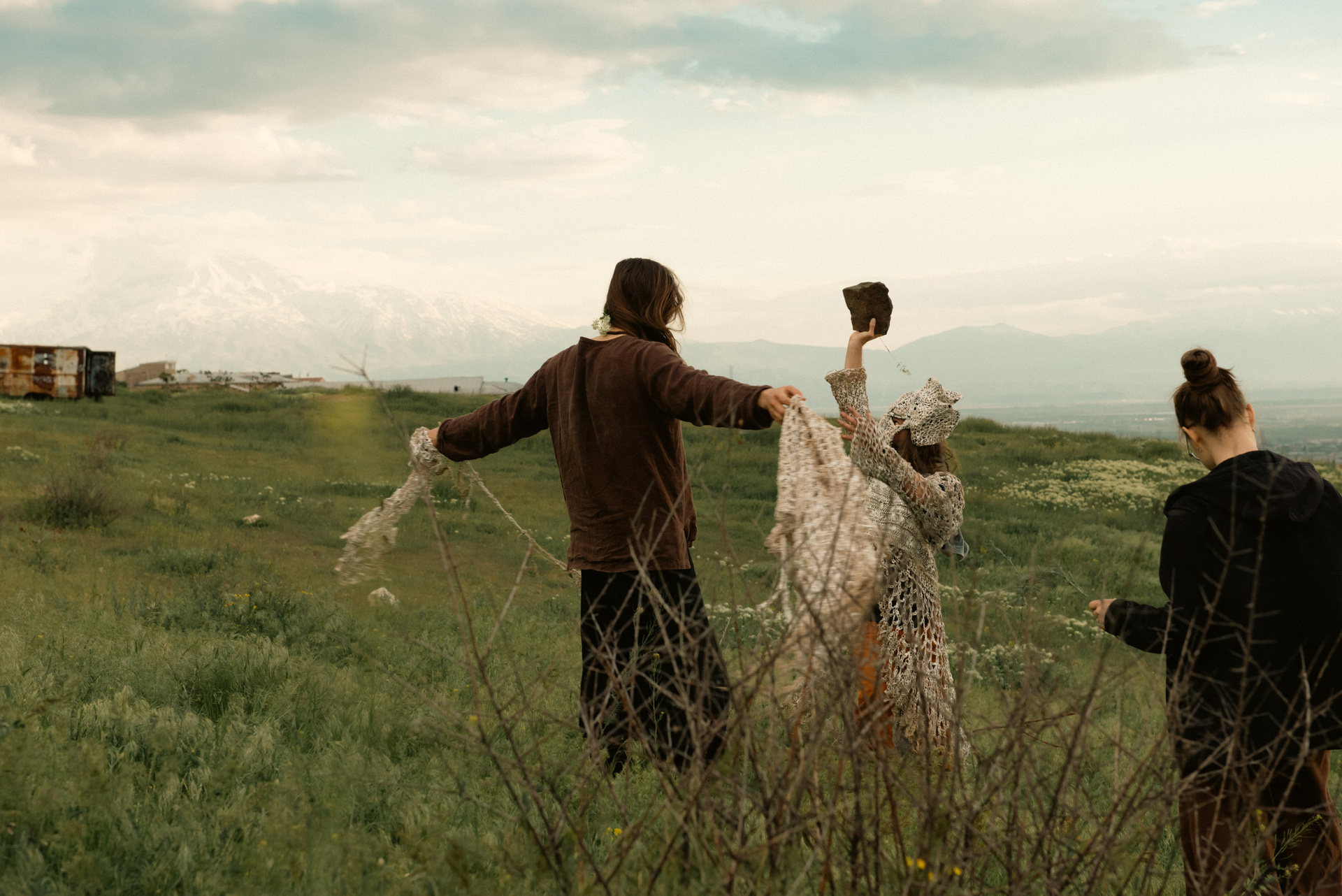
- Liza Arakelyan aka potôõ — DJ, activist, performer. She performed and also initiated an educational conversation with a group of Armenian boys who initially behaved in a confused and aggressive way, throwing stones, but eventually stayed to watch, communicate, and even try participating in the performance.
- Margo Vishnevskaya — performer, interdisciplinary artist, and dramaturge. In the project she performed and also helped organize rehearsals and find technical equipment.
Concept
The gods are a personified representation of the structure of the world.
The dance of the gods and the movement of spectators through space are attempts to witness that the world is happening and that we participate in it.
At this place and at this moment in time we exist in Armenia, therefore the dance in the costumes of Armenian pagan gods among the audience becomes an attempt to embody inner personal searches into something beautiful and collective.
Physical Realization
Performers in the costumes of pagan gods move through space, each following what feels necessary and truthful to them.
Motion sensors read the dance of the gods and transform it into sound. The musician distorts and processes the sounds of movement through effects.
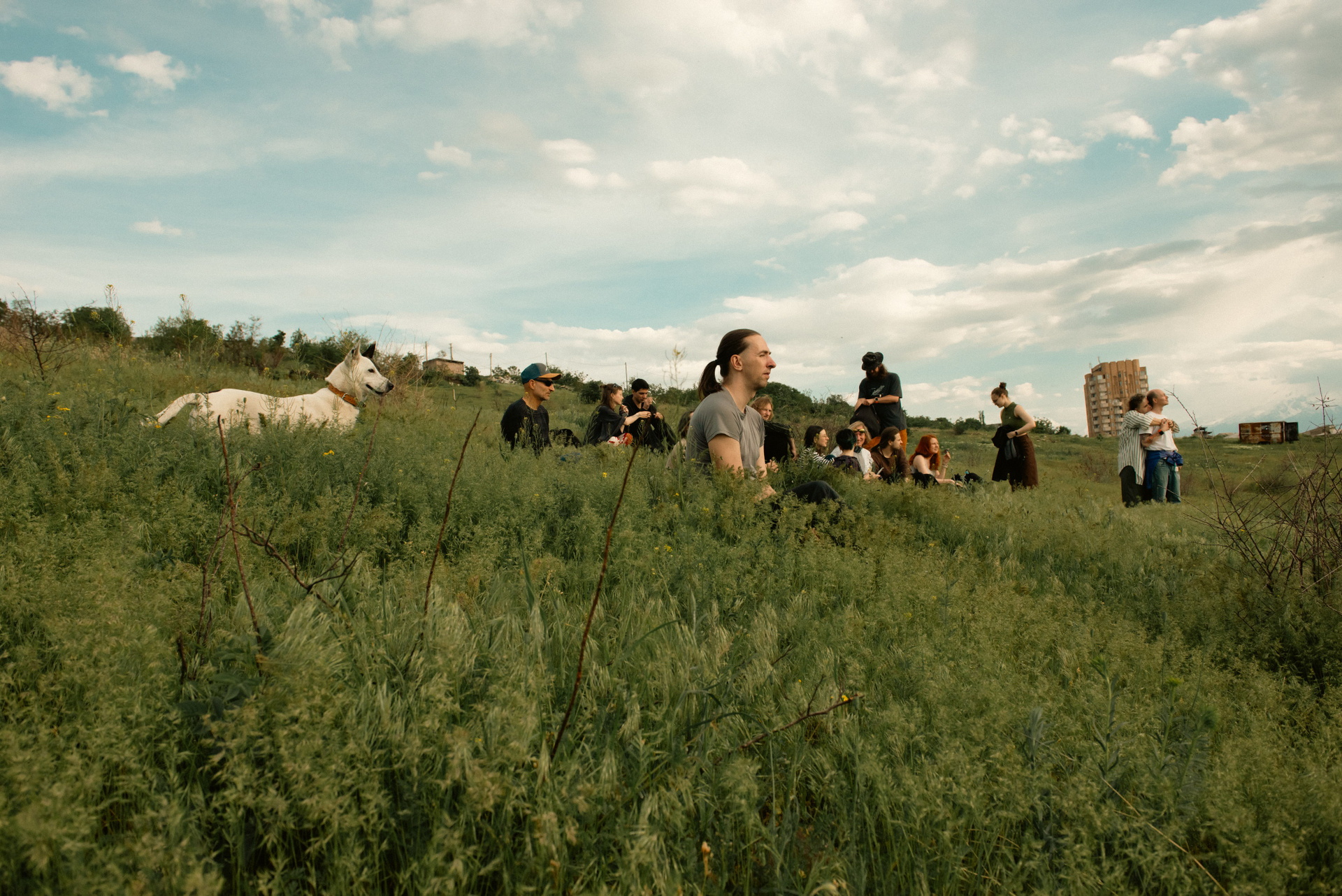
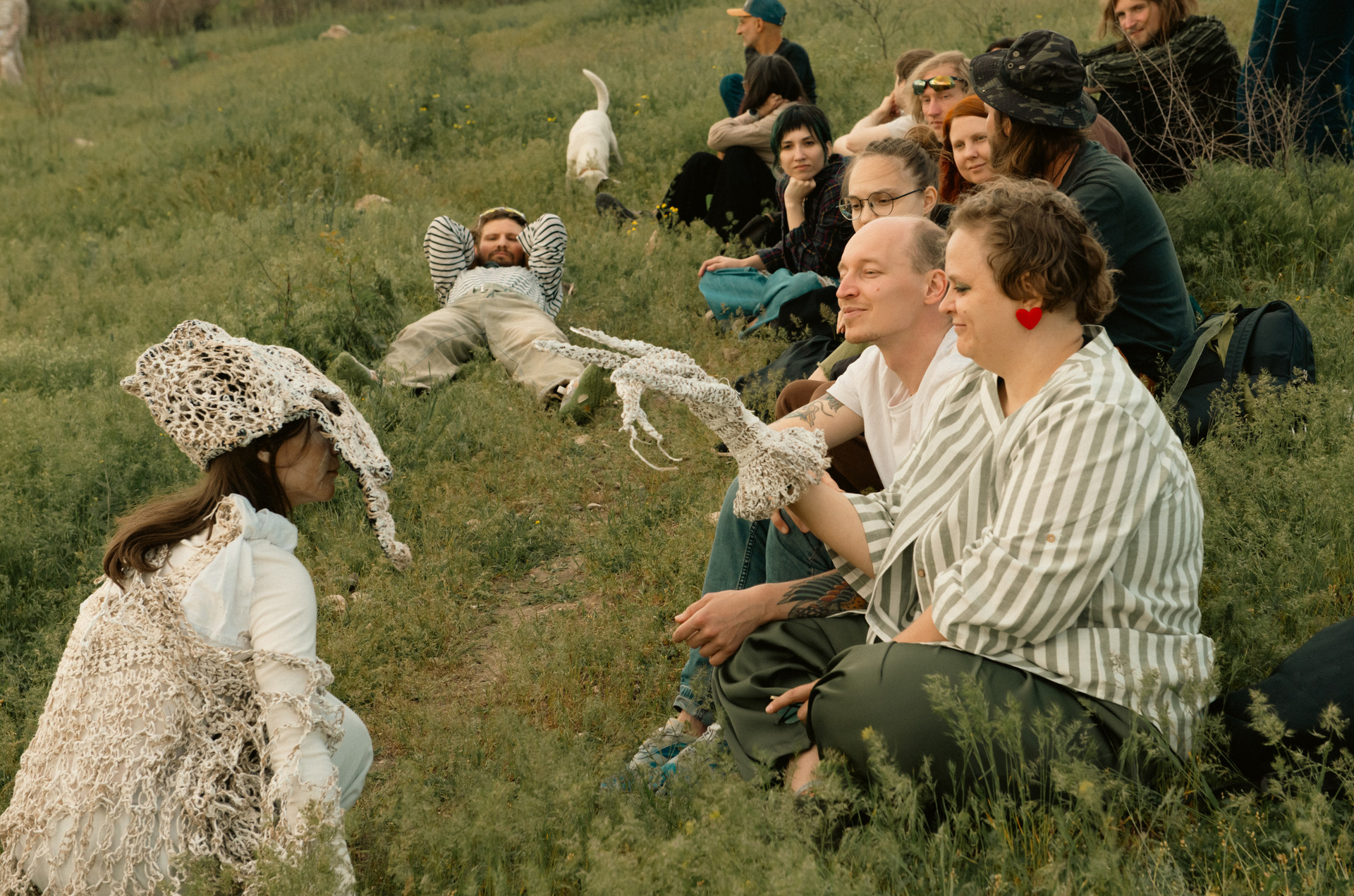
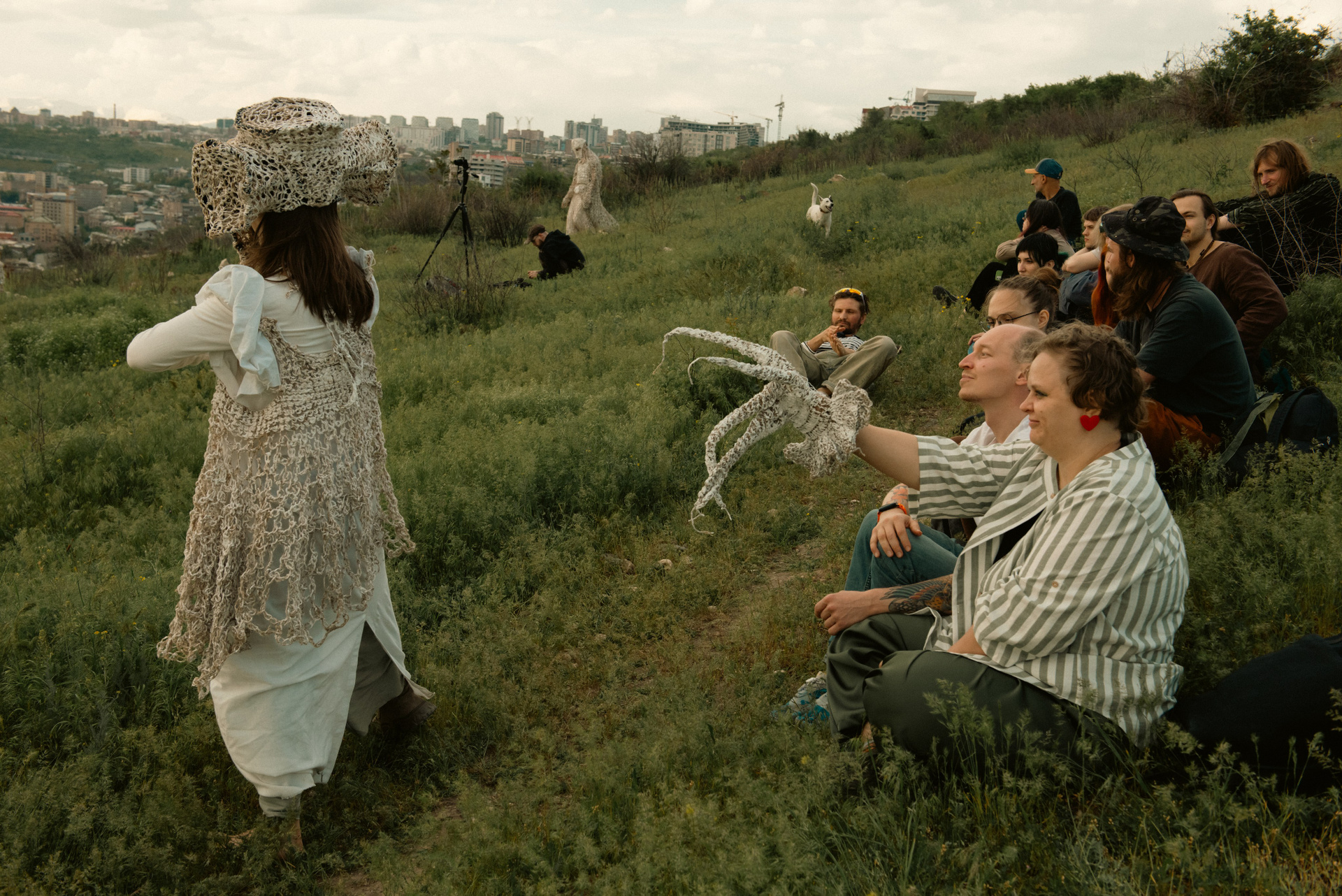
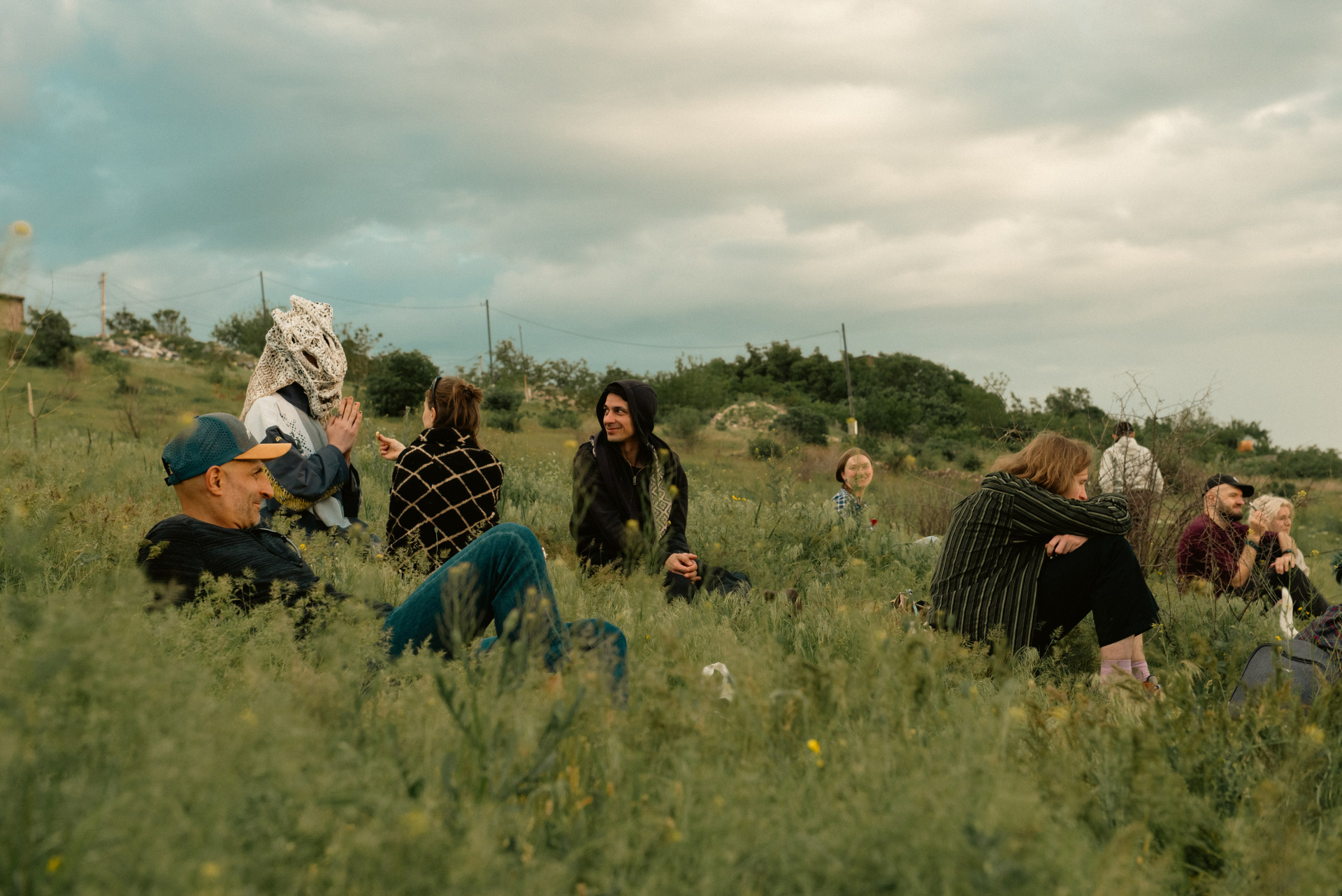
The audience becomes immersed inside a space transformed by an artistic atmosphere.
Instructions for the Audience
The audience is invited to choose their own mode of existence in relation to the performance:
- to be-surrounded-by-the-world
- to observe-while-fleeing-from-the-world
- to be-captured-by-the-world
- to be-the-world
Reflection on the Experience
I wrote to Nikita on social media suggesting that we meet and try creating something together in order to exchange experiences related to Butoh. During our meeting he came up with the idea of creating a performance using costumes sewn by our mutual friend, artist Masha. I noticed that Russian artists dancing Japanese Butoh while embodying Armenian pagan gods in Christian Armenia was the peak of absurdity — yet completely justified by our circumstances and somehow inevitable. From this observation Nikita derived the conceptual formula of our performance: “On the Mystery of the Structure of the World and the Elusiveness of the Universe.”
Since we had different god figures and very little preparation time (a week and a half), we decided to use Butoh methods and techniques during rehearsals while still preserving freedom for each performer to act and exist truthfully according to their own inner impulses and the external reality. We did not dissolve into the roles of gods — we continued seeing and hearing the environment, each other, the music generated by our own movements, and the arriving spectators.
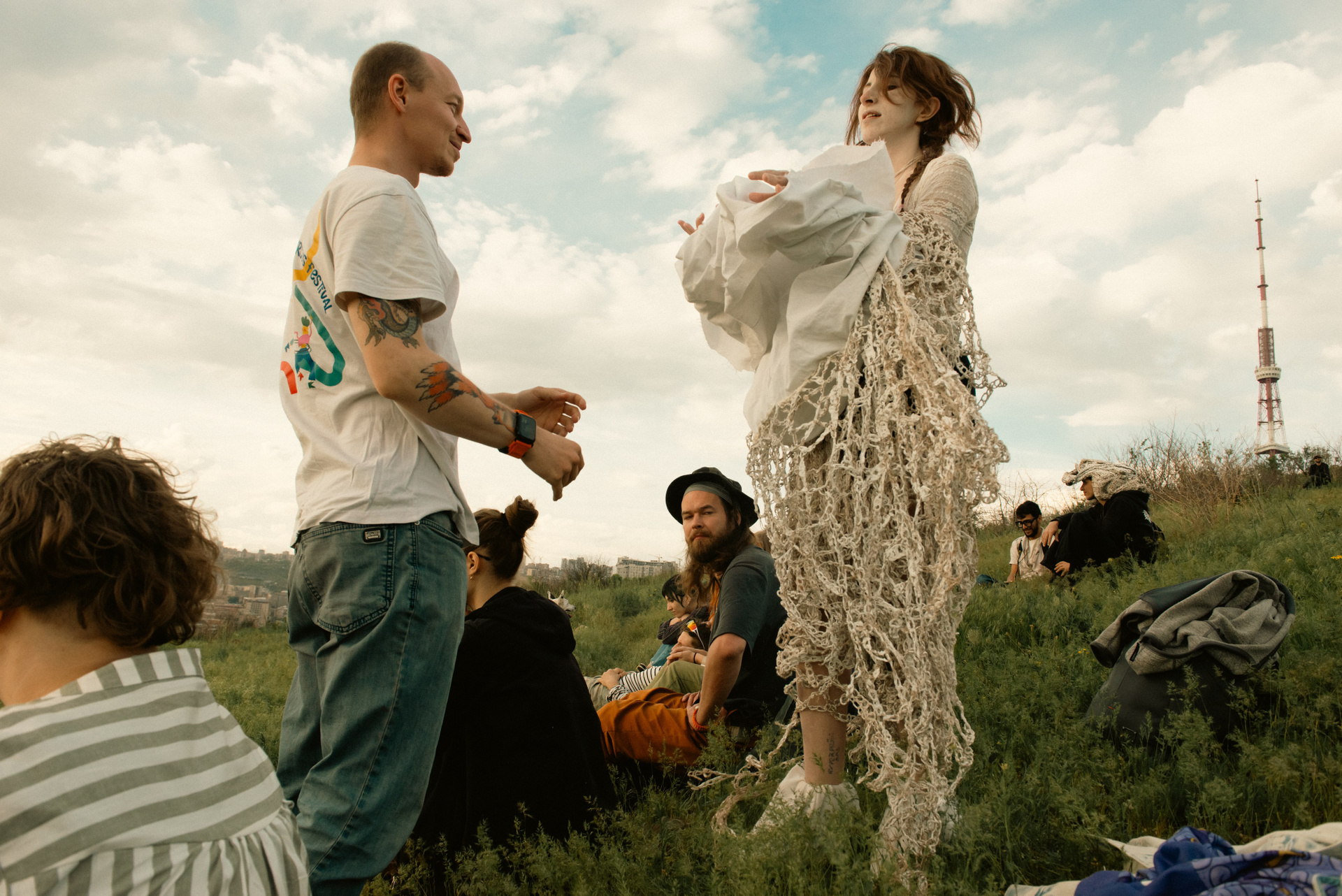
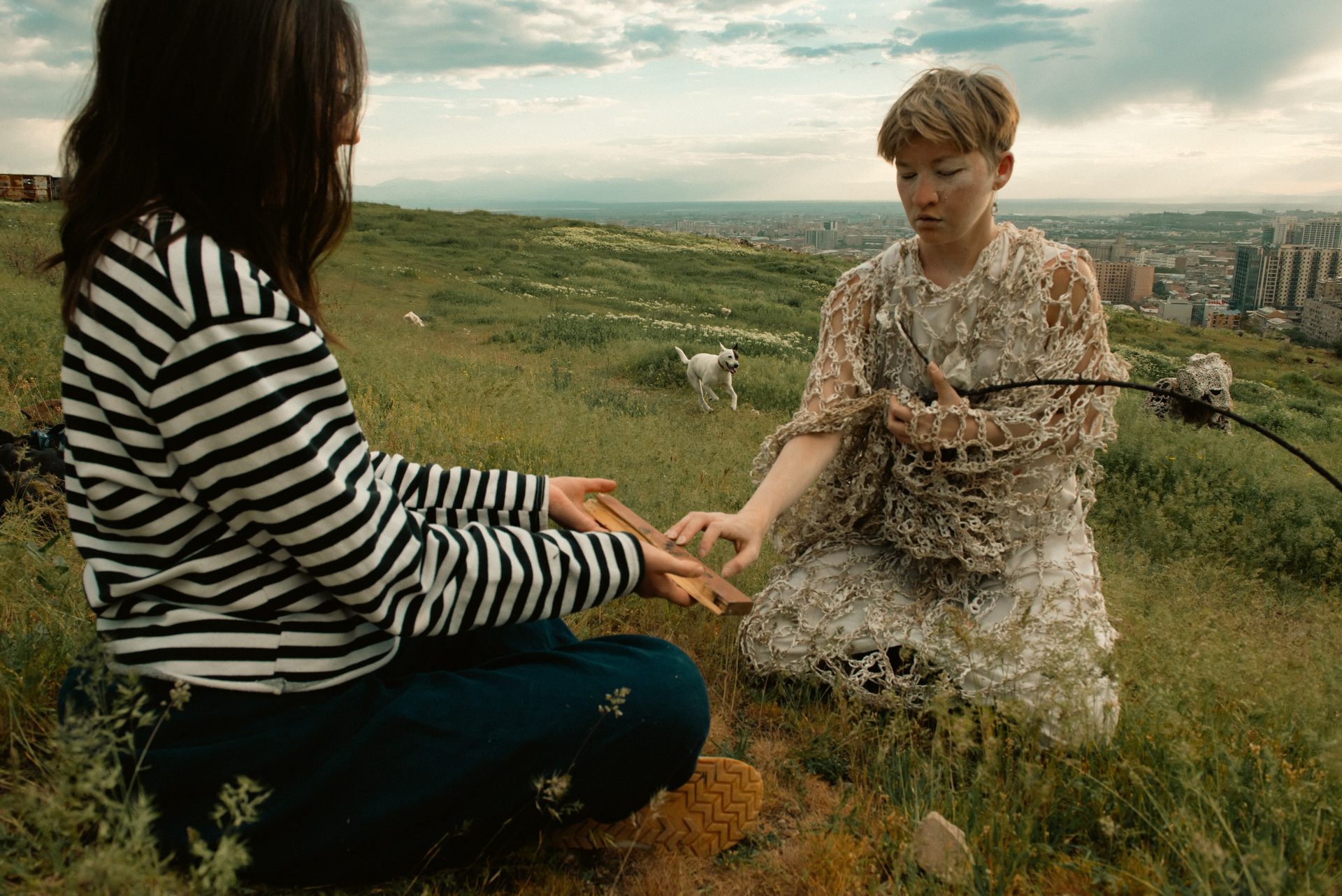
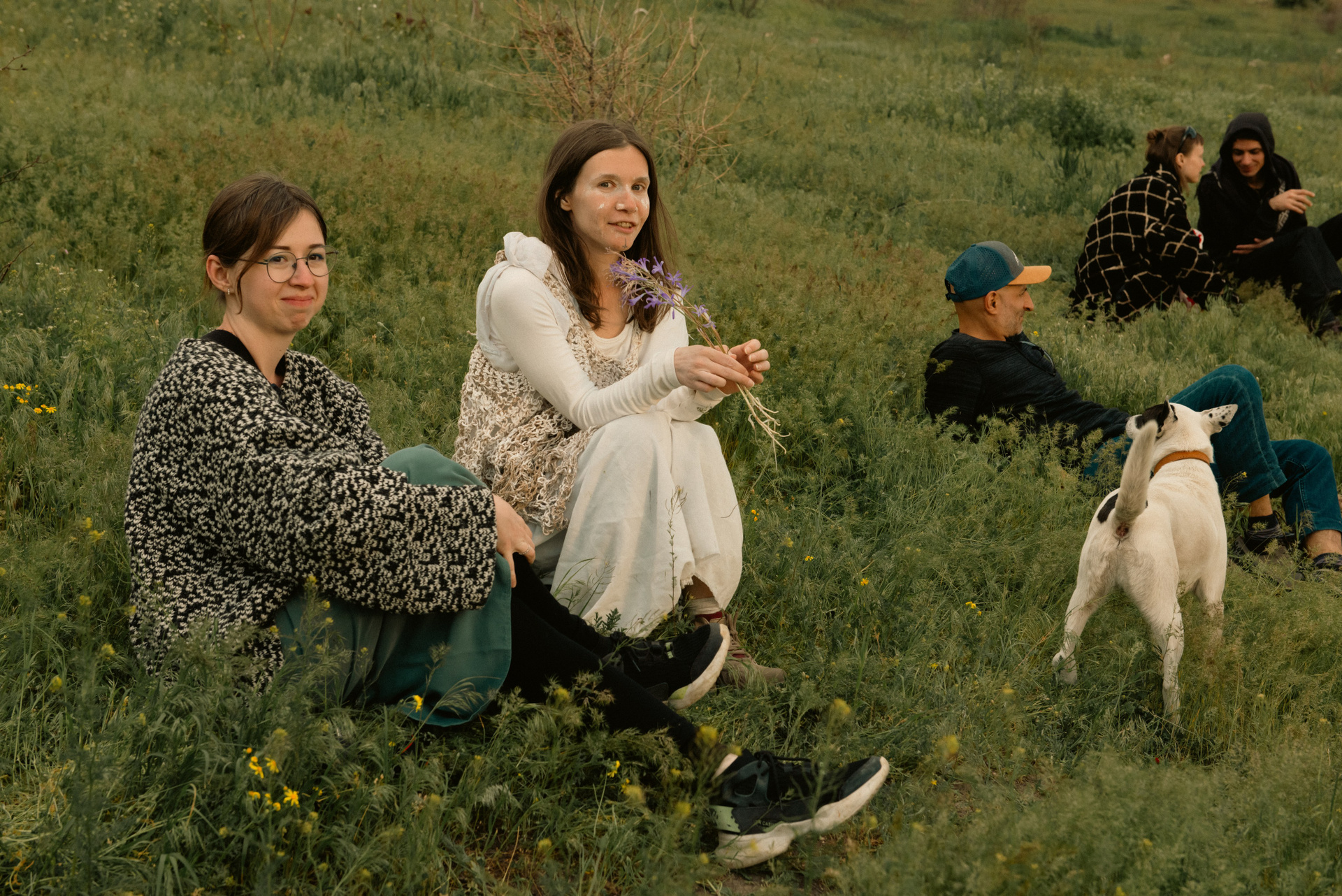
Because we had established certain “rules of the game” beforehand through the text and demonstrated ways these ideas could be embodied, the audience rather quickly began joining the process themselves: putting on costume elements or using parts of the environment and each other as objects for interaction. For about two thirds of the performance I sat among the spectators discussing what was happening, while many people who originally came only to watch started dancing themselves, then immediately discussing their experiences with one another, and dancing again.
Photographer — Sofia Slonim
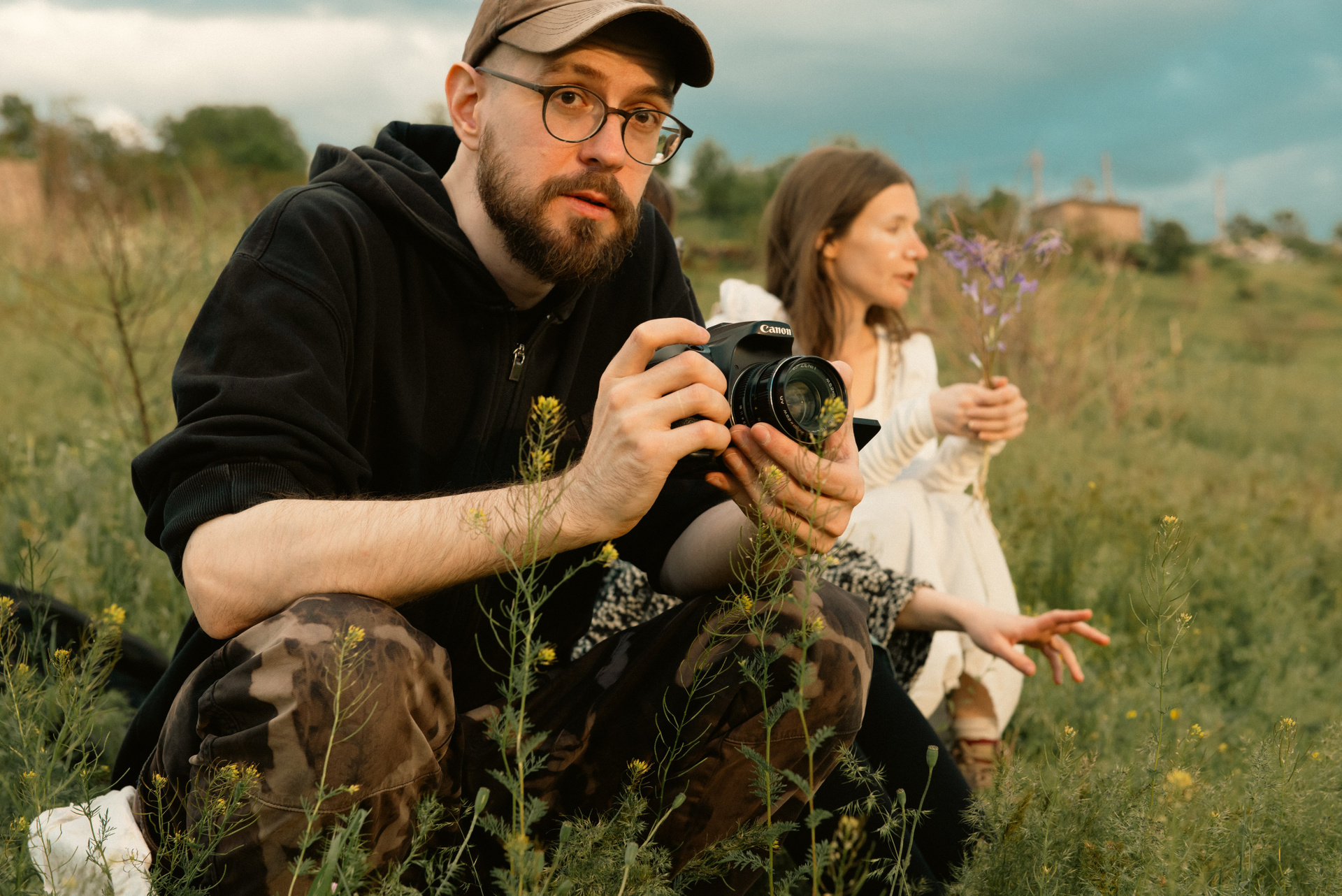
Camera operator — Mark Sharapov